

How Santa Clarita Heat Affects Garage Door Springs, Openers and Rollers
A homeowner guide to hot-garage conditions, spring balance, opener electronics, thermal protection, roller friction, lubrication, direct sun, safety sensors and summer maintenance.
Garage door acting differently during the hottest part of the day? If it is heavy, crooked, grinding, off track or showing a loose cable or broken spring, stop operating it. Call (661) 449-2694 to ask Next Hour Garage Door Repair Santa Clarita about current service availability.
How does Santa Clarita heat affect garage door springs, openers and rollers?
Hot Santa Clarita garage conditions can increase opener operating temperature, change lubricant behavior and make worn rollers or tight tracks more noticeable. Heat alone usually does not explain a broken spring or failed opener. If the door becomes heavy, crooked, noisy or inconsistent, inspect the spring system, opener, rollers, tracks, cables and door balance before blaming temperature alone.
Santa Clarita Heat Can Change How a Garage Door Behaves—but Heat Is Not the Cause of Every Failure
Santa Clarita garages can become very warm during the hotter part of the year, especially when a garage faces direct afternoon sun, has limited ventilation, or shares walls and ceiling space with an attached home. That environment can change how a garage door sounds and how some components behave. Lubricants can thin or dry out, electronics can run warmer, battery-backup systems can spend more time in elevated temperatures, and small changes in metal dimensions can make an already marginal track or roller problem easier to notice.
But it is important not to oversimplify the relationship between heat and garage door failure. Santa Clarita heat does not automatically snap a healthy torsion spring, burn out every opener, or make rollers fail overnight. Springs still fail primarily because of fatigue, corrosion, damage, incorrect sizing, or accumulated cycles. Openers fail for many reasons including worn gears, logic-board faults, motor problems, poor door balance and excessive mechanical resistance. Rollers fail because bearings and wheels wear, stems bend, tracks become misaligned, or lubrication and maintenance are neglected.
The best way to think about heat is as an operating condition that can expose weaknesses already developing in the door system. A hot garage can make friction, vibration, electrical load, battery condition and lubrication quality more noticeable. This guide explains what homeowners should watch for in springs, openers and rollers, what is normal, what deserves repair, and which checks are safe to make without touching high-tension hardware.
How Does Santa Clarita Heat Affect Garage Door Springs, Openers and Rollers?
Hot Santa Clarita garage conditions can increase opener operating temperature, change lubricant behavior and make worn rollers or tight tracks more noticeable. Heat alone usually does not explain a broken spring or failed opener. If the door becomes heavy, crooked, unusually noisy, slow or inconsistent, the spring system, opener, rollers, tracks, cables and balance should be checked before blaming temperature alone.
Heat Exposure vs. Actual Mechanical Failure: Know the Difference
A garage door system combines mechanical and electrical parts. Temperature affects materials and electronics, but the effect must be understood in context. Steel expands slightly as it gets warmer. Lubricants become less viscous or can lose effectiveness as they age. Plastic and nylon components respond differently to temperature than steel. Electronic components inside an opener produce their own heat while operating and are designed to work within model-specific environmental limits.
In a healthy system, ordinary seasonal temperature changes should not make the door suddenly unsafe. The door should remain level, rollers should stay in the tracks, cables should stay properly seated, and the opener should move a correctly balanced door without excessive strain. If normal summer heat produces dramatic binding, repeated reversal, severe grinding or sudden crooked movement, the heat is often exposing an alignment, lubrication, wear or balance problem that was already close to becoming noticeable.
This distinction prevents two bad assumptions: that every hot-weather problem needs a special “heat-resistant” part, or that a genuine mechanical failure can be ignored because the garage happens to be hot. The correct diagnosis should identify the actual failed or worn component.
Heat and Garage Door Components: What Homeowners May Notice
| Component | What hot conditions may influence | What points more strongly to a repair issue |
|---|---|---|
| Torsion / extension springs | Lubrication condition, normal material expansion, noise | Visible spring gap, heavy door, loss of balance, sudden bang, uneven lifting |
| Garage door opener motor | Internal operating temperature, thermal protection on some models, performance under repeated cycles | Repeated shutdown, humming, grinding, inability to move a balanced door |
| Logic board / electronics | Electronics operate warmer inside a hot garage | Intermittent controls, lost response, unusual error codes, repeated failure after power is confirmed |
| Battery backup | Long-term exposure to elevated garage temperatures | Battery warning light or beeping, reduced backup performance, replacement alert |
| Rollers / bearings | Lubricant behavior, noise, friction becoming more noticeable | Wobbling wheel, grinding bearing, cracked roller, binding in track |
| Tracks | Small thermal dimensional changes | Visible bend, loose bracket, rubbing, repeated binding at the same location |
| Safety sensors | Direct sunlight can be a separate optical factor on some installations | Sensor lights out or unstable, door will not close, wiring or alignment problem |
The important pattern is repeatability. If a problem appears only when the garage is hot, tell the technician that. If it happens at the same door position every time regardless of temperature, mechanical alignment or wear may be more likely.
How Heat Affects Garage Door Springs
Garage door springs counterbalance the weight of the door. A torsion spring twists around a shaft above the door, while an extension spring stretches along the horizontal track on compatible systems. Both types experience repeated stress every time the door opens and closes.
Heat changes the properties of metal slightly, but normal garage temperatures do not normally transform a properly sized, serviceable spring into a failed spring by themselves. Spring fatigue is much more closely tied to repeated cycling, existing wear, corrosion, damage and whether the spring was correctly matched to the door.
Where hot, dry conditions can matter more practically is lubrication and noise. Spring coils and bearing points that are already dry can become noisier. Dust can collect on exposed hardware. If a spring has surface corrosion or has already accumulated substantial fatigue, summer use may simply be the time when the existing weakness finally becomes obvious.
The safest homeowner response is not to “tighten the spring for summer.” It is to watch for changes in balance, noise and door weight. Spring tension should not be adjusted seasonally by a homeowner. If the door feels heavier or the spring system looks damaged, a trained technician should diagnose the cause.
Spring Warning Signs That Matter More Than Temperature
The signs of actual spring trouble are more important than the thermometer. A visible gap in a torsion spring, a loud bang followed by a heavy door, a door that opens only a few inches, cables that suddenly become slack, or a door that drops faster than normal all point toward counterbalance trouble rather than a simple hot-garage condition.
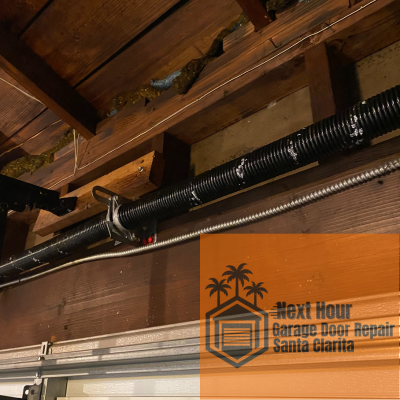
If the door suddenly feels heavy, do not repeatedly press the opener. The opener is not intended to replace the lifting assistance provided by the spring system. Continued operation with a failed spring can add strain to the opener, rail, trolley, top door section and cable system.
DASMA's garage door system safety guidance notes that springs wear out and that worn or frayed cables connected to the spring system should be handled by trained technicians. It also warns against homeowner adjustment of high-tension components.
Does Metal Expansion in Hot Weather Make Garage Doors Bind?
Metal expands as temperature rises. That includes steel tracks, shafts, hinges, brackets and door sections. In a normal installation, the amount of seasonal expansion is usually small enough that the system should continue operating correctly. Tracks, rollers and hardware are not installed with zero clearance.
Small dimensional changes can, however, expose a system that already has very little margin. A track that is slightly out of alignment, a roller stem that is bent, a bracket that has shifted or a panel that is already rubbing may become noisier during the hottest part of the day. In that case, heat is not necessarily the root cause; it is revealing a tolerance or alignment problem.
This is why homeowners should be cautious with claims that “the rails expanded and that is normal.” If the door binds, scrapes or reverses in a repeatable way, track spacing, roller condition, hinges and door alignment should be inspected. A healthy door should not require forceful operation because the garage is warm.
How Hot Garage Conditions Affect Garage Door Openers
Garage door openers contain motors, logic boards, transformers or power supplies, drive components, lighting and communication electronics. Those components generate some heat during operation, and the temperature inside a garage adds to the operating environment.
Manufacturer specifications are model-specific. As one example, a LiftMaster product guide for a wall-mount opener lists automatic thermal protection, auto-force adjustment for changing weather and environmental conditions, and an operating temperature range reaching 150°F. That does not mean every opener has the same temperature rating, but it shows why the owner's manual and exact model specifications matter when evaluating hot-garage performance.
See the LiftMaster opener product guide for an example of manufacturer environmental and thermal specifications. Homeowners should use the manual for their own opener rather than assuming another model's limits apply.
Can a Garage Door Opener Overheat?
Yes. An opener motor or internal electronics can become too warm under some conditions, especially when the unit performs repeated cycles or tries to move a door with excessive resistance. Some openers incorporate thermal protection that can interrupt operation until the system cools. Exact behavior depends on the model.
A crucial diagnostic point is that “overheating” may be the symptom of a mechanical problem rather than a climate problem. If rollers are binding, the door is poorly balanced, a spring is weak, the track is rubbing or the door is unusually heavy, the opener works harder on every cycle. More load means more stress on the motor and drive system.
If an opener stops after several cycles on a hot day but works later, note the pattern. Also note whether the motor sounded strained, whether the door moved slowly, whether the rail flexed or whether the door felt heavy before shutdown. Those observations help distinguish an opener-specific issue from a door that is overloading the opener.
Do not solve repeated hot-weather shutdown by simply increasing force settings. Force controls are not a substitute for correcting spring balance, roller friction or track resistance.
Heat, Logic Boards and Intermittent Opener Problems
Logic boards coordinate remotes, wall controls, safety sensors, travel settings, lighting and motor commands. Electronics operate best within the environmental range specified by the manufacturer. A garage that remains very hot for long periods adds thermal load to the electronic environment, but a hot day alone does not prove that a logic board has failed.
Intermittent behavior can include a wall control that works while a remote does not, an opener that clicks but does not run, unusual status lights, random loss of programming or an opener that works when cool and fails after extended operation. Those symptoms can also be caused by wiring, controls, radio interference, power problems or a failing component unrelated to temperature.
A good diagnosis records when the problem happens and checks power, controls, sensor status, error codes and mechanical door load before replacing a logic board. If the issue appears only during the hottest part of the afternoon, that timing is useful evidence—but it is still not a complete diagnosis.
Battery Backup in a Hot Garage: What to Watch
Many modern residential openers include or support battery backup. The battery allows limited opener operation during a power interruption, depending on the model and battery condition. Batteries are wear items, and their service life can be influenced by storage and operating environment, so a hot garage is a good reason to pay attention to battery status indicators and manufacturer maintenance instructions.
Do not wait for an outage to discover that the battery has been reporting a replacement warning. If the opener begins beeping or shows a battery-status light, check the owner's manual for that model. The alert may indicate charging, low battery, backup operation or replacement status.
Battery backup does not override mechanical safety. If the spring is broken, a cable is off the drum or the door is off track, using battery power to force the door can damage the same components as household power would.
If the Opener Stops During Hot Weather, Rule Out a Power Problem First
An opener that suddenly goes completely dead during a hot afternoon is not automatically overheated. Start with basic electrical checks: confirm whether the opener has power, whether the outlet is live and whether the circuit breaker has tripped. If other parts of the home are also without power, the issue may be an outage rather than the opener.
Southern California Edison maintains an official Outage Center where customers can check power status. This article does not claim that a current outage or Public Safety Power Shutoff is affecting Santa Clarita. The point is to separate a power-supply issue from a garage door opener failure before replacing parts.
If power is present but the opener remains unresponsive, then the wall control, wiring, logic board, motor circuit and other opener components can be investigated.
How Heat Affects Garage Door Rollers
Rollers guide the garage door through vertical, curved and horizontal tracks. Depending on the door, rollers may use steel wheels, nylon wheels, sealed bearings or simpler bushing designs. Heat can affect the environment around those parts, but normal summer temperature by itself should not make a healthy roller jump out of the track.
The more useful heat-related issue is friction and lubrication. Lubricants can change viscosity as temperature changes, and older lubricant can collect dust or lose effectiveness. A roller bearing that is already worn may become noisier as conditions change. A nylon wheel that is cracked or distorted may reveal more vibration when track alignment is marginal.
Listen for squeaking, grinding, clicking or a rough transition through the curved track. Watch for a roller that wobbles, hesitates or tilts. If the same roller is noisy every cycle, the roller, hinge and local track area should be inspected rather than simply adding more lubricant.
Steel vs. Nylon Rollers in Hot Santa Clarita Garages
Steel and nylon rollers have different noise and wear characteristics. Steel rollers are durable but can transmit more sound through the tracks, especially when bearings or tracks are worn. Nylon rollers are often chosen for quieter operation, but quality varies. Some have sealed ball bearings; inexpensive designs may have simpler bushings or lower-quality wheels.
Heat should not be used as the only reason to recommend one roller material. The correct roller needs to match the door weight, stem size, track and intended use. Bearing quality, wheel condition and alignment are often more important than whether the wheel is steel or nylon.
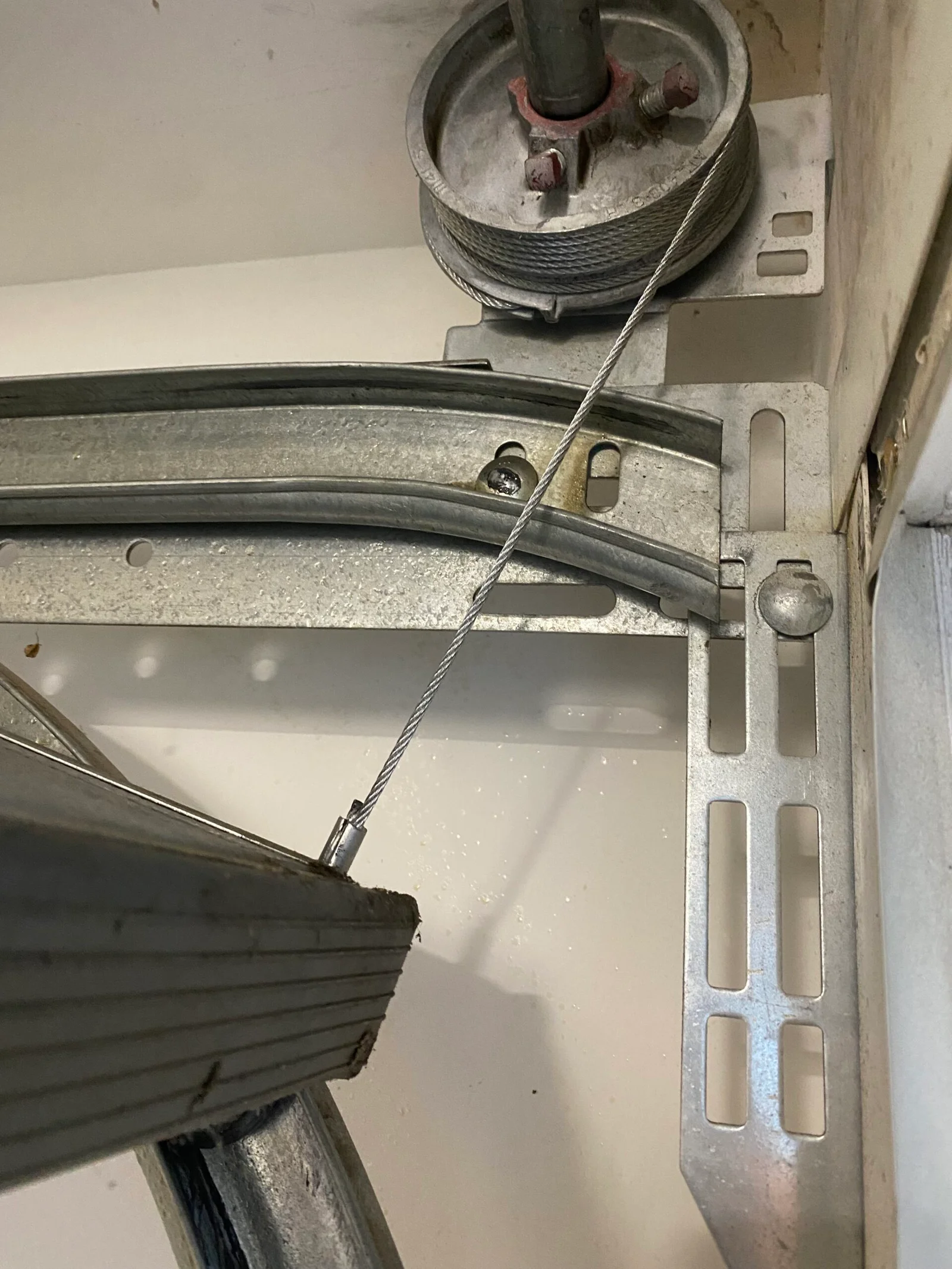
Next Hour's verified garage door roller replacement page is useful when the problem is grinding, wobbling or a roller that is no longer moving smoothly through the track.
Hot Weather and Garage Door Lubrication
Lubrication is one area where Santa Clarita heat and dry conditions can matter in a practical way. Moving parts that are already dry can become louder, and old lubricant can collect dust or become less effective. Lubrication should be targeted to the components and product types recommended by the door or opener manufacturer.
Do not coat the entire inside of the tracks with heavy grease. Tracks guide the rollers; they are not intended to become a reservoir of sticky lubricant. Excess grease can hold dirt and debris. If the roller is binding because the track is bent, adding lubricant does not straighten the track.
DASMA's garage door safety and maintenance guide advises regular inspection of hinges, rollers, springs and door panels and notes that some parts may require periodic lubrication according to the owner's manual. That is a better maintenance principle than applying a generic spray to every visible part.
Heat Plus Dust: Why Dry Santa Clarita Conditions Can Make Wear More Noticeable
Dry conditions often mean more airborne dust around garages, driveways and tracks. Dust itself does not automatically damage a garage door, but it can collect on rollers, hinges, tracks and old lubricant. When combined with worn bearings or rough metal surfaces, contamination can make noise and friction easier to notice.
Homeowners can keep accessible track surfaces free from obvious debris without dismantling hardware. The goal is cleanliness, not deep mechanical adjustment. If a roller has sealed bearings, spraying chemicals into it may not improve the bearing and can wash contamination into places it does not belong.
When a door becomes noticeably louder during dry weather, identify the sound source. Squeaking from a hinge may be maintenance-related. Grinding from one roller can indicate wear. Scraping at one side of the track can indicate alignment. Heat and dust are clues, not diagnoses.
Direct Sun on the Garage Door Is Different From Heat Inside the Garage
A west- or south-facing garage door can receive direct sun for hours, heating exterior panels more than the surrounding air. That surface heating creates normal expansion and can raise the temperature inside the garage depending on insulation, ventilation and construction.
Direct sunlight can also be relevant to safety sensors on some installations. Photo-eye sensors operate with an optical beam, so glare or direct sun can sometimes complicate troubleshooting when the door opens normally but refuses to close. That is an optical issue, not simply opener overheating.
Never bypass or permanently disable safety sensors to solve a sunlight-related closing problem. The U.S. Consumer Product Safety Commission explains that automatic residential garage door operators are subject to federal entrapment-protection requirements. See the CPSC's automatic residential garage door operator safety guidance.
Why Door Balance Matters Even More When the Opener Is Working in a Hot Garage
A garage door opener should move a door that is correctly counterbalanced. If the spring system is weak or broken, the opener has to overcome more weight. If rollers are binding, the opener sees more resistance. If tracks are misaligned, the opener has to pull through friction that should not be there.
Those extra loads matter in any weather, but a hot garage can make the opener's thermal margin smaller during repeated cycles. The correct response is not a larger motor or higher force setting; it is to restore the mechanical door so the opener is doing the job it was designed to do.
A professional inspection may include evaluating spring condition, door balance, roller movement, cable and drum condition, track alignment and opener response. Once the door moves smoothly and evenly, the opener can be assessed on its own.
Choosing an Opener That Fits Santa Clarita Garage Conditions
If opener replacement is already being considered, drive type and installation layout can influence noise, vibration and ceiling-space use. A belt-drive opener may reduce drive noise compared with many chain-drive systems, while a wall-mount opener can reduce ceiling-rail vibration when the door configuration is compatible.
For a detailed comparison, review our guide to garage door opener types for Santa Clarita homes. That page compares belt drive, chain drive and wall mount based on noise, ceiling clearance, battery backup, smart features and door compatibility.
Heat should be one factor in the broader opener decision, not the only factor. Model-specific operating limits, motor technology, battery backup, smart electronics, door balance and how often the garage is used all matter.
Hot-Weather Symptom Matrix: What the Pattern May Suggest
| What happens | Heat-related possibility | Other issues to rule out |
|---|---|---|
| Opener stops after several cycles | Thermal protection or elevated internal temperature on some models | Heavy door, weak spring, binding rollers, opener motor/drive fault |
| Door is noisier in afternoon | Lubrication/temperature changes make friction more noticeable | Worn roller, loose hinge, track alignment, spring noise |
| Door binds at same spot when hot | Small thermal changes may expose tight clearances | Bent track, damaged roller, warped section, loose bracket |
| Remote works inconsistently | Electronics or battery operating in elevated temperature | Remote battery, receiver, radio interference, logic board |
| Door will not close in direct afternoon sun | Optical interference may affect some sensor setups | Sensor alignment, dirty lens, wiring, obstruction, travel issue |
| Spring squeaks more in dry weather | Lubrication condition may be more noticeable | Spring wear, bearing noise, hinge or roller noise |
| Roller grinds through curve | Lubricant condition may affect sound | Worn bearing, bent roller stem, track deformation |
| Opener is totally dead | Do not assume heat | Power outage, breaker, outlet, control wiring, logic board |
Patterns are valuable. A technician who knows the symptom appears only after the garage has been hot for several hours can test differently from a technician responding to a failure that occurs randomly at every temperature.
Is It the Heat—or Is the Heat Revealing a Worn Part?
A hot garage can expose marginal lubrication, roller wear, poor balance or opener load. Diagnosis should identify the failed component before parts are replaced.
Safe Hot-Weather Checks Santa Clarita Homeowners Can Make
- Listen before touching anything. Identify whether the new sound comes from a spring, roller, track, opener motor or panel.
- Watch whether the door stays level. Crooked movement is a mechanical warning, not a normal heat effect.
- Check for a visible spring gap. Do not touch the spring or winding hardware.
- Look for a loose or frayed cable. Do not pull it or rewind it on a drum.
- Observe rollers. Note wobbling, grinding or hesitation at the same point.
- Check the opener's status lights or display. Use the model's manual to interpret codes.
- Confirm power before assuming overheating. Check the opener outlet and breaker, and verify utility status if the home has lost power.
- Keep sensor lenses clean and the beam path clear. Do not bypass the photo eyes.
- Note time-of-day patterns. Record whether problems occur only during direct afternoon sun or after repeated cycles.
- Stop testing when the door becomes heavy, crooked, off track or unstable.
What Not to Do Just Because the Garage Is Hot
- Do not add spring tension because the door feels different in summer.
- Do not wind or unwind torsion springs.
- Do not adjust cable drums or bottom brackets.
- Do not increase opener force to overcome a heavy or binding door.
- Do not bypass safety sensors because direct sun appears to interfere with closing.
- Do not spray heavy grease throughout the tracks.
- Do not keep cycling an opener that repeatedly stops or smells overheated.
- Do not force a roller through a tight or bent track.
- Do not stand under a door that is hanging unevenly.
- Do not assume a broken spring, cable or roller is normal summer expansion.
Heat can change operating conditions, but it does not make high-tension DIY work safer.
Three-System Diagnostic Method: Springs, Opener and Rollers
Step 1: Evaluate the counterbalance system
Begin with the springs and door balance because they determine how much load the opener should see. A door that becomes dramatically heavy is not a normal heat symptom. Look for a visible spring gap, loose cable or sudden change in balance. If the counterbalance system has failed, stop opener testing until the spring-and-cable system is repaired.
Step 2: Evaluate mechanical movement
Once the door is known to be structurally stable, observe rollers, tracks and hinges. Listen for one roller that becomes noisy at the same location, watch for scraping, and note whether the door stays square. Heat may make lubrication or clearances more noticeable, but repeatable grinding still deserves mechanical inspection.
Step 3: Evaluate the opener
Only after the door is moving correctly should the opener be judged on motor temperature, logic-board behavior, travel, controls and battery status. If the opener still shuts down or behaves intermittently with a smooth, balanced door, electrical and electronic components become more likely sources.
This order prevents an expensive diagnostic mistake: replacing an opener that was only struggling because the door was heavy, or adjusting spring tension when the real problem was a failing opener component.
A Santa Clarita Summer Garage Door Maintenance Plan
A practical summer maintenance plan focuses on observation and prevention rather than seasonal re-engineering. Start by watching a complete opening and closing cycle. The door should remain level. Rollers should move smoothly. The opener should not hesitate, strain or vibrate excessively. Cables should remain properly seated and free of visible fraying.
Inspect accessible hinges, rollers and tracks for visible wear or debris. Follow the door and opener manufacturer's instructions for lubrication. Check safety-sensor alignment and clean the lenses gently. If the opener uses battery backup, review the battery status indication and manual.
For a high-use household, a periodic professional inspection can be useful because the technician can evaluate door balance, spring condition, cable and drum wear, roller movement and opener load. Next Hour's verified garage door tune-up and inspection page describes the general maintenance areas involved.
The goal is not to promise that maintenance will prevent every spring or opener failure. Components still wear. The goal is to identify abnormal movement and developing wear before a hot day, repeated cycle or routine opening turns a small issue into a larger repair.
Six Real-World Hot-Weather Garage Door Scenarios
Scenario 1: The opener stops after three back-to-back cycles
A homeowner is loading the garage and cycles the door several times during a hot afternoon. The opener stops and works again later. This could be thermal protection, but it could also be a heavy door increasing motor load. The technician should check door balance and roller resistance before diagnosing the motor alone. If the door is smooth and balanced, model-specific thermal behavior becomes more relevant.
Scenario 2: The right-side roller grinds only in late afternoon
The repeatable location points toward the roller, hinge or track more than a general opener problem. Heat may make a marginal clearance or old lubricant more noticeable, but the correct repair depends on the condition of the roller and track. If the same wheel wobbles or binds in cooler conditions too, the roller itself is a stronger suspect.
Scenario 3: The door will open but not close when sunlight hits one sensor
This pattern suggests an optical safety-sensor issue rather than a spring or motor problem. The sensor should be cleaned, aligned and evaluated according to manufacturer procedure. The homeowner should not move the sensors away from the opening or defeat the circuit to force the door closed.
Scenario 4: A loud bang happens during the hottest week of the year
The timing does not prove heat caused the spring failure. A visible spring gap, heavy door and loose cables are evidence of counterbalance failure. The spring should be diagnosed according to its condition, size and service history rather than the weather alone. The opener should not be used to lift the full weight of the door after the spring fails.
Scenario 5: The opener is completely dead but the garage is hot
Check the outlet, breaker and utility power first. A power interruption can occur at the same time as high heat without the opener itself being damaged. If power is present, then control wiring, logic-board and motor diagnosis makes sense.
Scenario 6: The door gets louder every summer but still moves level
Seasonal noise can point toward lubrication condition, worn rollers, hinges or vibration becoming more noticeable. A maintenance inspection can identify the source before the sound develops into grinding, binding or a roller problem. The goal is to identify the part producing the sound rather than assuming all summer noise is harmless.
Hot-Day Checklist: If the Garage Door Starts Acting Differently
1. Stop and observe. Is the door level? Is anything visibly broken?
2. Identify the subsystem. Is the issue mechanical door movement, opener power, control response or safety sensors?
3. Compare one cycle with normal behavior. Is the door slower, louder, more hesitant or more crooked?
4. Rule out power loss. Confirm outlet and utility status before assuming opener electronics failed.
5. Note direct sun. If closing trouble occurs only in a certain afternoon window, tell the technician.
6. Stop repeated cycling. Repeated tests add heat and wear when the opener is already struggling.
7. Call for inspection if the door is heavy or unstable. Spring, cable and track problems take priority over temperature troubleshooting.
Spring Trouble vs. Opener Trouble During Hot Weather
Homeowners often blame the opener when the motor hums or the door moves only a few inches. During summer, the assumption may be that the motor overheated. But the same symptom can occur when a spring has broken and the opener is trying to lift a door that is no longer counterbalanced.
Look for mechanical clues first. A visible torsion-spring gap, suddenly heavy door or loose cable points toward spring or counterbalance failure. A motor that remains silent with power present points more toward electrical or control components. A motor that runs while the trolley moves but the door does not may involve a disconnected trolley or drive problem.
Correct diagnosis matters because replacing an opener will not fix a broken spring, and replacing a spring will not fix a failed logic board. Heat can make both systems more noticeable, but the repair still needs to match the failed component.
Roller Trouble vs. Track Trouble During Hot Weather
A grinding or scraping sound near one side of the door can be blamed on expansion, but homeowners should look more carefully. If a roller wobbles or the wheel does not spin smoothly, the roller may be worn. If multiple rollers become noisy at the same track location, the track may be bent or misaligned. If the entire door shifts sideways, cable or balance problems may be involved.
Temperature-related dimensional change can make a tight system less forgiving, but a garage door that rubs hard enough to slow, jerk or climb a track edge needs inspection. Tracks and rollers should guide the door without severe metal-on-metal contact.
Do not loosen track brackets as a DIY summer adjustment. A loaded door can shift unexpectedly, and changing track geometry without measuring the full system can create a new off-track risk.
Build a Seasonal Baseline Instead of Waiting for Failure
One useful thing a Santa Clarita homeowner can do is learn what the garage door sounds and feels like when it is operating correctly. Open and close it during a cooler morning and note the normal speed, sound and vibration. Later in the day, compare the same door during warmer conditions.
You are not looking for tiny differences. You are looking for meaningful changes: the opener suddenly sounds strained, one roller grinds, the door hesitates at the same track location, the sensor fails only in direct sun, or the opener stops after repeated use.
A simple baseline helps a technician because “it gets louder around 4 p.m. and only on the right curved track” is more actionable than “the heat is breaking my garage door.” Specific symptoms make troubleshooting faster and reduce the chance that an unrelated part will be replaced.
Why Model-Specific Opener Temperature Specifications Matter
Garage door openers are not all built to the same specifications. Motor technology, logic boards, battery systems, lighting and drive design vary. Manufacturers may publish operating-temperature ranges, thermal protection and environmental features for specific models.
That is why a homeowner should not take one internet temperature number and apply it to every opener. Find the exact model number on the opener housing, then consult the manufacturer manual or technical specification. If the opener is installed in an unusually hot garage, compare the actual environment with the documented operating limits.
A technician can also evaluate whether ventilation around the opener is blocked, whether repeated cycling is increasing motor temperature, and whether abnormal door resistance is causing the opener to work harder than intended.
Smart Openers, Wi-Fi and Heat-Related Troubleshooting
Modern Wi-Fi-enabled openers combine mechanical door control with network hardware, radios, sensors, cameras and app connectivity. When a smart opener stops communicating on a hot day, separate network status from door operation. If the wall button works but the app does not, the mechanical door and motor may be fine.
Check whether the opener has power, whether the home network is operating and whether local controls still work. An app outage, router issue or Wi-Fi connection problem is not the same as a motor problem. Likewise, a motor problem should not be diagnosed from app status alone.
If the opener becomes unreliable only after the garage has been hot for hours, record that timing and any diagnostic lights or error messages. Electronics can have temperature-dependent symptoms, but a professional still needs to rule out power, wiring and mechanical load.
Attached Garages Can Hold Heat Differently—and Make Noise More Noticeable
Attached garages behave differently from detached garages because they share walls or ceilings with living space. Insulation, orientation, garage-door material, ventilation and direct sun exposure all influence temperature. The same attached construction also makes vibration from rollers and opener rails easier to hear inside the home.
A homeowner may therefore notice two heat symptoms at once: the garage is warmer and the opener sounds louder in the room above it. That does not prove the opener motor is overheating. The sound may be vibration transmitted through framing, a noisy roller or a chain-drive system whose normal mechanical sound is easier to notice.
When comfort and sound are the main concerns, opener type, mounting, roller condition and door balance can be evaluated together.
Five Things Santa Clarita Heat Does Not Automatically Mean
- A broken spring does not automatically mean heat caused it. Spring fatigue, cycles, corrosion, damage and sizing remain key factors.
- A stopped opener does not automatically mean the motor overheated. Check power, controls, door balance and drive components.
- A noisy roller does not automatically need a heat-rated upgrade. Inspect the bearing, wheel, stem, hinge and track.
- A door that will not close is not automatically experiencing thermal expansion. Safety sensors, track resistance, travel settings and obstructions can all be involved.
- A hot garage does not justify bypassing safety systems. Photo eyes, reversal features, springs and cables should remain properly configured.
Temperature is easy to overuse as an explanation. A repair recommendation should be based on what the garage door is actually doing.
When Professional Garage Door Repair Makes Sense During a Hot Santa Clarita Day
Call for professional diagnosis when the garage door becomes unusually heavy, opens only a few inches, hangs crooked, has a visible spring gap, has a loose cable, grinds through the track, repeatedly comes off track, or when the opener repeatedly shuts down while moving a door that is difficult to operate.
Professional help also makes sense when a heat-related pattern is consistent but difficult to isolate. An opener that fails every afternoon after several cycles may need electrical testing and a mechanical-load check. A door that scrapes only when direct sun has heated one side may need track and roller alignment inspection. A safety sensor that becomes unreliable in afternoon sun may need alignment, shielding or manufacturer-appropriate correction rather than bypassing.
The repair should be evidence-based. The technician should explain whether the root issue is spring balance, roller wear, track geometry, opener electronics, motor load, sensor alignment or another component.
What Affects the Cost of Heat-Related Garage Door Troubleshooting in Santa Clarita?
There is no single hot-weather garage door repair price because heat is not one repair category. Cost depends on what the diagnosis finds. A worn roller replacement has a different scope from a broken spring. A logic-board repair is different from a sensor adjustment. A door that has gone off track because of binding can require more work than a routine tune-up.
Factors can include the failed component, parts, labor, door dimensions and weight, spring configuration, roller type, track damage, cable condition, opener model, battery condition, installation complexity, scheduling and any additional damage caused by continued operation.
This article does not publish fixed Next Hour Garage Door Repair pricing, promise free estimates or claim special hot-weather fees. Ask what the diagnostic visit includes, what part failed, what work is recommended and what the final repair price is before authorizing the job.
12 Questions to Ask About a Garage Door Problem That Appears in Hot Weather
- Is heat actually the root cause, or is it exposing an existing wear or alignment problem?
- Is the garage door properly balanced by the spring system?
- Are the rollers binding or worn?
- Are the tracks aligned correctly when the door is hot and when it is cooler?
- Is the opener operating within the manufacturer's temperature specifications?
- Has the opener shown a thermal-protection or error-code pattern?
- Is the motor being overloaded by a heavy or resistant door?
- Are safety sensors affected by direct sun, alignment or wiring?
- Does the battery backup show a low-battery or replacement warning?
- What lubrication does the door or opener manufacturer recommend?
- What exact part needs repair or replacement?
- What final balance, full-travel and safety tests will be completed after the repair?
Clear answers help separate a useful technical diagnosis from a vague claim that Santa Clarita heat is hard on garage doors.
Why Consider Next Hour Garage Door Repair Santa Clarita for Heat-Related Garage Door Problems?
Next Hour Garage Door Repair Santa Clarita | Garage Spring & Opener Repair is a local option for homeowners who notice garage door changes during hot weather, including spring-related heaviness, opener strain, roller noise, track friction, sensor trouble and other residential garage door problems.
A useful inspection should diagnose the component rather than assume heat is the answer. Springs, opener electronics, rollers, tracks, cables and lubrication can produce overlapping symptoms. The goal is to identify whether the hot environment is simply revealing normal wear or whether a specific part has failed.
For current service availability, call (661) 449-2694, visit Next Hour Garage Door Repair Santa Clarita, or view Next Hour Garage Door Repair Santa Clarita on Google Maps.
Santa Clarita Valley Heat and Service-Area Context
The primary geographic focus of this guide is Santa Clarita, California, including the 91387 local context and the broader Santa Clarita Valley. Supporting communities can include Valencia, Canyon Country, Saugus, Newhall, Stevenson Ranch, Castaic and Hasley Canyon when they are relevant to service coverage.
These community names describe service geography only. They do not imply that Next Hour Garage Door Repair maintains a separate storefront or public office in each community. The same diagnostic principle applies throughout the Santa Clarita Valley: heat can affect operating conditions, but the actual spring, opener, roller, track or cable condition should determine the repair.
Frequently Asked Questions About Santa Clarita Heat and Garage Door Components
Can Santa Clarita heat break a garage door spring?
Heat alone is usually not the direct cause of a garage door spring breaking. Spring fatigue, accumulated cycles, corrosion, damage and spring sizing are more direct causes. Hot, dry conditions can make lubrication and noise more noticeable, but a broken spring should be diagnosed as a counterbalance failure rather than blamed on temperature alone.
Can a garage door opener overheat in a hot garage?
Yes, some garage door openers can become too warm under heavy use or abnormal load, and certain models include thermal protection. A hot garage can add to operating temperature, but repeated shutdown may also indicate a heavy door, weak spring, binding rollers or opener component failure.
Why does my garage door get noisier when it is hot?
Hot conditions can change lubricant behavior and make existing roller, hinge, spring or track friction more noticeable. If the noise is grinding, scraping or accompanied by crooked movement, inspect for wear or alignment problems instead of assuming the sound is normal thermal expansion.
Can heat make garage door tracks expand and bind?
Metal tracks expand slightly as temperature rises, but a properly installed, healthy door should accommodate normal seasonal changes. If the door binds when hot, the heat may be exposing tight track spacing, a bent track, worn roller, shifted bracket or panel-alignment problem.
Does direct sunlight affect garage door safety sensors?
Direct sunlight can sometimes complicate photo-eye sensor operation on some installations, but the sensor should not be bypassed. Check lens cleanliness, alignment, wiring and manufacturer guidance if the door opens normally but will not close during a specific sunny period.
Should I increase opener force during hot weather?
No. Increasing force is not a proper response to a heavy, binding or unbalanced garage door. The spring system, rollers, tracks and cables should be checked first so the opener is not forced to compensate for a mechanical problem.
Do garage door rollers need different lubrication in Santa Clarita heat?
Use the lubricant and maintenance procedure recommended by the door or roller manufacturer rather than choosing a product only because the garage is hot. Avoid filling tracks with heavy grease, which can collect dirt and does not fix bent tracks or worn bearings.
Can heat damage a garage door opener battery backup?
Battery condition can be influenced by operating and storage environment, and batteries are wear items. Monitor the opener's battery-status indicator and follow the model-specific manual for replacement guidance. Do not assume every battery warning is a motor failure.
What should I do if my opener stops working on a hot day?
First confirm that the opener has electrical power and that the home is not experiencing an outage. Then note diagnostic lights, error codes, motor noise and whether the garage door feels heavy or binds. Stop repeated cycling if the opener is straining or the door is mechanically damaged.
When should I call for garage door repair during hot weather?
Call when the door becomes heavy, crooked, unusually slow, off track, repeatedly noisy, or when the opener repeatedly shuts down or fails despite confirmed power. Visible spring gaps, loose cables and displaced rollers are repair issues regardless of temperature.
Garage Door Acting Differently in the Heat? Diagnose the Component, Not Just the Temperature
If your garage door becomes louder, slower, heavier or less reliable during hot Santa Clarita weather, pay attention to the pattern. Heat can affect the operating environment, but the repair should still match the actual component problem.
Ask About Current Garage Door Service Availability
Call Next Hour Garage Door Repair Santa Clarita | Garage Spring & Opener Repair at (661) 449-2694. Describe whether the issue involves spring weight, opener shutdown, roller noise, track friction, sensor behavior or another symptom, and whether it happens only during the hottest part of the day.
8 Responses