
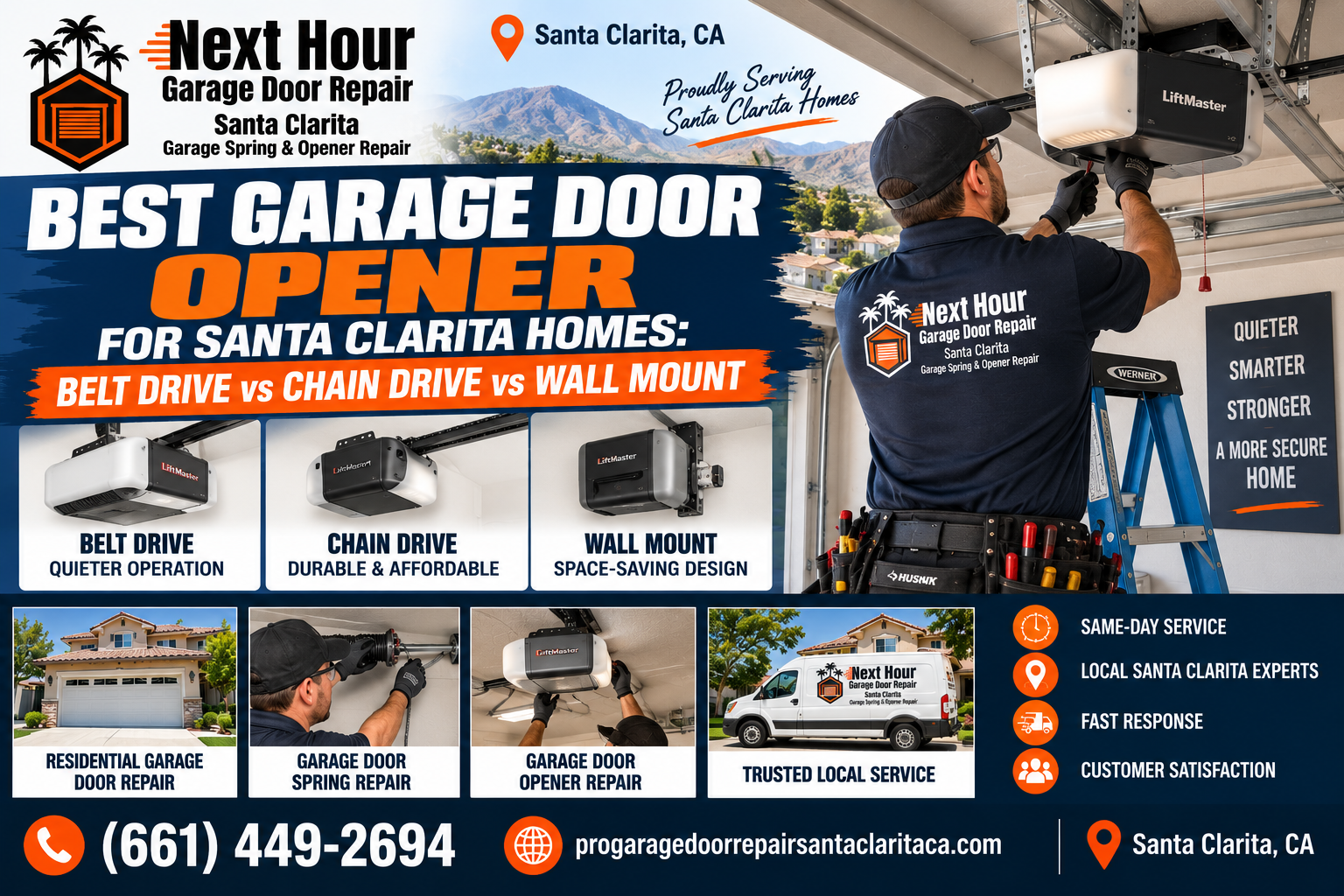
Best Garage Door Opener for Santa Clarita Homes: Belt Drive vs Chain Drive vs Wall Mount
A homeowner comparison of quiet operation, vibration, ceiling space, smart features, battery backup, door compatibility and installation considerations.
Replacing an opener? Before choosing a stronger motor, make sure the garage door is balanced and mechanically sound. Call (661) 449-2694 to ask Next Hour Garage Door Repair Santa Clarita about current opener service availability.
Which garage door opener is best for a Santa Clarita home?
For many attached Santa Clarita homes, a belt-drive opener is the best all-around choice because it runs quieter than a typical chain drive. Chain drive remains a durable, value-focused option where noise matters less. Wall mount is ideal when ceiling space and reduced overhead vibration matter and the door has a compatible torsion setup. The door must be balanced and mechanically sound before any opener is selected.
Choosing the Best Garage Door Opener for a Santa Clarita Home
The best garage door opener for a Santa Clarita home is not the same for every garage. A belt-drive opener is usually the strongest all-around choice when quiet operation matters, especially for attached garages or homes with bedrooms above or beside the garage. A chain-drive opener can be a practical choice when durability and straightforward operation matter more than noise. A wall-mount opener can be an excellent fit when ceiling space, reduced overhead vibration, or storage clearance is a priority and the garage door system is compatible with side-mounted operation.
The opener type matters, but the garage door itself matters just as much. Springs counterbalance the weight of the door. Rollers and tracks guide movement. Cables and drums work with the spring system. The opener should move a door that is already properly balanced and aligned; it should not be used to compensate for a broken spring, binding track, damaged cable, or unusually heavy door.
This guide compares belt drive vs chain drive vs wall mount garage door openers for Santa Clarita homeowners. It covers noise, vibration, ceiling clearance, smart-home features, battery backup, lighting, installation requirements, door compatibility, daily use, maintenance, safety, replacement considerations, and the questions to ask before choosing an opener.
Quick Answer: Belt Drive vs Chain Drive vs Wall Mount
Belt drive: usually best for homeowners who want quieter operation and less vibration, particularly in attached garages. Chain drive: a durable, familiar option when noise is less important and value is a priority. Wall mount: best when you want ceiling space open or reduced ceiling vibration and the door has the required compatible torsion setup and installation clearance. The best choice still depends on the door, garage layout, features, and budget.
Belt Drive vs Chain Drive vs Wall Mount: Side-by-Side Comparison
| Feature | Belt Drive | Chain Drive | Wall Mount |
|---|---|---|---|
| Noise level | Usually quieter | Usually more mechanical noise | Typically very quiet with less ceiling vibration |
| Best garage type | Attached garages, living space near garage | Detached garages, noise less important | Garages needing ceiling clearance or quiet side-mount operation |
| Drive location | Ceiling rail | Ceiling rail | Mounted beside torsion shaft on compatible systems |
| Ceiling storage impact | Rail occupies center overhead area | Rail occupies center overhead area | Frees most center ceiling space |
| Vibration transfer | Lower than many chain systems | Can transmit more vibration | Reduces ceiling-rail vibration because opener mounts at side |
| Maintenance focus | Belt, rail, trolley, door balance | Chain tension/lubrication as specified, rail, trolley, door balance | Torsion-shaft compatibility, side mount, cable tension monitor where applicable |
| Smart features | Widely available | Widely available | Widely available on modern premium models |
| Battery backup | Available on many models | Available on many models | Available on many models |
| Installation complexity | Conventional overhead opener layout | Conventional overhead opener layout | Requires compatible side-of-door/torsion configuration |
This table describes common design differences. Exact features vary by manufacturer and model, so the final choice should be based on the specific opener and garage door system rather than drive type alone.
Belt Drive Garage Door Openers: Best All-Around Choice for Quiet Santa Clarita Homes
A belt-drive opener uses a reinforced belt instead of a metal chain to move the trolley along the rail. The biggest reason homeowners choose belt drive is usually sound. The belt reduces metal-to-metal drive noise, and many belt-drive models are paired with DC motors that start and stop smoothly.
This can matter in Santa Clarita homes with attached garages, bedrooms above the garage, nurseries beside the garage, home offices near the garage wall, or household members who leave early and return late. The door itself still creates some sound from rollers, hinges, springs and panels, but a belt drive can reduce the opener-related portion of the noise.
LiftMaster's official quiet garage door opener guidance specifically highlights belt-drive DC and wall-mount models as solutions designed to reduce noise and vibration. The manufacturer also notes that homes with living space above or adjacent to the garage are common use cases for quieter openers.
A belt drive is not automatically the best choice if the door is mechanically rough. A new quiet opener installed on worn rollers, bent tracks, or poor spring balance can still sound loud. The door should be inspected before opener replacement.
Belt Drive Pros and Cons
Why homeowners choose belt drive
- Quieter operation than many chain-drive systems
- Reduced vibration through ceiling framing
- Smooth starts and stops on many DC-motor models
- Good fit for attached garages
- Smart controls, cameras, LED lighting and battery backup available on many models
- Conventional overhead installation familiar to most technicians
What to consider
- Often costs more than basic chain-drive models
- Still uses an overhead rail that takes up center ceiling space
- Belt and trolley parts must remain compatible with the opener model
- Quiet opener operation does not fix noisy rollers, springs or tracks
Chain Drive Garage Door Openers: Durable and Practical When Noise Is Less Important
A chain-drive opener uses a metal chain to move the trolley. Chain-drive openers have been common for decades because the design is familiar, durable and widely serviceable. For a detached garage or a garage that is not directly below living space, the extra mechanical sound may be less important.
LiftMaster's buyer guidance describes chain-drive openers as using a heavy-duty chain for durable, dependable operation, while belt drives use a steel-reinforced belt for quieter, smoother operation. That distinction is useful because it focuses the decision on household priorities rather than assuming one drive system is universally superior.
Chain-drive noise can come from the chain, sprocket, rail, trolley and vibration transferred into the opener mount. Proper installation and manufacturer-specified maintenance matter. A loose or poorly adjusted chain can create additional rattle, but homeowners should not randomly tighten the drive system beyond model specifications.
For a Santa Clarita detached garage, workshop, rental property or homeowner who places more weight on straightforward value than minimal sound, chain drive can still be a sensible option.
Chain Drive Pros and Cons
Why homeowners choose chain drive
- Long-established, familiar design
- Common replacement parts and service knowledge
- Strong value on many models
- Good fit where opener noise is less important
- Available with modern smart features and battery backup
What to consider
- More mechanical noise and vibration than many belt-drive systems
- Can be more noticeable in rooms above or beside the garage
- Chain and rail condition affect sound
- Still requires a properly balanced garage door
Wall-Mount Garage Door Openers: Best for Ceiling Space and Reduced Overhead Vibration
A wall-mount opener—sometimes called a jackshaft-style opener—mounts beside the garage door and turns the torsion shaft directly on compatible systems. Because there is no long opener rail running through the center of the ceiling, the design can free overhead space for storage, lighting, lifts or a cleaner ceiling layout.
Wall-mount systems are also attractive when noise transfer through ceiling framing is a concern. The motor is positioned beside the door rather than hanging from the center ceiling. LiftMaster's quiet-opener guidance specifically notes reduced noise and vibration from wall-mount design and highlights the ceiling-space benefit.
Compatibility matters more with wall mount than with a conventional belt or chain drive. Many wall-mount openers require a compatible torsion-bar configuration, sufficient side room, correct shaft geometry, and other model-specific conditions. Some systems use cable-tension monitoring or automatic door locks. A technician should confirm the door is a suitable candidate before the homeowner buys the opener.
Wall-Mount Pros and Cons
Why homeowners choose wall mount
- Frees center ceiling space
- Reduces ceiling-rail vibration
- Very quiet operation on many models
- Clean appearance with no center rail
- Useful for garages with storage or ceiling-layout priorities
- Premium smart, lock and battery-backup features available on many models
What to consider
- Not compatible with every door and spring configuration
- Requires adequate side clearance and torsion-shaft conditions
- Can cost more than basic conventional openers
- Installation is more dependent on door geometry and balance
Best Opener for an Attached Garage vs. a Detached Garage
For an attached garage, sound and vibration usually matter more because the garage shares framing with the home. A belt-drive opener is often the easiest recommendation when the homeowner wants a quieter conventional overhead system. A wall-mount opener can be even more appealing when the torsion system is compatible and the homeowner wants to reduce ceiling vibration or reclaim overhead space.
For a detached garage, chain-drive noise may be less noticeable inside the house. That can make chain drive a practical value choice. The homeowner can focus more on reliability, battery backup, smart access, lighting and door compatibility without paying primarily for lower indoor noise.
The previous Next Hour article on noisy garage door causes explains why opener drive type is only one part of total garage noise. Rollers, hinges, tracks, springs and door balance can make a quiet opener sound much louder than expected.
Best Opener if You Have a Bedroom Above or Beside the Garage
When a bedroom, nursery or home office sits above or beside the garage, vibration transmission becomes a bigger factor. Chain-drive vibration can travel through the opener mounting and ceiling framing. Belt drive reduces drive-system noise, and wall mount moves the motor away from the center ceiling altogether.
For this situation, belt drive is usually the simplest all-around fit if the garage has a standard overhead opener layout. Wall mount can be excellent when compatible and when ceiling vibration or storage space matters enough to justify the installation conditions.
Do not judge the opener only by a showroom sound demonstration. The garage door itself should be smooth and balanced. Worn rollers, loose hinges and rough tracks can still transfer noise into the house regardless of opener type.
Best Opener if You Want More Ceiling Storage Space
Wall mount is the clear advantage when overhead clearance is a major goal. Because it does not need a center opener rail extending from the door toward the back of the garage, the middle of the ceiling remains more open.
This can be useful for overhead storage racks, specialty lighting, ceiling fans, lifts, or garages where the center rail interferes with how the homeowner wants to use the space. The door tracks still occupy overhead areas, so wall mount does not make the entire ceiling empty; it removes the opener rail and motor from the center.
A technician should confirm that storage plans will not interfere with tracks, springs, moving door sections, emergency access or required opener components.
Door Weight, Springs and Why the Opener Horsepower Label Is Not the Whole Story
Homeowners often choose an opener based on horsepower or motor strength, but the garage door should not rely on the opener to lift its full dead weight. Springs counterbalance the door. When the spring system is correct, the opener guides and moves a balanced door rather than acting like a winch.
A heavy wood door, insulated steel door or oversized residential door may need a different spring setup and opener model than a lightweight single-car door, but the first question is whether the door is correctly balanced. An oversized motor does not fix a broken or weak spring.
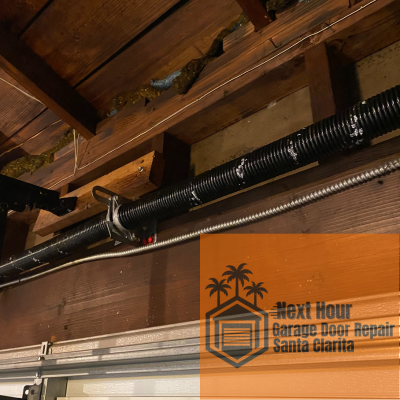
Next Hour's verified Santa Clarita garage door opener failure study explains that opener strain can come from broken springs, worn rollers, cables, tracks and poor balance—not just the opener motor itself.
Smart Garage Door Opener Features Worth Comparing
Drive type is only one part of a modern opener purchase. Many belt, chain and wall-mount openers now offer Wi-Fi, smartphone control, cameras, package-access features, integrated LED lighting, remote alerts, keypad access and battery backup.
Smartphone control can be useful for households that want to confirm whether the garage is open or closed, provide temporary access, or receive activity notifications. Cameras can add visibility, but they do not replace the mechanical safety systems of the door. Integrated lighting can be valuable in darker garages and may reduce the need for a separate fixture near the opener.
Compare features that solve real household needs rather than choosing the model with the longest feature list. A homeowner who mainly wants quiet operation may value a DC belt drive more than a camera. Another homeowner may prioritize battery backup and remote alerts.
Battery Backup: A High-Value Feature for Santa Clarita Homeowners
Battery backup allows compatible garage door openers to operate during a power interruption for a limited number of cycles, depending on the model, battery condition and door balance. That can be especially useful when the garage is the household's primary vehicle entrance.
Battery backup does not make a mechanically damaged door safe to operate. If the spring is broken, a cable is loose or the door is off track, using battery power to force the opener can create the same damage as operating on household power.
When comparing models, ask whether battery backup is included, optional or unsupported, how the system alerts you when the battery needs replacement, and what maintenance the manufacturer recommends.
Not Sure Which Drive Type Fits Your Garage?
The answer depends on attached vs detached construction, ceiling space, door balance, torsion configuration, desired noise level and smart features—not just horsepower.
Safety Sensors, Reversal and Why Opener Safety Features Matter
Automatic residential garage door openers are safety-regulated products. The U.S. Consumer Product Safety Commission states that automatic residential garage door operators are subject to the federal safety standard in 16 CFR Part 1211. Modern systems use entrapment-protection features such as photo-eye sensors and reversal behavior.
See the CPSC's official automatic residential garage door operator guidance for the federal standard context. Homeowners should not bypass photo-eye sensors or defeat reversal systems to make a new opener work with a mechanically problematic door.
After installation, sensors should be aligned, travel should be set correctly, and safety functions should be tested according to the opener manufacturer's instructions.
What a Technician Should Check Before Recommending a New Opener
Before selecting the opener, the technician should inspect the door itself. That includes spring balance, cables and drums, rollers, tracks, hinges, panels, top-section reinforcement, opener attachment, travel path and the available ceiling or side clearance.
A belt or chain drive needs a suitable overhead rail path and proper mounting structure. A wall mount needs compatible torsion-shaft geometry and side clearance. Smart features may need reliable Wi-Fi coverage in the garage. Integrated cameras and lighting can also influence mounting and power considerations.
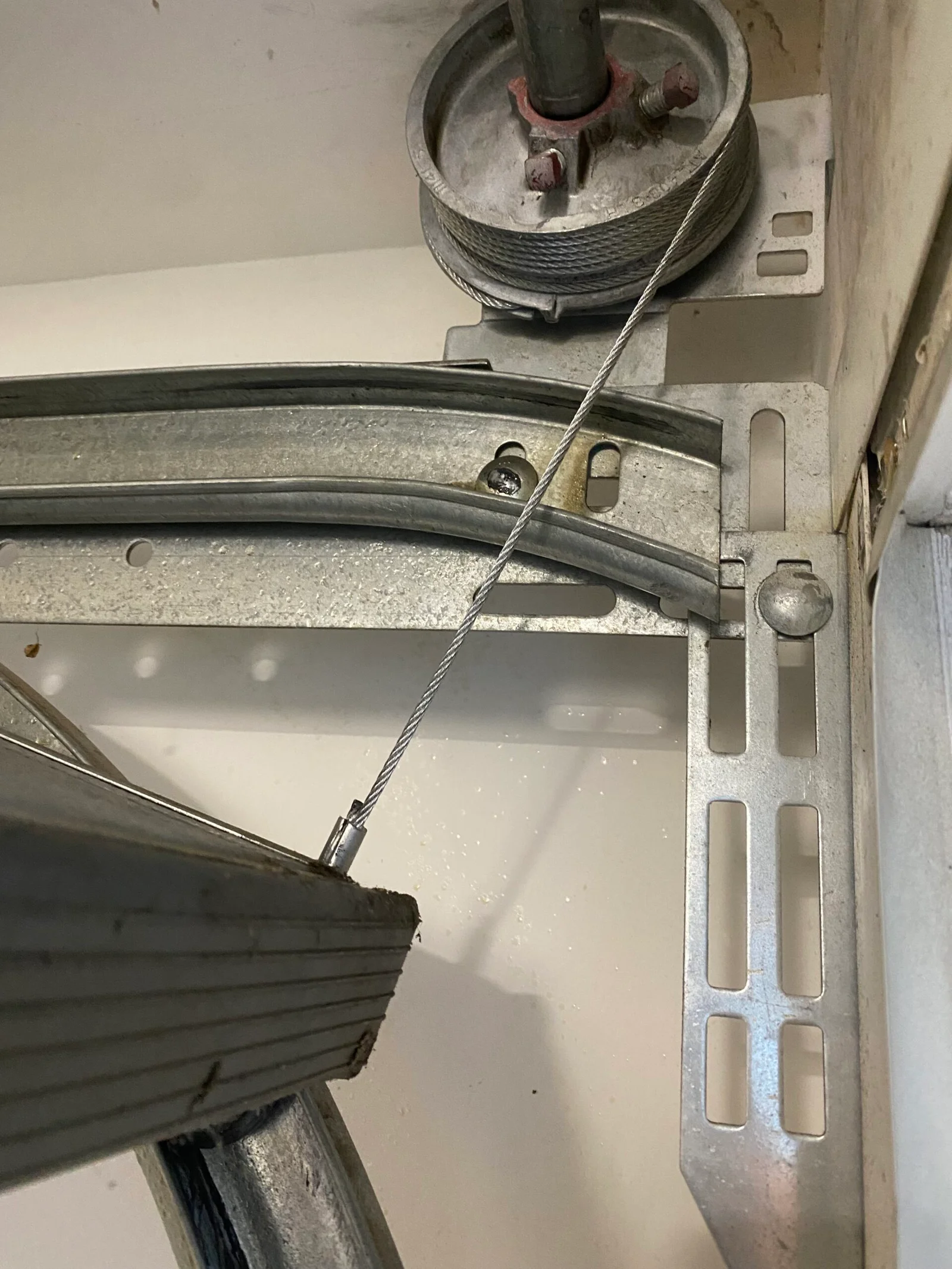
A new opener should not be the first repair when the door is crooked, binding or off track. Fix the mechanical system first, then select the opener based on the restored door.
What Proper Garage Door Opener Installation Should Accomplish
Proper installation should align the opener rail or wall-mount drive with the door system, secure the motor unit or wall bracket, connect the door without forcing the top section, set travel correctly and verify that the door opens and closes smoothly.
For conventional overhead openers, the rail should be positioned according to manufacturer instructions. The opener arm should not distort the top section. Reinforcement may be needed depending on the door construction and opener attachment. For wall-mount systems, side clearance, shaft compatibility and related accessories must be correct.
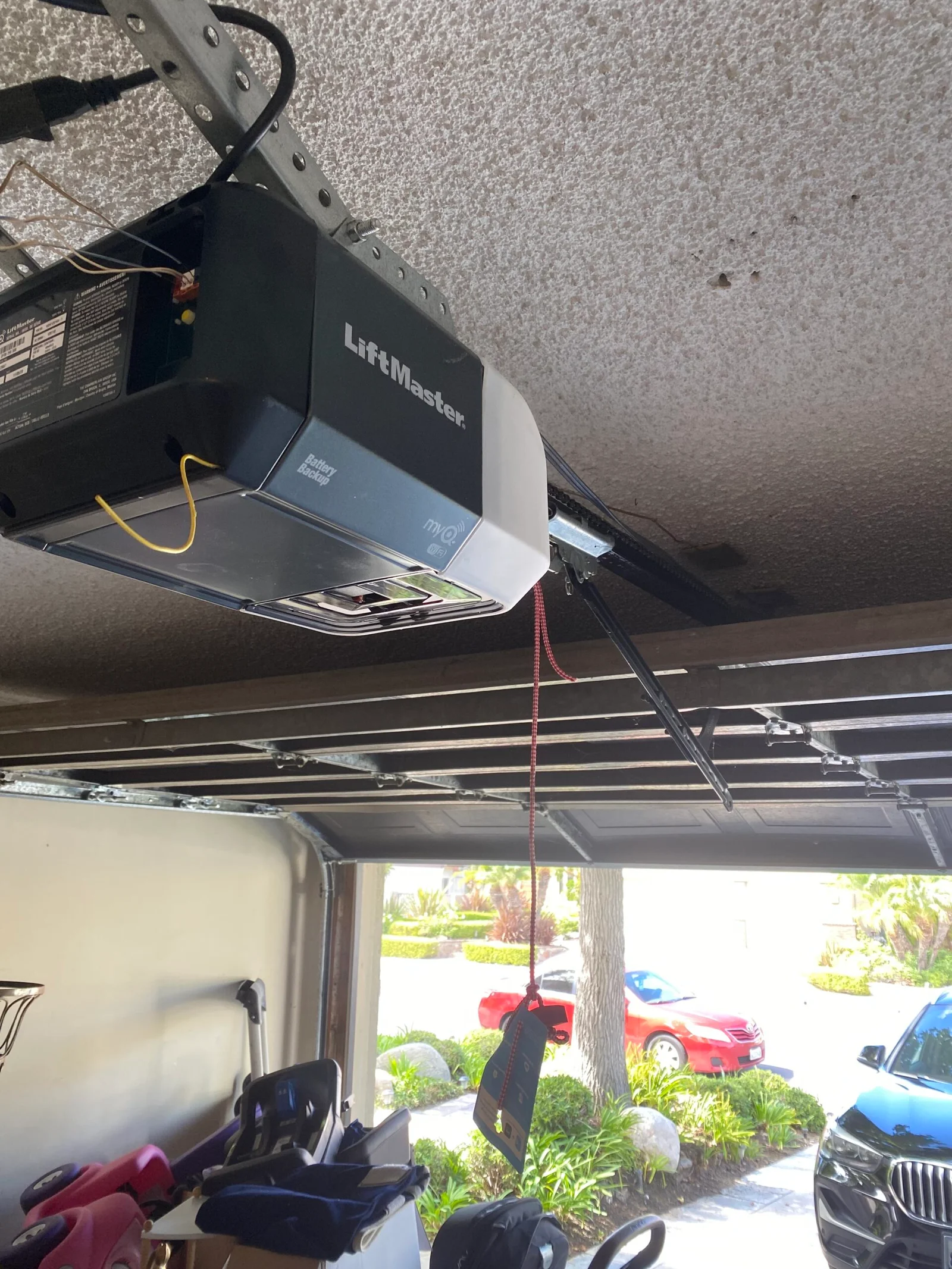
Installation should finish with a full operating test rather than a single open-close cycle.
Garage Door Opener Decision Scorecard
| Your priority | Belt drive | Chain drive | Wall mount |
|---|---|---|---|
| Lowest practical noise | Excellent | Fair to good depending on model | Excellent |
| Simple conventional replacement | Excellent | Excellent | Depends on compatibility |
| Ceiling storage clearance | Fair | Fair | Excellent |
| Value-focused purchase | Good | Often very good | Usually premium |
| Attached garage comfort | Excellent | Good if noise acceptable | Excellent |
| Detached garage | Excellent | Excellent | Good if layout benefits matter |
| Premium smart features | Widely available | Widely available | Widely available |
| Battery backup availability | Common on many models | Common on many models | Common on many models |
Use this as a prioritization tool rather than a universal ranking. The actual opener should match the door, manufacturer requirements and household needs.
Do You Need a New Opener if Your Current Garage Door Is Noisy?
Not necessarily. Noise can come from rollers, hinges, tracks, panels, springs or the opener itself. Replacing a chain drive with a belt drive can reduce opener noise, but it will not eliminate grinding from a worn roller or scraping from a bent track.
If the current opener is functional but the entire door system is noisy, diagnose the mechanical door first. If the opener itself is the main noise source and the homeowner values quieter operation, belt drive or wall mount may be a meaningful upgrade.
This is where the comparison becomes practical: choose a quieter opener for opener-related noise, but do not use opener replacement as a substitute for garage door repair.
Repair the Existing Opener or Replace It With a New Drive Type?
Opener repair can make sense when the current unit is otherwise suitable and the problem is limited to an available component such as a remote, sensor, gear, logic board or control issue. Replacement becomes more attractive when the homeowner wants quieter operation, battery backup, smart control, cameras, improved lighting, ceiling clearance or features the existing opener cannot support.
Parts availability also matters. A repair on an older opener may be reasonable when parts are readily available and safety systems are functioning correctly. Replacement may be more practical when several opener components are failing at once or the homeowner wants a significant technology upgrade.
The recommendation should explain why repair is or is not practical rather than using age alone as the deciding factor.
Which Opener Type Fits Different Santa Clarita Households?
| Household / garage situation | Best starting choice | Why |
|---|---|---|
| Bedroom above attached garage | Belt drive or wall mount | Lower noise and vibration |
| Detached garage | Chain drive or belt drive | Noise inside home may matter less |
| Need ceiling storage | Wall mount | Frees center ceiling rail area |
| Want simple quiet upgrade | Belt drive | Quiet conventional overhead layout |
| Budget-focused replacement | Compare chain and belt models | Feature and price differences vary by model |
| High-use household | Quality DC belt or compatible wall mount | Smooth operation and premium feature availability |
| Existing torsion setup with suitable side room | Wall mount worth considering | Compatible layout can support side-mounted design |
| Door is heavy or difficult to move | Diagnose door first | Spring or mechanical repair may be needed before any opener choice |
Should You Choose LiftMaster, Chamberlain, Genie, or Another Opener Brand?
Brand matters for parts availability, dealer support, smart-home ecosystem, warranty terms, accessories and model selection, but drive type and installation fit still matter more than the logo alone. LiftMaster, Chamberlain, Genie and other established manufacturers offer different combinations of belt, chain, wall-mount, DC motor, battery backup and connected features.
This guide does not claim one manufacturer is universally best. Compare the exact model, drive type, motor technology, safety features, battery backup, lighting, smart controls, available service support and compatibility with your door.
When a technician recommends a model, ask for the exact model number and feature list so you can compare like-for-like options.
What Affects Garage Door Opener Installation Cost in Santa Clarita?
Garage door opener installation cost varies by opener type, model, included accessories, door configuration, mounting requirements, electrical setup, battery backup, smart features, cameras, lighting, removal of the old opener and whether mechanical door repairs are needed first.
A basic chain-drive replacement can have a different scope from a premium wall-mount system with battery backup, smart lock, camera and accessory setup. A belt-drive replacement can also vary significantly depending on motor, rail length and included features.
This article does not publish fixed Next Hour pricing or promise free estimates or no service fees. Ask what the opener, installation labor, accessories, old-opener removal, programming and final safety testing include before approving the job.
Maintenance Differences Between Belt, Chain and Wall-Mount Openers
Every opener needs some maintenance, but the focus differs by design. Chain-drive systems may require chain-related inspection or lubrication according to manufacturer instructions. Belt-drive systems use a reinforced belt and still require rail, trolley, mounting and general opener inspection. Wall-mount systems depend heavily on correct shaft connection, door balance and side-mounted components.
All three types rely on the garage door itself being maintained. Worn rollers, loose hinges, poor spring balance and track resistance create opener strain regardless of drive type.
Follow the exact manufacturer's maintenance instructions for the model rather than applying a generic routine to every opener.
Santa Clarita Conditions to Consider When Choosing an Opener
Santa Clarita homeowners often use the garage as a primary vehicle entrance, so reliability, battery backup and daily-cycle comfort can matter. Warm garage temperatures can make integrated electronics, batteries and motor ventilation worth considering, although heat alone does not make one drive type automatically better.
Attached garages can make noise transfer more noticeable. Dust can collect around sensors and tracks. Newer smart-home households may place more value on remote alerts, cameras and app control. HOA homes may have architectural rules for exterior door appearance, although the opener itself is generally inside the garage.
For Valencia, Canyon Country, Saugus, Newhall, Stevenson Ranch, Castaic and Hasley Canyon, the best opener still depends on the individual garage layout and door system rather than the neighborhood name.
15 Questions to Ask Before Choosing a Garage Door Opener
- Is my garage attached to living space?
- How important is quiet operation?
- Do I need to free up center ceiling space?
- Is my door compatible with a wall-mount opener?
- Is the spring system correctly balancing the door?
- Are rollers, tracks and cables in good condition?
- Does the opener include battery backup?
- Does it include Wi-Fi or smart-home control?
- Does it include integrated lighting or a camera?
- What exact model number are you recommending?
- What is included in installation?
- Will the old opener be removed?
- Will remotes and keypads be programmed?
- Will travel, sensors and reversal be tested after installation?
- What written warranty terms apply to the opener and installation?
California homeowners can use the official CSLB Check a License tool when contractor verification is relevant. CSLB also defines the D-28 Doors, Gates and Activating Devices classification. This article does not claim a specific Next Hour license number.
Why Consider Next Hour Garage Door Repair Santa Clarita for Opener Selection?
Next Hour Garage Door Repair Santa Clarita | Garage Spring & Opener Repair is a local option for homeowners comparing opener replacement and installation choices. A useful recommendation should begin with the garage door itself, then match the opener type to noise goals, garage layout, ceiling space, features and compatibility.
The company should not recommend a stronger opener merely because the door is heavy. A heavy or rough-moving door may need spring, roller, cable or track repair first. Once the door is balanced and aligned, the homeowner can compare belt drive, chain drive and wall mount on their actual benefits.
For current service availability, call (661) 449-2694, review the Santa Clarita garage door opener failure study, or view Next Hour Garage Door Repair Santa Clarita on Google Maps.
Santa Clarita Valley Service-Area Context
The dominant geographic entity for this guide is Santa Clarita, California, with the 91387 local context and the broader Santa Clarita Valley. Supporting service-area communities may include Valencia, Canyon Country, Saugus, Newhall, Stevenson Ranch, Castaic and Hasley Canyon when current scheduling allows.
These are service-area references only. They do not imply separate public storefronts in each community. When calling about opener replacement, describe whether the garage is attached or detached, whether living space is above it, whether ceiling storage matters, and what features you want from the new opener.
Frequently Asked Questions About Garage Door Openers in Santa Clarita
What is the best garage door opener for a Santa Clarita home?
For many attached Santa Clarita homes, a belt-drive opener is the best all-around choice because it provides quieter operation with a conventional overhead layout. Wall mount is excellent when ceiling space and low vibration matter and the door is compatible. Chain drive remains a practical value choice when noise is less important.
Is belt drive better than chain drive for an attached garage?
Usually, yes, when noise and vibration matter. Belt drive typically runs more quietly than chain drive, which can be helpful when bedrooms or living space are above or beside the garage.
Is a chain-drive garage door opener still a good choice?
Yes. Chain drive is durable, widely used and can offer strong value. It is especially reasonable for detached garages or households where opener noise is not a major concern.
What is the advantage of a wall-mount garage door opener?
A wall-mount opener frees center ceiling space and can reduce ceiling-transmitted vibration. It can be ideal for storage-focused garages or quiet-home goals, but the door must have a compatible torsion setup and installation clearance.
Can every garage door use a wall-mount opener?
No. Wall-mount compatibility depends on the torsion shaft, spring configuration, side clearance, door geometry and model-specific requirements. A technician should confirm compatibility before purchase.
Do I need a stronger opener for a heavy garage door?
Not as a substitute for proper spring balance. The spring system should counterbalance the door first. A heavy or difficult door may need spring or mechanical repair before opener sizing is considered.
Which garage door opener is the quietest?
Belt-drive DC and wall-mount openers are usually among the quietest common residential choices. Actual sound also depends on rollers, hinges, tracks, door balance and installation quality.
Should I choose an opener with battery backup?
Battery backup is a valuable feature when the garage is a primary vehicle entrance or power interruptions are a concern. It allows limited operation during an outage, but it should not be used to force a mechanically damaged door.
How much does garage door opener installation cost in Santa Clarita?
Cost varies by drive type, opener model, smart features, battery backup, rail or wall-mount requirements, accessories, removal of the old opener and whether the garage door needs mechanical repair first.
Should I repair my current opener or replace it?
Repair can make sense when the current opener is otherwise suitable and the failed part is available. Replacement becomes more attractive when you want quieter operation, battery backup, smart features, ceiling clearance or when multiple opener components are failing.
Need Help Choosing a Garage Door Opener for Your Santa Clarita Home?
If you are deciding between belt drive, chain drive and wall mount, start with the garage itself: attached or detached, living space nearby, ceiling-storage needs, door balance, torsion configuration, daily use and the smart features you actually want.
Ask About Current Garage Door Opener Service Availability
Call Next Hour Garage Door Repair Santa Clarita | Garage Spring & Opener Repair at (661) 449-2694. Describe the existing opener, garage layout and the features you want so the comparison can focus on compatible options.
Real-World Opener Selection Scenarios for Santa Clarita Homes
Scenario 1: Attached two-car garage with a bedroom above
Start with belt drive or a compatible wall-mount opener. The priority is reducing vibration and mechanical drive noise. If the garage has standard ceiling clearance and the homeowner wants a straightforward replacement, belt drive is usually the simplest answer. If the homeowner also wants overhead storage space and the torsion system is compatible, wall mount deserves consideration.
Scenario 2: Detached garage where noise barely matters
Chain drive can be an excellent value. The homeowner can compare chain and belt models based on battery backup, lighting, Wi-Fi and long-term serviceability rather than paying mainly for lower indoor noise.
Scenario 3: Garage with extensive ceiling storage plans
Wall mount has the strongest layout advantage because it removes the center opener rail. The technician still needs to confirm side clearance, torsion-shaft compatibility and safe door travel around the planned storage.
Scenario 4: Existing opener strains to lift the door
Do not begin by buying a more powerful opener. First inspect the springs, door balance, rollers, cables and tracks. If the door is mechanically heavy, the repair belongs in the door system before opener replacement.
Scenario 5: Homeowner wants the quietest conventional opener
A quality belt-drive DC opener is the strongest starting point. It keeps the familiar ceiling-mounted layout while reducing drive noise and vibration compared with many chain systems.
Scenario 6: Homeowner wants modern access control
Compare models based on Wi-Fi, app features, camera, keypad options, remote alerts, battery backup and integrated lighting. Those features are available across multiple drive types, so the drive system can still be selected around noise and garage layout.
5 Responses