
7 Signs Your Garage Door Needs Repair Before It Stops Working
A prevention-first homeowner guide to noise, rough movement, heavy doors, crooked travel, opener strain, sensor trouble and visible hardware wear.
Noticing a new noise, slow movement or crooked travel? If the door is heavy, off track, has a loose cable or appears unstable, stop operating it. Call (661) 449-2694 to ask Next Hour Garage Door Repair Santa Clarita about current service availability.
What are the signs your garage door needs repair before it stops working?
Watch for new grinding or popping noises, slower or jerky movement, a door that feels heavy, crooked travel, opener strain, closing or sensor problems, and visible wear such as frayed cables, damaged rollers or bent tracks. If any warning sign involves instability, stop using the door and have the system inspected before the failure becomes more serious.
Garage Doors Usually Give Warning Signs Before They Stop Working
Most residential garage doors do not go from completely normal operation to total failure without showing some kind of warning first. The warning may be subtle: a new squeak, a slight hesitation, one side of the door moving a little faster, a remote that works intermittently, or a roller that begins making noise in the curved track. Other signs are harder to ignore, such as a door that feels unusually heavy, hangs crooked, reverses unexpectedly, or shows a frayed lift cable.
For Santa Clarita homeowners, recognizing those changes early can help prevent a small problem from becoming a stuck vehicle, an off-track door, a damaged opener, or a door that cannot be secured. The purpose of this guide is not to make every sound seem urgent. Garage doors contain many moving parts and some ordinary operating noise is normal. The goal is to identify changes in movement, balance, alignment, safety systems and visible hardware that suggest the system should be inspected before normal operation becomes unreliable.
The seven signs below focus on the components that most often affect residential garage door performance: springs, cables, drums, tracks, rollers, hinges, panels, opener components and safety sensors. Some symptoms overlap. A slow door can come from an opener problem, but it can also come from a binding roller or poor spring balance. A crooked door may involve cables, tracks, rollers or structural damage. That is why the best repair starts with diagnosis rather than replacing the first part that looks suspicious.
Quick Answer: What Are the Main Signs a Garage Door Needs Repair?
The biggest warning signs are new grinding or popping noises, slow or jerky movement, a door that feels heavy or loses balance, crooked or uneven travel, an opener that strains or stops, a door that will not close or reverses unexpectedly, and visible wear such as frayed cables, damaged rollers, bent tracks or broken spring components. Any sign combined with instability should be inspected before continued use.
7 Early Garage Door Repair Warning Signs at a Glance
| Warning sign | What it may involve | Why it matters |
|---|---|---|
| 1. New or worsening noise | Rollers, hinges, tracks, springs, opener, loose hardware | Friction or wear may be developing before a part fails |
| 2. Slow, jerky or hesitant movement | Rollers, tracks, spring balance, opener drive | Extra resistance can increase strain throughout the system |
| 3. Door feels heavy or will not stay balanced | Springs, cables, drums, counterbalance system | The opener may be carrying load it was not designed to carry |
| 4. Door moves crooked or sits unevenly | Cables, drums, rollers, tracks, hinges, panels | Uneven movement can lead to off-track or structural damage |
| 5. Opener strains, hums or stops | Opener motor/drive, door resistance, spring balance | The opener may be failing or reacting to a mechanical door problem |
| 6. Closing or safety-sensor problems | Photo eyes, alignment, wiring, travel, obstruction | A door that will not close or reverses may have a safety or mechanical issue |
| 7. Visible wear or damage | Cables, rollers, tracks, hinges, panels, springs | Visible deterioration can become a sudden mechanical failure |
These signs do not automatically identify one failed part. They tell you that the system is changing and should be evaluated before the door becomes unreliable or unsafe.
Sign 1: Your Garage Door Has Started Making New or Louder Noises
A garage door that suddenly becomes louder is often one of the earliest repair warnings. Squeaking can come from dry hinges or rollers. Grinding may indicate a roller bearing, track contact or opener drive problem. Popping can come from hinge movement, panel flex or spring-related tension. Rattling can involve loose brackets, hinges or opener mounting. Scraping is especially important because it can indicate that the door is rubbing a track or beginning to move out of alignment.
Do not judge the problem only by volume. The timing and location of the noise are more useful. A sound that occurs at the same height every cycle may point toward one roller, hinge or section of track. Noise from above the door can involve the torsion spring or bearing system. Noise from the ceiling-mounted motor unit can involve the opener rather than the door itself.
If the door remains level and smooth, a mild squeak may be maintenance-related. If noise is accompanied by jerking, slow movement, crooked travel or a visible loose cable, stop treating it as a simple lubrication issue. Continued operation can increase wear on the tracks, rollers, opener and door sections.
For a deeper sound-by-sound breakdown, the existing noisy garage door causes guide explains squeaking, grinding, popping, rattling, opener vibration and other common sound patterns.
Sign 2: The Door Is Moving Slower, Jerking or Hesitating
Garage doors should move in a controlled, repeatable way. A door that begins hesitating, moving in short jerks, slowing at one point or shuddering through the curved track is telling you that resistance has changed somewhere in the system. The cause can be mechanical, electrical or a combination of both.
Worn rollers can bind instead of rolling smoothly. A bent track can narrow the path. Loose hinges can change roller alignment. A spring system that is no longer balancing the door correctly can make the opener work harder. Inside the opener, worn drive components can create uneven movement even when the door itself is mechanically sound.
Pay attention to whether the hesitation occurs at the same place every time. A repeated slowdown at one track location points toward a mechanical issue. Random hesitation or intermittent starting can be more consistent with an opener control or drive problem. If the whole door is slow from the beginning and the motor sounds strained, door resistance and spring balance should be checked before assuming the opener needs replacement.
Do not increase opener force to push through a rough spot. Extra force can hide the warning while increasing stress on the door. The proper repair is to identify what changed in the movement path.
Why Roller and Track Changes Often Show Up Before a Bigger Failure
Rollers and tracks are a good example of why small symptoms deserve attention. A worn roller may begin with a light clicking sound. As the bearing deteriorates, the wheel can wobble. That changes how the roller travels through the track. The wobble can turn into grinding, then binding, and eventually an off-track condition if the problem becomes severe enough.
Similarly, a track bracket that loosens slightly may create extra vibration before the track visibly shifts. A track dent can create a small repeated bump that becomes more pronounced as the roller wears. These are developing mechanical problems rather than sudden surprises.
Next Hour's verified garage door roller replacement resource is relevant when a roller becomes noisy, wobbles, grinds or stops moving smoothly. A roller recommendation should still include inspection of the hinge and track that support it.
Sign 3: The Garage Door Feels Unusually Heavy or Will Not Stay Properly Balanced
Springs counterbalance garage door weight. They are not optional accessories to the opener; they are a core part of how the door can be moved safely and efficiently. When the spring system is correct, the opener moves a balanced door. When a spring breaks or loses effective counterbalance, the door can feel much heavier and the opener may strain, stop or lift only a short distance.
Homeowners should not perform a high-tension balance adjustment. A change in apparent weight is a reason to have the spring system inspected, not a reason to wind a torsion spring or tighten a cable drum.
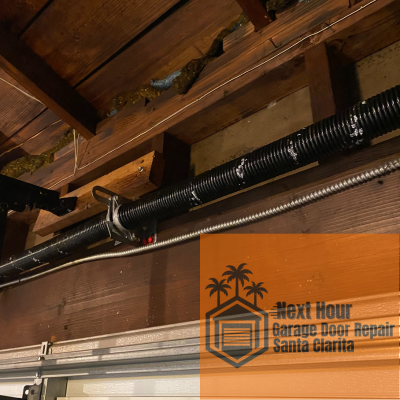
A loud bang followed by a heavy door is a classic spring-failure pattern. Another sign can be a visible separation or gap in a torsion spring. A door that closes much faster than before or seems difficult to control can also indicate counterbalance trouble.
DASMA's garage door safety guidance warns consumers that springs and related high-tension hardware should be handled by trained door-system technicians. If the door suddenly becomes heavy, stop repeatedly operating the opener until the counterbalance system is checked.
Sign 4: The Door Is Crooked, Uneven or No Longer Sits Square in the Opening
A garage door that starts moving crooked is one of the clearest signs that repair is needed before the door stops working. When both sides of a sectional door lift correctly, the door should remain reasonably level. If one side rises ahead of the other, the problem can involve a cable that lost tension, a cable that came off the drum, a damaged roller, track resistance, hinge damage or a structural problem in the door sections.
Uneven movement matters because garage doors are designed to travel squarely through two tracks. When one side gets ahead, rollers can approach the track at the wrong angle. Hinges can twist. Panels can rack. A cable can become tighter on one side and looser on the other. The opener may continue pulling on the high side, making the misalignment worse.
Visible gaps at the floor can also be useful clues. If one bottom corner touches the floor while the other remains elevated, the door may not be level. If the track itself looks bent or shifted, stop operating the door rather than forcing it through the tight area.
A crooked or unstable door should not be manually wrestled back into position. Our off-track garage door repair page explains how cables, rollers, tracks and spring tension can overlap when a door begins to derail.
Frayed, Loose or Hanging Cables Are a Serious Early Warning
Lift cables work with the spring system and cable drums to control the left and right sides of many residential garage doors. A cable that begins fraying may continue working temporarily, but visible broken wire strands mean the cable is deteriorating. A cable that becomes loose can indicate lost tension, a spring problem, a drum problem or uneven door movement.
Do not pull on a loose cable or attempt to wind it back onto the drum. The cable may look slack while other parts of the system remain under spring tension. Bottom fixtures, drums and spring hardware can store significant mechanical energy.
If one cable is visibly different from the other, note whether the door is also crooked. That combination is more important than either symptom alone and should be inspected before continued opener use.
Sign 5: The Garage Door Opener Is Straining, Humming, Clicking or Stopping
A garage door opener can give warning before it fails completely, but opener symptoms need to be interpreted carefully. A motor that hums while the door barely moves may have an internal drive problem, but it can also be trying to move a door that is too heavy because the spring system has failed. An opener that stops at the same point can be reacting to track resistance. An opener that clicks but does not run can involve a logic board, control, motor or power issue.
That is why the mechanical door should be evaluated before an opener is condemned. If the springs, cables, tracks and rollers are not moving correctly, replacing the opener can leave the real problem untouched.
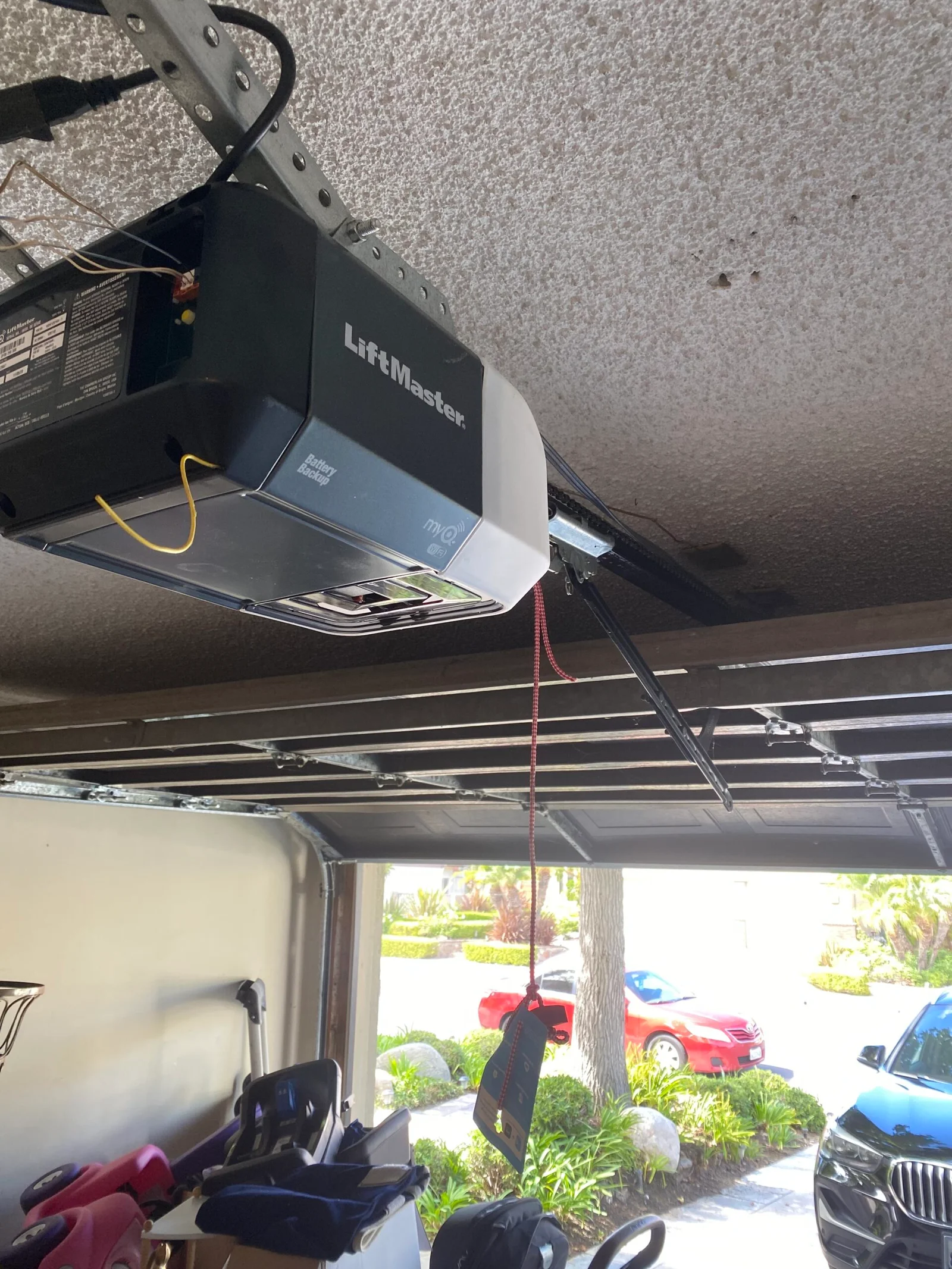
Common opener warning patterns include slower movement, repeated stopping, unusual grinding from the motor unit, intermittent wall-control or remote response, the trolley moving without lifting the door, or the opener reversing when the door encounters resistance.
Next Hour's Santa Clarita garage door opener failure study is a useful internal reference because it separates opener symptoms from spring, cable, track and balance problems.
If the Warning Signs Are Worse in Hot Weather, Track the Pattern
Santa Clarita homeowners sometimes notice noise, opener strain or roller friction more strongly during hotter parts of the day. Heat can change lubricant behavior, increase the operating temperature of opener electronics and make marginal clearances more noticeable. But hot weather should not be used as a blanket explanation for a heavy door, broken spring or failing roller.
If symptoms appear mainly in the afternoon, record that timing. A technician can use the pattern as diagnostic information. Our previous guide on how Santa Clarita heat affects garage door parts explains where temperature can matter and where a mechanical failure is more likely.
The practical rule is simple: heat can expose weakness, but the repair should still match the actual worn or failed component.
Sign 6: The Door Will Not Close Reliably or Reverses Unexpectedly
A garage door that opens normally but refuses to close can have a safety-sensor issue, track resistance, travel-setting problem, obstruction or another mechanical condition. Modern automatic residential garage door operators use entrapment-protection systems such as photo-eye sensors and reversal behavior. Those systems should not be bypassed just because they are inconvenient.
Start with safe observations. Make sure nothing is blocking the door path. Look at both photo-eye sensors near the floor and note whether their indicator lights are normal for the opener model. Check whether one sensor was bumped, twisted or covered with dust. Direct sun can also complicate some sensor installations, but a repeated problem still deserves proper adjustment or diagnosis rather than permanent disabling.
If the door starts down and reverses at the same physical location, look for track or roller resistance. If it reaches the floor and then reverses, the cause may involve travel settings, floor contact or another model-specific adjustment. If the door closes only while a wall button is held, that can point toward a sensor or safety-circuit issue depending on the opener.
The U.S. Consumer Product Safety Commission explains that automatic residential garage door operators are covered by the federal safety standard in 16 CFR Part 1211. See the official CPSC garage door operator safety guidance. Safety features should be repaired, not defeated.
Sign 7: You Can See Wear, Damage or Deterioration Before the Door Fails
Visible wear is one of the easiest repair signs to act on because you do not need to interpret a complicated sound or control problem. Frayed cable strands, a roller wheel that is cracked or wobbling, a track that is visibly bent, a hinge that is pulling away from the panel, a spring with a visible gap, or a door section that is cracking around hardware are all reasons to stop treating the system as normal.
Surface dust or minor cosmetic marks are not the same as structural wear. The key question is whether the part is changing how the door moves, carries load or stays aligned.
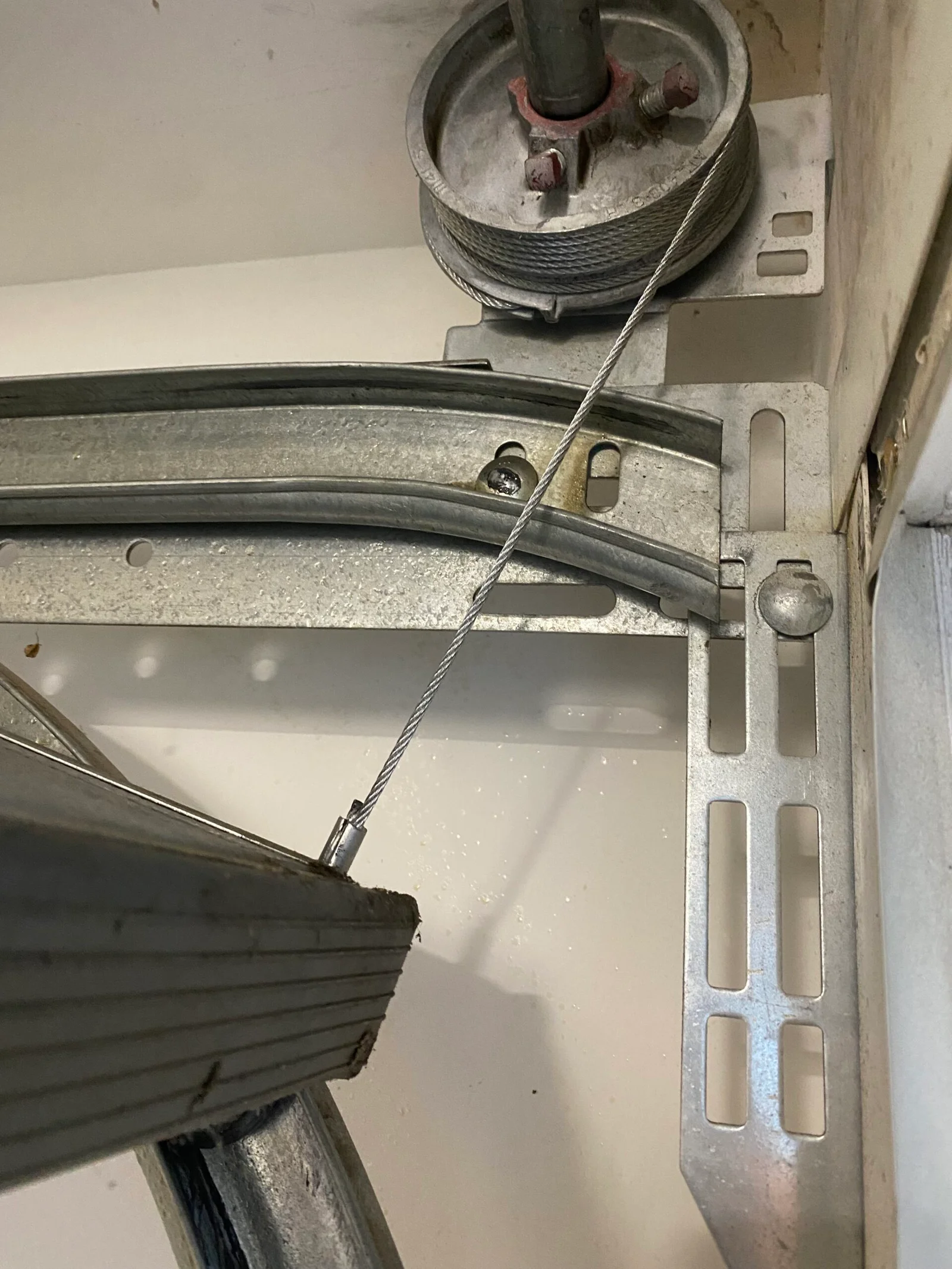
Inspect only from a safe position. Do not remove a roller, loosen a bottom bracket, adjust a cable drum or touch spring hardware in order to “see how bad it is.” A visual warning is enough reason to arrange inspection.
When several visible signs appear together—such as a frayed cable, crooked door and damaged roller—the system should be evaluated as a whole rather than repairing one part in isolation.
Why Repairing Warning Signs Early Can Prevent Secondary Damage
Garage door parts interact. That is why a small developing problem can create secondary damage if the door is operated long enough. A worn roller increases resistance in the track. The opener then has to pull harder. Extra force can stress the top section and rail. A cable that loses tension can make the door crooked. Crooked movement can push rollers against track edges. A broken spring can make the door heavy enough to strain the opener.
Early repair does not mean replacing every part “just in case.” It means correcting the component that is measurably worn, damaged or misadjusted before it changes the load on the rest of the system. Good diagnosis protects against both under-repair and unnecessary parts replacement.
This is also the reason maintenance inspections can be useful for high-use garages. A technician can identify cable wear, roller condition, track alignment and door balance before the symptom becomes a complete operating failure.
Warning Sign or Complete Failure?
If the door is still operating but has changed in sound, speed, balance or alignment, that is the time to diagnose it—before repeated cycles create secondary damage.
Safe Homeowner Checks Before Calling for Garage Door Repair
- Listen for changes. New noise is more useful than comparing your door to someone else's garage door.
- Watch whether the door stays level. A crooked door is a mechanical warning.
- Note where hesitation occurs. Repeated trouble at the same height can point toward a roller or track issue.
- Look at visible spring condition from a distance. Do not touch spring or winding hardware.
- Inspect cables visually. Look for fraying or unusual slack without pulling on the cable.
- Observe roller condition. Wobbling, grinding or a roller outside the track needs repair.
- Check the opener's indicator lights or display. Use the model manual for error codes.
- Keep the sensor path clear. Clean lenses gently and do not bypass the sensors.
- Check for visible panel or hinge damage. Look for cracks, bending or torn attachment areas.
- Stop testing if the door becomes heavy, crooked, off track or unstable. Repeated cycling can make the damage worse.
These checks are designed to gather information without disturbing high-tension parts. They help you describe the symptom accurately when requesting service.
What Homeowners Should Not Adjust When Warning Signs Appear
- Do not wind or unwind torsion springs.
- Do not remove spring brackets or winding cones.
- Do not adjust cable drums.
- Do not reconnect lift cables under tension.
- Do not loosen bottom brackets attached to cables.
- Do not force a badly crooked or off-track door.
- Do not increase opener force to compensate for a heavy or binding door.
- Do not bypass photo-eye sensors or reversal systems.
- Do not stand beneath a door that is partly open and unstable.
- Do not keep operating a visibly damaged door to “see if it clears itself.”
These restrictions are important because a garage door can store significant energy in the spring-and-cable system and can weigh far more than it feels when properly counterbalanced.
Which of the 7 Warning Signs Should You Prioritize First?
Not all warning signs carry the same immediate risk. Visible spring failure, loose cables, crooked movement and an off-track roller deserve higher priority because the door may be mechanically unstable. A door that is stuck open also creates a security issue. Those symptoms should take precedence over mild squeaking on an otherwise smooth, level door.
Opener strain becomes higher priority when it occurs with a heavy door because the motor may be trying to compensate for lost counterbalance. Sensor problems are also important because they affect safe closing. A door that will not close because the photo eyes are interrupted is different from a door that reverses because it is hitting track resistance, but both deserve diagnosis.
The lowest-priority signs are typically mild, isolated maintenance symptoms with no movement change—such as a small squeak from a healthy hinge. Even then, monitor the sound. If it becomes louder or is joined by vibration, wobble or rough travel, the priority changes.
Warning Sign Diagnostic Matrix: What the Pattern May Suggest
| Symptom pattern | Possible areas to inspect | Why diagnosis matters |
|---|---|---|
| Grinding only at one track location | Roller, hinge, track | Could be local friction rather than opener failure |
| Door heavy from the start | Spring system, cables, balance | Opener may be reacting to lost counterbalance |
| One side rises faster | Cable, drum, roller, track | Uneven lift can progress to off-track damage |
| Opener hums but door barely moves | Door balance, spring, opener drive | Motor strain can be mechanical or electrical |
| Door starts closing then reverses | Sensors, track resistance, travel | Safety and mechanical causes overlap |
| Rattle plus visible loose hinge | Hinge, panel, roller alignment | Loose hardware can change roller position |
| Loose cable plus crooked door | Cable/drum, spring, balance | High-priority alignment and tension issue |
| New squeak but smooth level travel | Roller, hinge, lubrication | May be maintenance-related if no other symptom exists |
Maintenance Can Catch Repair Signs Before a Breakdown
Preventive maintenance is most useful when it is specific. The purpose is not to promise that a spring will never break or an opener will never fail. Components wear and electronics age. The value is in identifying developing wear before a part creates a larger operating problem.
A maintenance review can include visible spring condition, door balance, cable wear, drum alignment, roller movement, hinges, track condition, opener travel and safety functions. Homeowner maintenance can focus on observation, keeping the door path clear and following manufacturer guidance for lubrication and sensor care.
Next Hour's garage door tune-up and inspection page is a relevant internal resource when the door is still working but has begun making noise, vibrating, moving less smoothly or showing minor wear.
Use maintenance as a diagnostic opportunity. A tune-up should not be a substitute for repairing a broken spring, frayed cable or damaged track.
When a Warning Sign Becomes an Urgent Garage Door Problem
Some repair signs can be scheduled reasonably; others deserve faster attention because the door may be unstable or the home may not be secure. A mild squeak on an otherwise smooth door is different from a partly open door hanging on one side.
Treat the problem as more urgent when the door is crooked, a cable is hanging, a spring has visibly broken, a roller is outside the track, the door is stuck open, a vehicle is trapped, or the door moves suddenly or drops. In those situations, keep people away from the opening and avoid forcing the door with the opener.
If the garage door is fully closed and stable but a warning sign has appeared, leaving it closed until inspection can sometimes prevent a minor problem from becoming a jammed or off-track door. The right next step depends on the actual condition, not on whether the opener button still works.
How One Warning Sign Can Turn Into a Chain of Failures
Garage door problems often become expensive because one worn component changes the load on another. Imagine a roller bearing that begins to seize. At first, the symptom is a grinding sound. As the roller binds, the opener has to pull harder. The door begins to jerk. The extra side load can stress the hinge and track. If the roller eventually climbs the track edge, the door can become crooked or come off track.
A similar chain can begin with a spring. Lost counterbalance makes the door heavy. The opener strains and may damage drive components. Cables can lose normal tension when the spring system changes. The door may stop partway or sit unevenly.
The purpose of recognizing early warning signs is to interrupt that chain. Repair the failing component while the rest of the system is still serviceable. That is different from replacing multiple parts preemptively without evidence. The repair should be tied to measurable wear or damage.
Is This a Repair Problem or Just Normal Maintenance?
The difference is whether the component is still serviceable and functioning correctly. Dry but healthy hinges may need manufacturer-appropriate lubrication. A worn hinge that is cracked or pulling from the panel needs repair. A roller that is slightly noisy but spins smoothly may need maintenance; a roller that wobbles, binds or has a damaged wheel needs replacement.
The same distinction applies to opener behavior. A remote with a weak battery is a maintenance item. An opener that grinds internally or repeatedly shuts down while the door is balanced may need repair. Sensor lenses that are dusty can be cleaned; damaged sensor wiring or persistent alignment problems require diagnosis.
When the warning sign affects door weight, alignment, spring tension, cables or track stability, treat it as a repair issue rather than routine maintenance.
Santa Clarita Conditions That Can Make Early Warning Signs More Noticeable
Santa Clarita garages experience warm and hot weather, dry conditions, dust, direct sun and frequent daily vehicle use. These operating conditions can make certain symptoms more noticeable. Dry or aging lubrication can contribute to squeaking. Dust can collect around tracks and rollers. Attached garages can make opener vibration easier to hear inside the home. Direct afternoon sun can complicate some sensor setups.
Those conditions are context, not proof of a specific failure. A spring should not be blamed on heat without evidence. A roller that grinds should be inspected for bearing or track problems. An opener that stops should be checked for power, mechanical load and internal components.
For Santa Clarita, Valencia, Canyon Country, Saugus, Newhall, Stevenson Ranch, Castaic and Hasley Canyon, the same rule applies: the symptom should lead to a component diagnosis, not a generic local-weather explanation.
12 Questions to Ask Before Approving Garage Door Repair
- What specific warning sign points to the failed part?
- Is the problem mechanical, electrical or both?
- Is the door properly balanced by the spring system?
- Are both lift cables in serviceable condition?
- Are rollers and tracks aligned and moving smoothly?
- Is the opener itself failing, or is the door overloading it?
- Are safety sensors and reversal functions working correctly?
- Is any panel or hinge damage structural?
- What parts are being replaced and why?
- What original components will remain in service?
- Will any additional work require my approval first?
- What final full-travel, balance and safety checks will be completed?
California homeowners can verify contractor information using the official CSLB Check a License tool. CSLB also describes the D-28 Doors, Gates and Activating Devices classification. This article does not claim a specific Next Hour license number or classification.
Why Consider Next Hour Garage Door Repair Santa Clarita When Warning Signs Appear?
Next Hour Garage Door Repair Santa Clarita | Garage Spring & Opener Repair is a local option for homeowners who notice changes in garage door noise, balance, alignment, opener performance, cables, rollers, tracks, sensors or other residential garage door components.
A useful inspection should explain the reason for the recommendation. A noisy roller should not automatically become an opener replacement. A heavy door should be checked for counterbalance problems before opener force is increased. A crooked door should be evaluated for cables, drums, rollers, tracks and door structure.
For current service availability, call (661) 449-2694, visit Next Hour Garage Door Repair Santa Clarita, or view Next Hour Garage Door Repair Santa Clarita on Google Maps.
Santa Clarita Valley Service-Area Context
The primary geographic entity for this guide is Santa Clarita, California, including the 91387 local context and the broader Santa Clarita Valley. Supporting service-area communities may include Valencia, Canyon Country, Saugus, Newhall, Stevenson Ranch, Castaic and Hasley Canyon when current scheduling allows.
These community names describe service geography only. They do not mean Next Hour Garage Door Repair maintains a separate storefront or public customer office in every community. When calling, describe the warning sign, where it occurs during door travel and whether the door remains level and secure.
Frequently Asked Questions About Garage Door Repair Warning Signs
What are the first signs a garage door needs repair?
The first signs are often new noise, slower or jerky movement, a door that feels heavier, uneven travel, opener strain, closing problems or visible wear on cables, rollers, tracks, hinges or springs. Changes from the door's normal behavior are more useful than age alone.
Is a noisy garage door always a repair problem?
No. A mild squeak can be maintenance-related, but grinding, scraping, popping or noise combined with jerking, crooked movement or visible damage should be inspected. The sound source should be identified before parts are replaced.
Why is my garage door suddenly moving slowly?
Slow movement can come from worn rollers, track resistance, poor spring balance or opener drive problems. If the motor sounds strained, the mechanical door should be checked before assuming the opener is the only problem.
Why does my garage door feel heavier than before?
A heavier-feeling door can indicate that the spring counterbalance system is no longer supporting the door correctly. Broken or weakened spring components should be inspected by a trained technician rather than adjusted by the homeowner.
Is a crooked garage door a warning sign?
Yes. Crooked movement can involve cables, drums, tracks, rollers, hinges or structural door damage. Continued opener use can make the misalignment worse and can lead to an off-track condition.
Why does my garage door opener hum but not lift the door?
The opener may have an internal drive or motor problem, but the door may also be too heavy because of a broken spring or mechanical resistance. Check the door system before replacing the opener.
Can a frayed garage door cable still work?
It may still move the door temporarily, but visible broken strands are a warning that the cable is deteriorating. Do not pull or reconnect a frayed cable; the spring-and-cable system should be inspected.
Why does my garage door reverse before closing?
Possible causes include safety-sensor alignment, an obstruction, track resistance or opener travel settings. The safety system should be repaired rather than bypassed.
How often should I inspect my garage door for warning signs?
A quick visual and listening check can be done periodically during normal use. Look for new noise, crooked movement, loose cables, roller wear and changes in opener behavior. Follow the door and opener manufacturer's maintenance guidance for formal intervals.
When should I stop using my garage door and call for repair?
Stop using the door when it becomes crooked, unusually heavy, off track, has a loose cable or broken spring, drops unexpectedly, or cannot be operated without forcing it. Those conditions can worsen with continued use.
Do Not Wait for the Garage Door to Stop Working Completely
A garage door that becomes noisier, slower, heavier, crooked or less reliable is giving you information. The safest and most cost-conscious response is to identify the changing component before the problem turns into a stuck door, damaged opener, off-track condition or security issue.
Ask About Current Garage Door Repair Availability
Call Next Hour Garage Door Repair Santa Clarita | Garage Spring & Opener Repair at (661) 449-2694. Describe the warning sign, when it happens, whether the door remains level, and whether you can see a spring, cable, roller, track or sensor problem.
2 Responses