
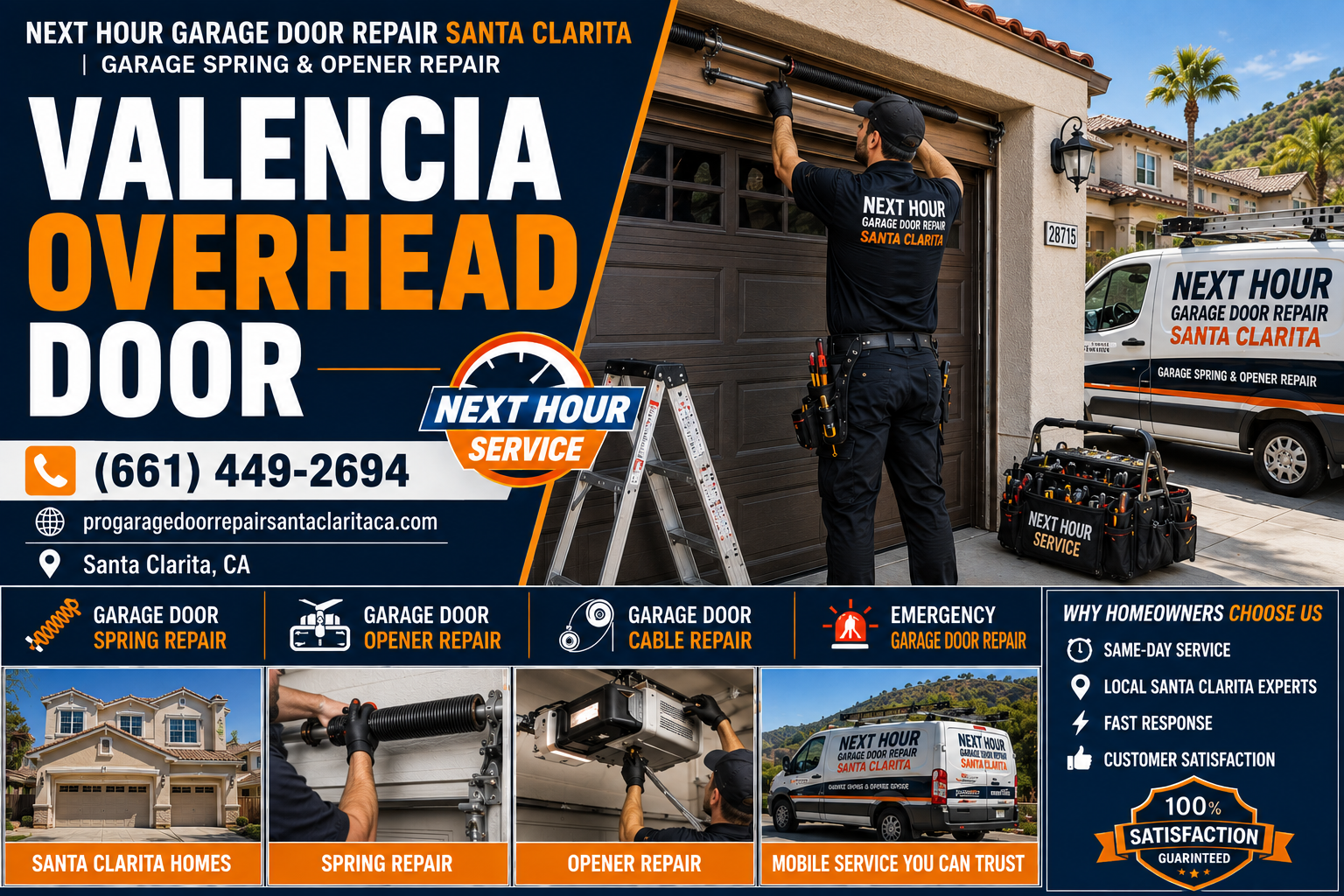
Valencia Overhead Door
If you are searching for Valencia overhead door service, you may need help with a sectional garage door that will not open, a broken spring, a malfunctioning opener, damaged cables, worn rollers, an off-track door, noisy movement or a damaged section. This homeowner guide explains how residential overhead garage doors work, what commonly fails, and how to decide between repair, component replacement and a new garage door.
What Should You Know About Valencia Overhead Door Service?
Short answer: homeowners searching for a Valencia overhead door are usually looking for service involving a residential garage door that travels upward and stores horizontally or along tracks near the garage ceiling. Common service needs include broken springs, opener problems, damaged cables, worn rollers, off-track doors, sensor issues, damaged panels and doors that will not open or close.
The correct repair depends on the actual failed component. A garage door that feels extremely heavy may have lost spring assistance. A motor that runs while the door does not move can involve the trolley, drive system or a mechanical door problem. A door that reverses while closing may involve photo-eye sensors, obstruction or abnormal resistance.
Because the spring, cables, rollers, tracks, panels and opener work together, diagnosis should happen before parts are replaced. Repair often makes sense when one serviceable component failed. Panel replacement or full-door replacement may deserve consideration when structural damage is extensive or compatible parts are unavailable.
Next Hour Garage Door Repair Santa Clarita is one local residential company serving Valencia that homeowners can contact for an evaluation of overhead garage door problems.
What Is an Overhead Garage Door?
In ordinary residential use, an overhead garage door is a door that moves upward from the garage opening and travels along a track system rather than swinging outward like a traditional hinged door.
Many residential overhead doors are sectional. They are built from horizontal panels connected by hinges. Rollers attached to the door travel inside vertical and horizontal tracks as the door moves from the closed position to the open position.
Sectional Garage Door
A sectional door bends at the hinges between individual sections. This allows the door to turn from the vertical portion of the track into the horizontal area near the garage ceiling.
This design is common in residential garages because it allows a wide door to open without swinging outward into the driveway.
The Door and the Opener Are Different Systems
One of the most important concepts for homeowners is that the automatic garage door opener and the physical overhead door are not the same thing.
The physical garage door includes panels, rollers, hinges, tracks, springs, cables and related hardware. The automatic opener includes the motor, rail, trolley or carriage, drive system, controls, remote receivers and safety-related components.
An opener can work correctly while the physical door has a broken spring. Conversely, the physical door can be mechanically sound while the opener has an electronic or drive-system problem.
Important Keyword Note
This article uses the phrase “Valencia overhead door” generically to describe residential overhead garage doors and related service in Valencia. It is not a claim of affiliation with any manufacturer, franchise or separate garage-door brand.
How Does a Residential Overhead Door System Work?
A garage door may look like one large moving panel from the driveway, but several mechanical systems work together every time it opens and closes.
Garage Door Panels
The panels form the visible door. Sectional panels pivot at hinges as the door transitions from vertical to horizontal travel.
Rollers
Rollers guide the garage door through the track system. Worn or damaged rollers can contribute to noise, rough travel or misalignment.
Tracks
Vertical and horizontal tracks define the path of door movement. Bent or improperly positioned track can interfere with travel.
Hinges
Hinges allow sectional panels to articulate as the door moves through the curved portion of the track.
Springs
Torsion or extension springs provide counterbalance assistance so the door does not behave like its full dead weight during operation.
Lift Cables
On many systems, cables transfer lifting force between the counterbalance system and the bottom of the door.
Drums
Torsion spring systems commonly use drums that guide the lift cables as the door moves.
Garage Door Opener
The opener moves an appropriately balanced door using a motor, rail, trolley and drive mechanism.
Safety Sensors
Modern automatic systems commonly use photo-eye sensors near the bottom of the opening as part of the closing safety system.
Why Component Interaction Matters
A failure in one system can create symptoms in another. For example, if a spring breaks, the automatic opener can appear weak because it is attempting to move a much heavier door than normal.
If a lift cable loses proper tension, the door can become uneven. That uneven movement can then place additional force on rollers, tracks, hinges and panels.
This is why diagnosis should focus on the cause rather than simply the most visible symptom.
What Problems Commonly Affect Valencia Overhead Doors?
Homeowners usually notice a symptom before they know which component failed. The same symptom can sometimes have several possible causes.
Garage Door Will Not Open
Possible causes include a broken spring, opener failure, disconnected trolley, cable problem, track obstruction, electrical issue or a garage door that has become mechanically difficult to move.
Garage Door Will Not Close
Possible causes include photo-eye sensor obstruction, sensor alignment, wiring, travel-setting issues, an object in the door path or mechanical resistance.
Door Stops a Few Inches Above the Floor
Closing problems should be evaluated in the context of both the opener and the physical door. Replacing sensors without confirming that they caused the problem may not solve it.
Garage Door Suddenly Feels Heavy
A sudden increase in weight can indicate that the counterbalance system is no longer assisting the door normally. A broken spring is one important possibility.
Door Is Crooked
Uneven movement can involve a cable, drum, roller, spring or track condition. Continued cycling can make secondary damage worse.
Garage Door Is Grinding, Scraping or Squeaking
Noise may involve rollers, hinges, track contact, opener components or another moving part. The sound itself is useful diagnostic information, but it does not identify the cause by itself.
Opener Runs but the Door Does Not Move
The opener may have a trolley or drive problem, but the door should also be checked for spring failure or another mechanical condition.
Door Came Off Track
An off-track condition can result from impact, roller failure, cable problems, track damage or severe misalignment. Putting a roller back into the track without finding the cause may not provide a lasting repair.
Why Won't My Valencia Overhead Door Open?
A garage door that will not open can have a mechanical, counterbalance, automatic-opener or control problem. The key is determining whether the physical door is difficult to move or whether the opener is failing to command or transfer movement.
Broken Spring
If the garage door suddenly became very heavy or the opener lifts it only several inches, a spring problem should be considered.
A torsion spring may show a visible gap when it breaks. Other spring systems can fail differently, so the complete system still deserves inspection.
Opener or Motor Problem
If the physical door is not unusually heavy but the automatic system does not respond, the technician may evaluate electrical power, controls, motor response, trolley and drive-system components.
Disconnected Trolley
The opener motor can run while the trolley is disconnected from the door. This can happen after manual-release operation or because of a mechanical issue.
Cable or Track Condition
A crooked door, loose cable or damaged track can prevent normal travel. If the door appears unstable, repeated opener operation should stop.
Electrical or Control Issue
A power interruption, remote problem, wall-control issue or other electrical condition can prevent automatic movement without a major failure in the physical garage door.
Important Diagnostic Distinction
If the opener is struggling against an abnormally heavy garage door, replacing the opener without correcting the spring or mechanical problem may not solve the actual failure.
Why Won't an Overhead Garage Door Close?
Closing failures often bring attention to the safety sensors, but several conditions can produce a similar symptom.
Photo-Eye Obstruction
An object in the path between the photo-eye sensors can prevent normal automatic closure.
Sensor Alignment
A sensor that has been bumped may no longer be positioned correctly. The technician can examine the sensor mounting and system response.
Sensor Wiring
Wiring damage can create a sensor-related closing problem even when the sensor housings look normal.
Mechanical Resistance
A garage door can also reverse because of abnormal movement or resistance. Rollers, tracks, hinges and door alignment should not be ignored simply because the symptom resembles a sensor problem.
Opener Travel or Control Issue
Automatic opener settings or internal controls can affect where the system believes the open and closed positions are located.
Automatic residential garage door operators are subject to a mandatory federal safety standard. Homeowners can review U.S. Consumer Product Safety Commission guidance for automatic residential garage door operators for additional safety information.
What Should Valencia Homeowners Know About Overhead Door Springs?
Springs perform one of the most important mechanical jobs in a residential overhead garage door system: they help counterbalance the weight of the door.
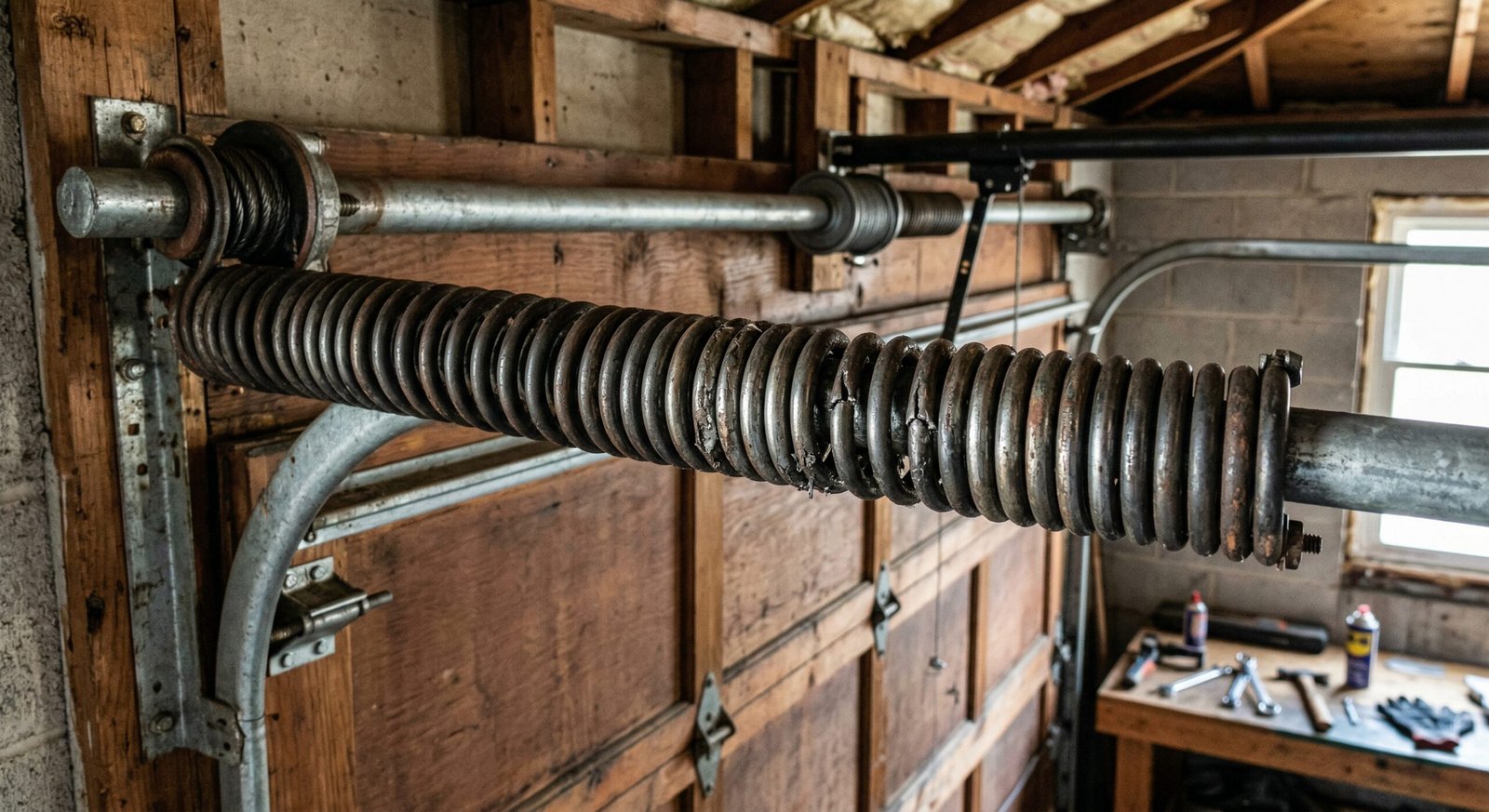
Torsion Springs
Torsion springs are commonly mounted on a shaft above the garage door opening. As the system operates, spring torque helps counterbalance door weight.
Extension Springs
Other residential systems use extension springs that stretch and contract as the door travels. The hardware arrangement is different from a torsion system.
Signs a Spring May Have Failed
- A loud bang occurred in the garage.
- A torsion spring has a visible separation.
- The door became unusually heavy.
- The opener can no longer lift the door normally.
- The door lifts only a short distance before stopping.
Why Spring Matching Matters
A replacement spring should correspond to the garage door's mechanical requirements. Door width, material, insulation, windows and other construction details can affect total weight.
Installing a component because it physically fits is different from matching the counterbalance needs of the door.
One-Spring and Two-Spring Systems
Some residential doors use one spring and others use two. If one spring in a paired system fails, the technician may discuss the condition of the remaining spring.
Homeowners should understand whether additional spring replacement is required for the proposed repair, recommended for matched-system reasons, or being presented as preventive work.
Do Not Attempt High-Tension Spring Adjustment
Garage door springs can contain significant stored mechanical energy. Loaded drums, cables and some related brackets can also be affected by spring tension. Avoid loosening high-tension hardware or trying to replace a spring as a casual DIY project.
What Commonly Fails in an Overhead Garage Door Opener?
An automatic opener includes multiple components, and the physical garage door itself should also be considered during diagnosis.
Motor or Internal Drive Problem
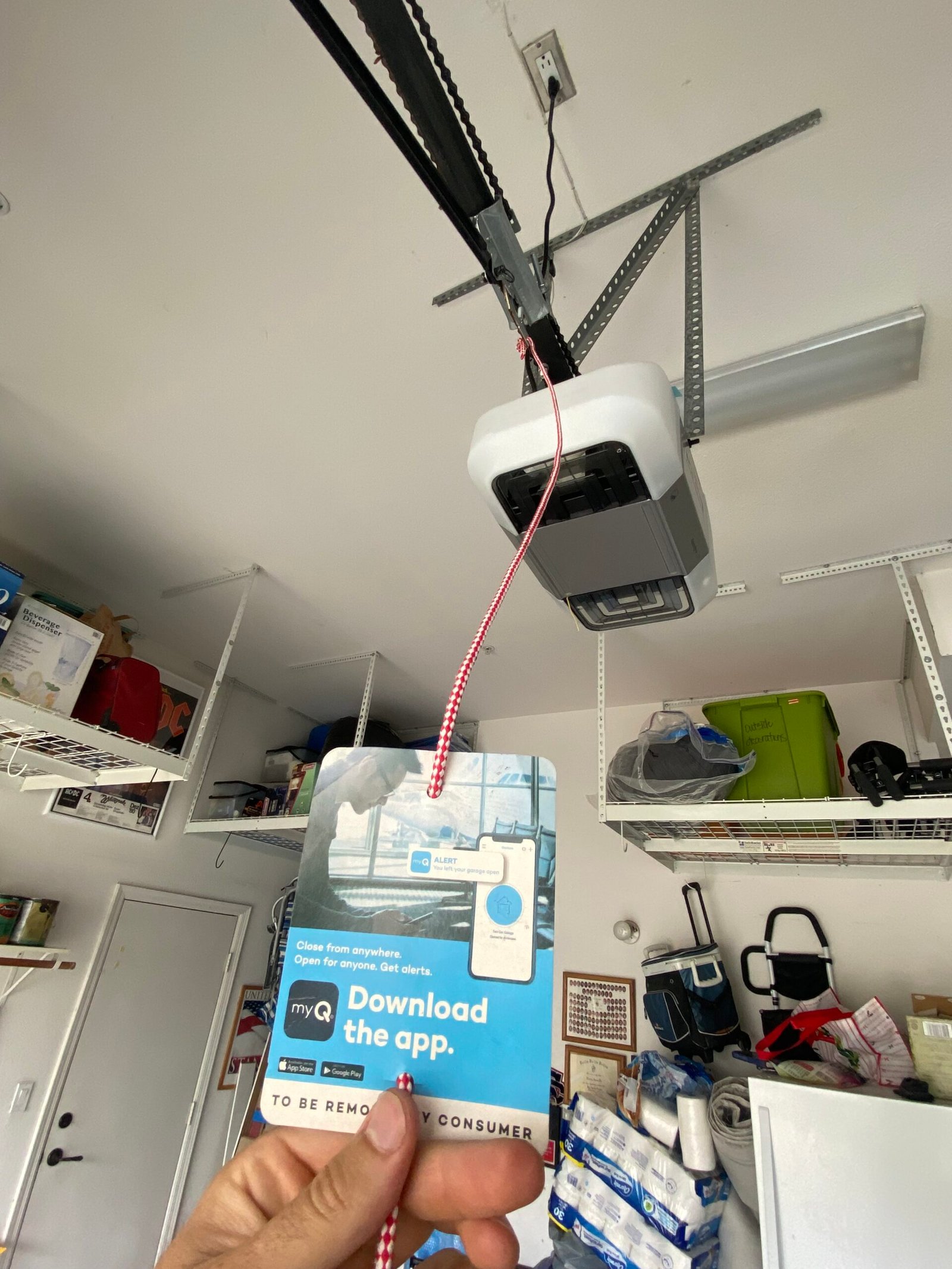
The opener may fail to respond, stop under load or make noise without transferring normal movement.
Trolley or Carriage
The trolley connects opener movement to the garage door. A trolley or carriage problem can allow the motor to run without normal door travel.
Belt or Chain Drive
Depending on the opener design, the drive system can include a belt, chain or another mechanism.
Remote Control
If the wall control operates the door but a remote does not, the diagnostic path differs from an opener with no response at all.
Wall Control
A wall-control or wiring problem can prevent operation even when other parts of the opener remain functional.
Safety Sensors
Photo-eye sensors are particularly relevant when the door opens normally but has difficulty closing automatically.
Repair vs. Opener Replacement
Repair may make sense when an isolated component is serviceable. Replacement can deserve consideration when major components are unavailable, repair is impractical, or a homeowner specifically wants updated functionality.
UL Solutions explains that UL 325 addresses hazards associated with electric door operators, including entrapment, and notes the importance of appropriate safety devices and installation. Homeowners can review UL 325 garage door operator safety information for technical background.
How Do Cables and Tracks Affect an Overhead Door?
Lift cables and tracks have different jobs, but a problem with either can affect how the entire garage door moves.
Lift Cables
On many residential systems, lift cables connect the bottom area of the garage door with the counterbalance hardware. If a cable becomes damaged, loose or displaced, the door can move unevenly.
Cable Drums
Torsion spring systems commonly use drums to manage cable travel. Cable and drum condition can be especially important when one side of the garage door becomes lower than the other.
Vertical Tracks
Vertical tracks guide the rollers as the door begins moving upward from the closed position.
Horizontal Tracks
Horizontal track supports the door as it moves toward the open position near the garage ceiling.
Bent Track
Vehicle impact or other force can physically distort a track. A bent track may create binding or allow rollers to leave their normal path.
Off-Track Door
An off-track condition should be treated as a symptom. The repair should address why the door came out of alignment—whether that was a roller, cable, track, spring or impact problem.
Stop Repeated Operation if the Door Is Severely Crooked
Continued movement can increase stress on rollers, tracks, hinges, cables and panels. A visibly unstable garage door should be evaluated before repeated automatic operation continues.
Why Is My Valencia Overhead Door Noisy or Rough?
Noise is one of the most common homeowner complaints, but it can come from several areas of an overhead garage door system.
Worn Rollers
Rollers travel through the tracks on every cycle. Wear can contribute to vibration, rough movement or increased operating noise.
Hinges
Sectional hinges move every time the door transitions through the curved track. Loose, worn or damaged hinge components can influence noise and panel movement.
Track Contact
Scraping can occur when hardware or rollers are not traveling normally. A technician should determine whether the track itself is damaged or whether another component caused the contact.
Spring Noise
Some sounds originate near the counterbalance system. Any noise accompanied by visible spring damage or an unusually heavy door deserves additional caution.
Opener Noise
The opener motor, drive system, rail and trolley can create their own noises. Listening to whether the sound occurs during door movement, motor operation or both can help narrow the diagnosis.
Lubrication Is Not the Answer to Every Noise
Appropriate maintenance can reduce some friction-related noise, but a damaged roller, bent track or failing component should not be hidden by treating every sound as a lubrication issue.
Can a Damaged Overhead Door Panel Be Repaired or Replaced?
It depends on the extent of the damage, whether operation is affected and whether a compatible replacement section is available.
Cosmetic Dent
A small dent that does not affect hinges, rollers or structural movement is different from a severely distorted section.
Structural Damage
If impact damages the part of the panel that supports hinges or roller hardware, the problem can affect more than appearance.
One-Panel Replacement
Sectional overhead doors can sometimes allow an individual section to be replaced. Compatibility depends on dimensions, construction, design, manufacturer and model availability.
Multiple Damaged Sections
When several panels are structurally compromised, comparing the total repair scope with complete door replacement can become reasonable.
Vehicle Impact
After significant impact, tracks, hinges, rollers, cables and the door opening should also be considered rather than evaluating only the visible dent.
Valencia Overhead Door Problem Comparison Table
| Symptom | Possible Causes | What a Technician May Inspect | Recommended Next Step | Urgency |
|---|---|---|---|---|
| Door suddenly feels extremely heavy | Broken or failed spring system | Springs, cables, drums, door balance | Limit operation and arrange evaluation | Higher |
| Opener runs but door barely moves | Broken spring, trolley or drive problem | Door balance, springs, trolley, opener drive | Diagnose physical door before replacing opener | Moderate / Higher |
| Door begins closing then reverses | Sensor issue, obstruction, resistance, opener control | Photo eyes, wiring, tracks, rollers, opener | Remove obvious obstruction; evaluate persistent issue | Moderate |
| Door is crooked | Cable, drum, spring, roller or track problem | Cables, drums, rollers, tracks, springs | Stop repeated cycling if instability is significant | Higher |
| Roller is outside track | Impact, roller failure, cable issue, misalignment | Tracks, rollers, cables, door alignment | Identify cause before repositioning | Higher |
| Door is noisy but still operating | Rollers, hinges, tracks, opener or wear | Moving hardware and opener system | Schedule inspection if noise is new or worsening | Routine / Moderate |
| Remote does not work but wall button does | Remote, programming or receiver issue | Remote and opener controls | Troubleshoot control system | Routine |
| Panel damaged by vehicle | Impact damage | Panel, hinges, rollers, track, door alignment | Compare repair, panel replacement or full replacement | Depends on Stability |
When Should You Stop Operating an Overhead Garage Door?
Not every squeak requires immediate shutdown, but certain symptoms suggest that continued operation can increase damage or expose people to a heavy or tensioned system.
Stop or Limit Operation When
- The door is severely crooked.
- A lift cable is hanging or visibly damaged.
- Multiple rollers have left the track.
- A torsion spring is visibly broken.
- The door became dramatically heavier than normal.
- Vehicle impact has made the door structurally unstable.
- The garage door is hanging partly open at an unusual angle.
- The opener is repeatedly straining against a door that does not move normally.
What Homeowners Can Safely Observe
From a normal standing position, you can note whether a spring has a visible gap, whether a cable is hanging, whether a roller is out of position, whether the door is level, and how the automatic opener responds.
What Not to Loosen
Avoid loosening spring hardware, cable drums, lift cables or bottom brackets connected to the counterbalance system.
Keep the Area Clear
If the door appears unstable, keep children, pets and unnecessary foot traffic away from the opening until the condition is evaluated.
What Should a Professional Valencia Overhead Door Service Visit Include?
A useful garage door service visit should move from symptom to cause to repair recommendation rather than immediately replacing parts.
Homeowners who prefer an on-site service approach can also review the related mobile garage door repair Valencia on-site service guide .
Should a Valencia Overhead Door Be Repaired or Replaced?
Many overhead garage door problems are component failures rather than reasons to replace the complete door.
Repair May Make Sense When
- A spring is broken but the door panels remain suitable.
- A cable requires replacement.
- Rollers or hinges are worn.
- A track problem can be appropriately corrected.
- The opener has a serviceable failure.
- Safety sensors need troubleshooting.
- Weather seals are worn.
- Compatible replacement components remain available.
Panel Replacement May Make Sense When
Damage is limited to one section, the remainder of the garage door is structurally suitable and a compatible replacement section can be obtained.
Full Door Replacement May Deserve Comparison When
- Several sections are structurally damaged.
- Vehicle impact affects multiple parts of the door system.
- A matching replacement section is unavailable.
- Several major systems require extensive repair simultaneously.
- The door cannot reasonably be restored to appropriate operation.
- The homeowner wants a significant design, material or insulation upgrade.
Ask Why Replacement Is Being Recommended
If a complete new door is recommended, ask which condition makes repair impractical. The answer should relate to actual structural condition, parts availability, accumulated damage or the homeowner's upgrade goals.
What Affects the Cost of Valencia Overhead Door Repair?
There is no single accurate price for every overhead garage door repair. The final amount depends on the scope found at the property.
Component Involved
A sensor adjustment, roller replacement, broken spring, cable repair, opener repair and damaged panel do not use the same parts or labor.
Door Size and Weight
Large two-car doors can have different spring and hardware requirements from smaller doors.
Part Quantity
One spring and two springs are different scopes. One damaged roller and several worn rollers are different scopes.
Secondary Damage
A simple broken cable can become a larger repair if continued operation damages rollers, tracks or panels.
Opener Part Availability
Older automatic openers may use components that are difficult or impractical to source.
Panel Availability
Replacement garage door sections can require matching a particular design and construction.
Same-Day or Urgent Scheduling
Companies may structure normal appointments, urgent appointments and after-hours work differently. Ask about applicable service charges before scheduling.
Better Than Asking Only “How Much?”
Ask: “What exactly failed, which parts are included, and what complete repair does this estimate cover?”
What Maintenance Helps an Overhead Garage Door Operate Reliably?
Maintenance cannot prevent every part from eventually wearing, but regular observation can help identify changes before a minor problem becomes more disruptive.
Watch Door Movement
Notice whether the garage door remains level and whether movement has become rough, jerky or unusually slow.
Listen for New Sounds
New grinding, scraping, popping or repetitive clicking can provide an early clue that a moving component deserves inspection.
Look at Rollers and Hinges
Visible wear, loose hardware or unusual panel movement can indicate that service is appropriate.
Observe Tracks
Tracks should not be used as storage supports, struck with heavy objects or intentionally bent. Obvious physical deformation deserves attention.
Watch the Cables
Homeowners can visually observe whether a cable appears frayed or loose without touching tensioned cable hardware.
Observe the Weather Seal
Bottom and perimeter seals can wear from age, movement and environmental exposure. Damaged seal is usually a separate maintenance issue rather than evidence that the entire door needs replacement.
Pay Attention to Opener Safety Behavior
If automatic closing or reversal behavior changes, the condition deserves troubleshooting rather than being ignored.
What Valencia Conditions Can Matter for Residential Overhead Doors?
The mechanical principles of a garage door are not unique to Valencia, but local residential patterns and environmental conditions influence what homeowners and technicians encounter.
Wide Two-Car Garage Doors
Many Valencia homes use wide garage doors for two-car garages. Larger doors can be heavier, particularly when insulated, glazed or built with decorative features.
Door weight can influence spring selection, cable loading and how the automatic opener performs.
Frequent Daily Use
In vehicle-oriented Santa Clarita Valley neighborhoods, the garage is often used as a regular household entrance. Repeated daily cycles add wear to springs, rollers, hinges and opener components over time.
Hot, Dry Summers
Valencia experiences hot and dry summer conditions. Strong sun and garage heat can be relevant to weather seals, exterior door surfaces and automatic equipment installed inside warm garages.
Heat alone should not be used as a generic explanation for every failure. The technician should still identify the actual component responsible for the symptom.
Dust and Debris
Dry conditions can contribute to dust around tracks, rollers and photo-eye sensors. Cleaning an obstruction is different from replacing a component that has actually failed.
Attached Garages
A garage door stuck open can create a security concern for an attached home. A stuck-closed door can interfere with vehicle access and make same-day service more important.
Aging and Updated Components Can Be Mixed
The physical garage door, springs and automatic opener may not have been installed at the same time. A newer opener might be connected to older door hardware, or an older opener may remain after a newer door was installed.
Building or Replacement Questions
Routine component repair is different from a project that changes a garage opening or involves broader construction. When a planned garage-door project involves structural alteration or there is a question about permitting, homeowners can review the City of Santa Clarita Building & Safety Permit Center rather than assuming whether a permit applies.
The City states that current building-code requirements and local amendments apply to residential and non-residential construction projects submitted under the applicable code cycle. For larger alteration projects, homeowners can also consult the City of Santa Clarita building codes and design criteria .
What Should You Ask a Valencia Overhead Door Technician?
Garage Door Service Checklist
- What do you believe caused the garage door problem?
- Which component appears to have failed first?
- Is the door safe to operate right now?
- What parts need repair or replacement?
- Are any related components damaged?
- Can you explain how the failed part creates the symptom?
- Is this primarily a door problem or an opener problem?
- What is included in the estimate?
- Are parts and labor included?
- How many springs, rollers or other components are included?
- Which recommendations are necessary now?
- Which recommendations are preventive or optional?
- Are there multiple reasonable repair options?
- If replacement is recommended, why is repair not practical?
- Could one panel be replaced instead of the complete door?
- Will the door's relevant operation be checked after repair?
- What warranty applies if one is offered?
- Does the planned project require any permit or additional approval?
When applicable to the scope of a California home-improvement project, consumers can also review California CSLB guidance for choosing and comparing contractors .
What Red Flags Should Valencia Homeowners Watch For?
Be Cautious When
- The business providing the service is difficult to identify.
- The technician recommends replacement before meaningfully inspecting the door.
- The failed component cannot be explained.
- An opener replacement is recommended without checking the physical door or spring system.
- An off-track door is repositioned without determining why it came off track.
- The repair price changes substantially without an explanation of additional scope.
- Part quantities are unclear.
- Optional maintenance is presented as mandatory without explanation.
- Every problem is presented as requiring a complete new garage door.
- A legitimate safety concern is used only as a sales-pressure tactic.
- No distinction is made between cosmetic panel damage and structural damage.
- Important verbal promises do not appear in the written scope when applicable.
Additional repairs are not automatically an upsell. One failure can damage another component. What matters is whether each recommendation is tied to an identifiable condition and clearly explained.
Why Consider Next Hour Garage Door Repair Santa Clarita for a Valencia Overhead Door?
Next Hour Garage Door Repair Santa Clarita | Garage Spring & Opener Repair is a local residential garage door company serving Santa Clarita and nearby Santa Clarita Valley communities, including Valencia.
Homeowners can contact the company for garage door troubleshooting and service involving broken springs, garage door openers, damaged cables, worn rollers, track problems, off-track doors, safety sensors, noisy operation, damaged panels and doors that will not open or close.
For a broad overhead-door problem, diagnosis is important because several components can produce similar symptoms. A heavy door may indicate counterbalance trouble. A door that reverses may involve sensors or mechanical resistance. A crooked door may involve a cable, drum, roller or track condition.
Next Hour can be compared with other Valencia-serving garage door companies using practical criteria such as business identity, diagnostic process, repair explanation, written scope when applicable, pricing clarity, safety awareness and whether repair-versus-replacement recommendations match the actual condition of the door.
Business Information
Next Hour Garage Door Repair Santa Clarita |
Garage Spring & Opener Repair
19410 Golden Valley Rd
Santa Clarita, CA 91387
Phone:
(661) 449-2694
Homeowners can also visit Next Hour Garage Door Repair Santa Clarita for residential garage door service information.
Overhead Garage Door Service Areas Near Valencia
This guide is specifically focused on Valencia. Next Hour also serves nearby Santa Clarita Valley communities where relevant to residential garage door service coverage.
Valencia Overhead Door FAQs
What is meant by a Valencia overhead door?
In this guide, “Valencia overhead door” refers generically to a residential garage door in Valencia that moves upward along tracks, usually with sectional panels that travel toward the ceiling. Common service needs include springs, openers, cables, rollers, tracks, sensors and panels. The phrase is being used as a garage door service description, not as a claim of affiliation with a specific manufacturer or franchise.
Why does my overhead garage door suddenly feel very heavy?
A sudden increase in weight can indicate that the counterbalance system is no longer assisting the garage door normally. A broken spring is one important possibility. Because the automatic opener is designed to move a properly functioning door, avoid repeatedly forcing the opener against a door that suddenly became extremely heavy. The spring and related lifting components should be evaluated.
Why does my garage door opener run but the overhead door does not move?
Possible causes include a disconnected or damaged trolley, drive system problem, broken spring or another mechanical issue with the physical garage door. The door should be evaluated before assuming the motor needs replacement. A broken spring can make the door far heavier than normal, causing a functioning opener to appear weak or unable to lift it.
What causes an overhead garage door to come off track?
An off-track door can result from vehicle impact, roller failure, a damaged track, cable trouble or severe door misalignment. “Off track” describes the condition but not necessarily the root cause. A technician should inspect rollers, tracks, cables, springs and door alignment before returning the system to normal operation.
Can one damaged overhead garage door panel be replaced?
Sometimes. Sectional garage doors may allow an individual section to be replaced when the rest of the door remains suitable and a compatible panel is available. Dimensions, design, manufacturer, construction and age can affect availability. If multiple sections are structurally damaged, comparing panel repair with complete door replacement may be more practical.
When should I stop using a damaged overhead garage door?
Stop or limit operation if the door is severely crooked, a cable is hanging, multiple rollers are outside the tracks, a spring is visibly broken, the door became extremely heavy or significant impact damage has made the system unstable. Repeated movement can increase damage to rollers, tracks, hinges, cables and panels.
Is overhead door repair usually better than replacing the entire door?
It depends on the condition. Repair often makes sense when a spring, cable, roller, opener, sensor or other individual component failed but the physical door remains structurally suitable. Replacement deserves comparison when several sections are badly damaged, compatible parts are unavailable, multiple major systems require extensive work or the homeowner wants a significant upgrade.
Does Next Hour provide overhead garage door service in Valencia?
Next Hour Garage Door Repair Santa Clarita | Garage Spring & Opener Repair serves residential customers in Santa Clarita and nearby Santa Clarita Valley communities, including Valencia. Homeowners can contact the company for garage door troubleshooting, broken springs, opener problems, cables, rollers, tracks, safety sensors, off-track doors, panels and related residential garage door service.
Find Next Hour Garage Door Repair Santa Clarita on Google Maps
Valencia homeowners can review the Next Hour business listing and Santa Clarita location before requesting residential overhead garage door service.
Need Help With an Overhead Garage Door in Valencia?
If your garage door is heavy, noisy, crooked, stuck, off track, reversing unexpectedly or having spring, opener, cable, roller, sensor or panel problems, identifying the actual failed component is the first step toward choosing the appropriate repair.
Call (661) 449-2694Call Next Hour Garage Door Repair Santa Clarita at (661) 449-2694 for overhead garage door repair and service in Santa Clarita and nearby areas.
One Response