

Why Is My Garage Door So Noisy? Santa Clarita Garage Door Repair Guide
A homeowner troubleshooting guide to squeaking, grinding, popping, rattling, scraping, opener vibration, noisy rollers, spring sounds, and the repair or maintenance issues behind them.
New grinding, banging, scraping, or popping sound? If the door is crooked, jerking, off track, or has a loose cable or broken spring, stop operating it. Call (661) 449-2694 to ask Next Hour Garage Door Repair Santa Clarita about current service availability.
Why is my garage door so noisy in Santa Clarita?
A noisy garage door can be caused by worn rollers, dry hinges, loose hardware, misaligned tracks, spring or cable problems, panel movement, poor door balance, or opener drive components. Squeaking is often maintenance-related, while grinding, scraping, banging, or noise combined with crooked movement deserves faster attention. Diagnose the source before replacing parts or increasing opener force.
Why Is My Garage Door So Noisy in Santa Clarita?
A garage door that suddenly becomes louder is often giving you useful information. A light squeak can point toward dry rollers or hinges. A metallic scrape can suggest track or roller contact. A repeated pop can come from a hinge, panel movement, spring-related tension, or another part shifting under load. Grinding from the opener area can involve drive components, while rattling can come from loose hardware, vibration, rollers, tracks, or the opener installation.
For Santa Clarita homeowners, the most useful question is not simply, “How do I make the noise stop?” It is, “What is causing the noise, and is the door still moving safely?” Noise is a symptom. Some sounds are maintenance-related; others warn that the garage door is becoming crooked, binding, losing balance, or putting abnormal load on the opener.
This guide explains the most common garage door noises, what they can mean, which homeowner checks are reasonable, what not to adjust, when professional noisy garage door repair in Santa Clarita makes sense, and how rollers, hinges, tracks, springs, cables, panels, and opener components can produce different sounds.
Start by Identifying the Sound, Location, and Door Position
The sound itself matters, but so does when and where it happens. A squeak that occurs only as one roller passes the curved track points in a different direction than a hum coming from the opener motor before the door moves. A bang at the top of the door is different from a scrape at the bottom corner. A pop during opening can have a different cause from a pop when the door closes against the floor.
Before touching anything, operate the door only if it appears mechanically stable. Stand inside the garage where you can observe safely without standing under the moving door. Listen for whether the noise comes from the left track, right track, spring area, hinges, panels, opener rail, motor unit, or floor contact. Note whether the door remains level and whether the noise happens in the same place on every cycle.
If the door is crooked, a cable is hanging, a roller is outside the track, or the door is jerking violently, stop testing it. At that point the noise is secondary to a visible mechanical problem.
Garage Door Noise Guide: What Different Sounds May Mean
| Sound | Common areas to inspect | Possible explanation |
|---|---|---|
| Squeaking | Rollers, hinges, bearings, moving pivot points | Dry or worn moving parts, roller wear, hinge friction |
| Grinding | Rollers, tracks, opener gears/drive, bearings | Binding roller, damaged track, worn opener component, metal contact |
| Popping | Hinges, panels, springs, track transitions | Panel flex, hinge movement, spring tension changes, roller binding |
| Rattling | Hinges, brackets, tracks, opener mounts, door sections | Loose hardware, vibration, worn rollers or opener mounting movement |
| Banging | Spring area, panels, opener arm, floor contact | Spring failure, abrupt section movement, loose hardware, hard closing |
| Humming | Opener motor unit | Motor energized but door not moving, heavy door, opener component issue |
| Vibration | Opener rail/mounts, rollers, tracks | Opener mounting, drive vibration, worn rollers, rough door movement |
| Scraping | Tracks, rollers, bottom brackets, panels | Misalignment, bent track, crooked door, roller or panel contact |
| Clicking | Opener, hinges, rollers, controls | Normal relay/control sound or mechanical movement depending on location |
| High-pitched squeal | Roller bearings, opener drive, moving metal contact | Dry or worn bearing/drive component that needs diagnosis |
This table is a starting point, not a diagnosis. Two different failures can make similar noises, and one door can have more than one worn component.
1. Squeaking: Often Rollers, Hinges, or Dry Pivot Points
Squeaking is one of the most common garage door noises. It often comes from parts that rotate or pivot during every cycle: rollers, roller bearings, hinges, and certain bearing points. A light squeak that has developed gradually may be maintenance-related, but a loud squeal accompanied by rough movement deserves closer inspection.
Watch each hinge and roller as the door moves. If the noise occurs at the same hinge or roller every time, that helps narrow the source. Worn rollers can wobble in the track, and dry bearings can become louder before they visibly fail. Hinges can also squeak where metal surfaces pivot.
Homeowners can follow manufacturer or door-system guidance for appropriate lubrication points, but avoid spraying lubricant everywhere. The inside face of the track is not a substitute for correcting a damaged roller or bent track. If the door is binding or the roller visibly wobbles, lubrication alone is not the repair.
2. Roller Noise: When the Door Sounds Rough Going Through the Tracks
Rollers carry the door through the vertical, curved, and horizontal tracks. When roller wheels or bearings wear, the door may sound rough, clattery, or uneven. Metal rollers can naturally sound different from nylon rollers, but a sudden change in noise level can indicate wear, a damaged bearing, a bent stem, or track alignment trouble.
A noisy roller often becomes most noticeable through the curved track section because the roller angle changes as the door transitions overhead. If one roller is consistently louder, appears tilted, or hesitates, it should be inspected before it contributes to a jam or off-track event.
Next Hour has a dedicated garage door roller replacement page for Santa Clarita homeowners. Roller replacement can reduce noise when the roller itself is worn, but the track and hinge supporting that roller should also be checked so the new part is not forced through the same misalignment.
3. Rattling or Clattering: Loose Hinges, Brackets, or Hardware
Rattling often means something is moving more than it should. Section hinges, track brackets, opener mounts, door reinforcement, and other fasteners can develop vibration. The sound may be most obvious when the door starts moving, reverses direction, or travels across a rough section of track.
From a safe position, look for a hinge that visibly shifts, a bracket that moves against the wall, or a track that vibrates excessively. Do not loosen or tighten high-tension hardware connected to springs, cables, drums, or bottom fixtures. Ordinary visible hardware and high-tension counterbalance hardware are not the same thing.
A technician should determine whether the rattle is only a loose fastener or whether the movement is being caused by a worn roller, warped section, track problem, or opener vibration.
4. Grinding: A Sound That Deserves More Attention
Grinding is usually more concerning than a light squeak because it can indicate parts rubbing or binding under load. Grinding near a track may involve a roller that is not moving freely, a bent track, or a door section contacting metal. Grinding from the opener motor area may involve drive components, gears, sprockets, a screw-drive mechanism, or another internal component.
If grinding is accompanied by slow movement, jerking, crooked travel, or a door that stops at the same point, stop repeated cycling. Continuing to operate the door can wear the affected parts faster and may cause secondary damage.
The Chamberlain Group's official guidance on troubleshooting garage door opener noise recommends separating door noise from opener noise by checking the door and opener independently when it is safe to do so. That diagnostic principle is useful because a noisy door can make a healthy opener sound strained, while a noisy opener can remain loud even when the door itself moves smoothly.
5. Popping: Hinges, Panels, Springs, or Track Transitions
A popping sound can be difficult to diagnose because several components can create it. A hinge can shift under load, a roller can bind and release, a panel can flex, or spring-related tension can change abruptly. The key is to note exactly where the pop occurs and whether the door changes shape or speed at the same moment.
If a pop happens at the same height every time, watch the rollers and hinges as they pass through the curved track. If the sound comes from the spring area, do not touch spring hardware. If the pop is followed by loose cables, a heavy door, or a visible gap in a torsion spring, stop using the opener.
Popping that is new, sharp, and accompanied by jerking should be treated differently from a mild, longstanding panel movement sound. Changes in operation matter as much as the volume.
6. Spring Noise: When a Bang or Pop Comes From Above the Door
Garage door springs counterbalance the weight of the door. A torsion spring sits above many residential sectional doors, while extension-spring systems use springs along the horizontal tracks. Springs can make some normal movement noise, but a sudden loud bang can indicate a spring failure.
If you hear a loud bang and then the door becomes heavy, the opener lifts only a few inches, or cables become slack, stop operating the door. Do not wind or unwind torsion springs or adjust winding cones.
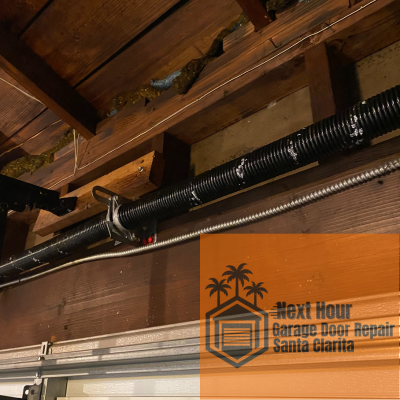
DASMA's garage door safety tips warn homeowners not to adjust springs or related high-tension hardware themselves. Noise coming from the spring system should be diagnosed with the door's balance and cables in mind.
7. Scraping: Track, Roller, Cable, or Alignment Problems
A scraping sound usually means a component is contacting something it should not. The door edge can rub a track, a roller stem can contact the track, a cable can rub near a drum or bracket, or a crooked door can load one side more heavily.
Look at the gap between the door and tracks on both sides. Is one side noticeably tighter? Does a roller look tilted? Is there fresh metal marking on the track? Is the door level when it is partially open?
Scraping combined with crooked movement is a warning to stop operating the door. A door that continues to move while misaligned can become an off-track garage door problem. The noise may be the early warning before a roller fully leaves the track.
8. Cable and Drum Noise: Clicking, Slapping, or Uneven Movement
Lift cables and cable drums should work in a coordinated way with the spring system. If a cable is frayed, loose, winding incorrectly, or rubbing, homeowners may hear clicking, slapping, or scraping near one side of the door. Cable problems can also make the door move crooked, which creates additional noise at the tracks and rollers.
Do not pull on a loose cable or attempt to rewind it on the drum. A cable that looks slack can still be part of a system with stored spring tension. If cable noise is accompanied by visible fraying, a loose cable, or one side of the door sitting higher, stop operating the door and arrange inspection.
9. Garage Door Opener Noise: Hum, Grind, Chain Rattle, or Vibration
Sometimes the garage door itself is not the loudest part—the opener is. Chain-drive openers can transmit more mechanical sound than belt-drive designs, and any opener can become louder when mounts loosen, drive components wear, the rail vibrates, or the door becomes harder to move.
A useful diagnostic question is whether the opener is noisy because of its own components or because it is pulling a rough, heavy, or poorly balanced door. If the door is mechanically stable and the manufacturer's procedure allows a safe manual test, separating the opener from the door can help distinguish those sources. Do not perform that test on a door with a broken spring, loose cable, off-track condition, or uncertain balance.
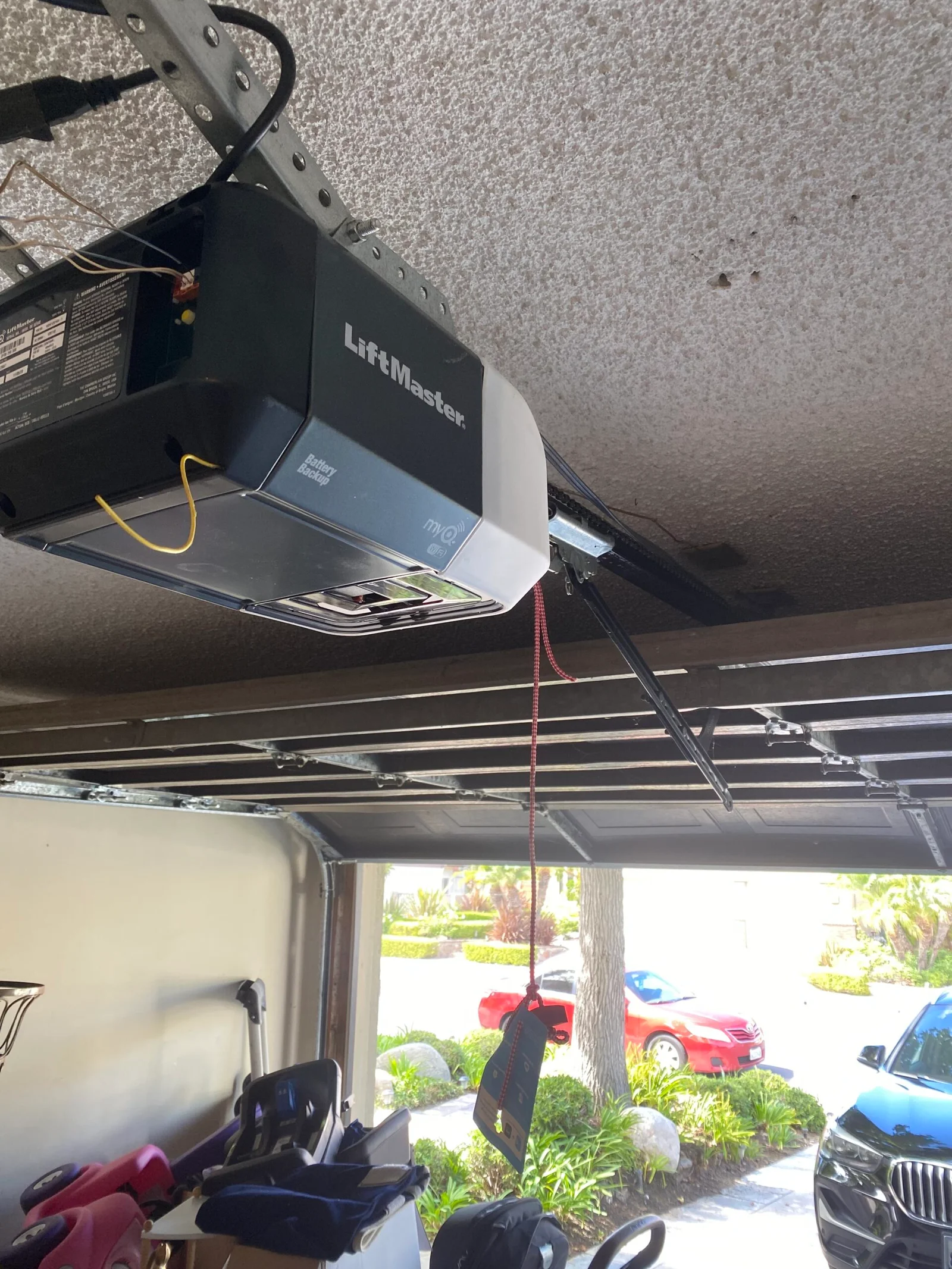
LiftMaster notes that door lubrication, sensor alignment, track alignment, and broken springs can all affect opener operation, and its quiet-opener guidance explains that belt-drive DC and wall-mount designs can reduce noise and vibration compared with noisier drive arrangements. Opener replacement should still follow diagnosis rather than being the first response to every noisy door.
10. Chain Drive vs. Belt Drive vs. Wall Mount: Why Opener Type Changes the Sound
Different opener designs produce different sound profiles. A chain drive uses a metal chain and can transmit more mechanical sound and vibration through the rail and ceiling structure. A belt drive uses a reinforced belt and is generally selected when quieter operation is important. Wall-mount openers move the drive mechanism away from the center ceiling rail and can reduce some ceiling-transmitted vibration depending on installation.
LiftMaster's official information on quiet garage door openers highlights belt-drive DC and wall-mount designs for reduced noise and vibration. That does not mean a noisy chain drive is defective, and it does not mean every noisy opener should be replaced. First determine whether the noise is normal for the drive type, maintenance-related, or caused by wear or door resistance.
11. Poor Door Balance Can Make Almost Every Component Sound Louder
A garage door that is not properly counterbalanced places extra load on rollers, hinges, tracks, cables, and the opener. The sound may show up as groaning, straining, popping, or a louder-than-normal opener motor.
Door balance is controlled primarily by the spring system, not by the opener. Increasing opener force does not repair an imbalanced door. If the door is unusually heavy, drops quickly, or will not remain controlled when professionally tested, the spring system requires attention.
Balance problems are especially important when noise develops alongside slow opening or a door that stops before reaching full travel.
12. Panel Flexing and Section Movement Can Create Pops and Creaks
Sectional garage doors flex slightly as they travel from vertical to horizontal. A damaged or poorly reinforced panel can flex more than intended and create popping or creaking. Hinge attachment points can also move under load when a section is bent or weakened.
Look for cracks, bowed sections, torn hinge attachment points, or a top section that bends excessively when the opener pulls. A cosmetic dent may not cause noise, but structural deformation can change how the door moves through the tracks.
Panel noise should be evaluated together with hinges, rollers, tracks, and opener attachment rather than treated as an isolated sound.
13. Noise Near the Floor: Bottom Seal, Threshold, or Hard Closing
A garage door can make a thump, slap, or squeak at the end of the closing cycle because of the bottom seal, floor threshold, or opener travel setting. A damaged seal can fold or drag. A new threshold can change where the door contacts the floor. Excessive down travel can make the opener push too hard after the door is already closed.
If the noise occurs only at the final inch of closing, inspect the floor area and bottom seal from a safe position. Do not place hands under a moving door. If the door closes hard and the top section or opener arm flexes, the travel setting and mechanical door condition should be checked.
Safe Homeowner Checks for a Noisy Garage Door
- Listen before touching anything. Identify whether the sound comes from rollers, tracks, hinges, springs, cables, panels, or the opener.
- Watch whether the door stays level. Crooked movement is more important than the sound itself.
- Look for a roller that wobbles or hesitates. Do not remove it while the door is loaded.
- Inspect visible hinges. Look for movement, cracks, or fasteners that appear obviously loose.
- Look for fresh scrape marks on tracks. Metal marks can reveal where rubbing occurs.
- Check for a visible broken spring. Do not touch spring hardware.
- Look for frayed or hanging cables. Do not pull them.
- Note when the sound happens. Opening, closing, transition through the curve, or floor contact all provide clues.
- Compare opener noise with door noise only when the door is mechanically safe. Follow manufacturer procedures rather than improvising.
- Stop testing if the noise is accompanied by jerking, crooked travel, or instability.
Is the Noise Coming From the Door or the Opener?
Rollers, tracks, hinges, springs and cables can make a healthy opener sound strained. A professional diagnosis should separate mechanical door noise from opener noise before recommending parts.
Will Lubrication Fix a Noisy Garage Door?
Sometimes lubrication reduces noise, but only when friction at an appropriate moving point is the actual cause. Hinges, certain roller bearings, and manufacturer-specified moving parts may benefit from proper garage-door lubricant. The correct product and lubrication points depend on the door and opener.
Lubrication will not straighten a bent track, replace a worn roller, repair a cracked hinge, restore a broken spring, correct cable tension, or fix a stripped opener gear. If the sound is grinding, scraping, or accompanied by rough movement, applying more lubricant can hide the symptom without correcting the failure.
Next Hour's verified garage door tune-up and inspection page is relevant when noise appears to come from routine wear, lubrication points, rollers, hinges, or alignment checks. The purpose of a tune-up should be to identify developing problems, not simply spray lubricant until the door sounds quieter.
What the Timing of the Noise Can Tell You
Noise only when the door starts moving
A start-up clunk, pop, or rattle can point toward initial spring load, a loose hinge or bracket, opener trolley movement, or a roller beginning to move after sitting in one position. Watch whether the door hesitates before moving. A delay followed by a jerk is more important than a small normal click from the opener.
Noise halfway through travel
If the sound occurs at the same height every time, inspect the track and rollers at that height. The curved track is a common location for a worn roller or hinge to become louder because the door sections change angle there.
Noise only near fully open
Sounds near the top of travel can involve the horizontal tracks, opener rail, trolley stop, spring movement, or door alignment. If the opener hits a stop abruptly, model-specific travel settings may need review.
Noise only at the floor
Thumping, squeaking, or slapping at the end of closing can involve the bottom seal, floor threshold, or down-travel setting. The door should not be forced into the floor to make it seal.
Noise changes with temperature
Some noises become more noticeable when a garage is hot or cool because materials, lubricant viscosity, and opener components respond to temperature. Temperature can be a clue, but it should not replace inspection of the actual noisy part.
What You Should Not Lubricate or Adjust Just Because the Door Is Noisy
A noisy garage door can tempt homeowners to spray lubricant on every visible metal surface. That is not a good diagnostic method. Do not use heavy grease inside the tracks to cover up roller resistance. The track is a guide path; excessive grease can collect dirt and does not correct a bent track.
Do not lubricate or adjust spring winding cones, cable drums, bottom brackets, or other high-tension components unless manufacturer procedures specifically call for a task and you are qualified to perform it. Do not loosen track brackets while the door is unstable.
When in doubt, identify the noise source first and follow the door or opener manufacturer's maintenance instructions.
Noise Red Flags: When the Sound Means Stop Using the Door
- A loud bang followed by a heavy door or visible spring gap.
- Grinding while the door moves crooked.
- Scraping with a roller visibly outside the track.
- Slapping or clicking with a loose or frayed cable.
- Popping followed by sudden panel movement.
- A door that drops, slams, or accelerates unexpectedly.
- An opener that hums while the door barely moves.
- Repeated jerking at the same point in travel.
- Metal-on-metal noise after vehicle impact.
- Any new noise combined with visible structural damage.
These conditions shift the problem from “annoying sound” to “possible mechanical failure.” Stop repeated cycling and have the system diagnosed before additional damage occurs.
A Professional Noise Diagnosis Should Separate the Door From the Opener
A professional noisy-door diagnosis should begin with the location and timing of the sound. The technician can inspect rollers, hinges, tracks, cables, springs, panels, fasteners, door balance, and opener components. The goal is to reproduce the sound safely and identify what is moving abnormally.
If the mechanical door is safe to test independently, the technician may compare door movement with opener operation. A noisy door when disconnected points toward the door hardware; a noisy opener operating without the door points toward the opener or its mounting/drive system. Noise that occurs only when they are connected can involve installation angle, load, balance, or vibration transfer.
Chamberlain's official noise-troubleshooting guidance uses this same separation approach: first assess whether the door itself is smooth and balanced, then listen to the opener independently. That helps avoid replacing an opener when the real problem is a roller or spring—and avoids replacing door hardware when the motor unit is the noise source.
Noise by Location: Where the Sound Comes From Can Narrow the Cause
| Noise location | Components to consider | Useful clue |
|---|---|---|
| Top center above door | Torsion spring, shaft, center bearing | Bang, pop, or rotational noise |
| Left or right vertical track | Rollers, track, hinges, cable | Scrape, grind, click, rattle |
| Curved track area | Rollers, hinges, track radius | Pop or rough transition |
| Door panels | Hinges, reinforcement, panel flex | Creak or pop as sections bend |
| Motor unit on ceiling | Motor, gear, drive, mounts | Hum, grind, vibration |
| Opener rail | Chain/belt, trolley, rail mounting | Rattle, vibration, clatter |
| Bottom of door | Seal, threshold, floor contact | Thump, slap, squeak |
Santa Clarita Conditions That Can Influence Garage Door Noise
Santa Clarita's warm and often dry operating environment can be relevant to garage door noise because heat, dust, and frequent daily use affect moving components. Dust can collect around rollers and hinges. Garage heat can change lubricant behavior and can add stress to opener electronics over time. Frequent cycling increases wear on rollers, springs, hinges, and drive components.
Attached garages also make noise more noticeable because vibration can transfer into walls or rooms next to or above the garage. A mechanically normal chain-drive opener can sound louder inside a bedroom above the garage than it does while standing in the driveway.
These local conditions are context, not proof of a specific failure. A technician should still identify the physical source of the noise rather than attributing every squeak or grind to Santa Clarita heat.
When a Minor Noise Turns Into a Bigger Garage Door Problem
Garage doors often give warning before a major failure. A roller that begins squeaking can later wobble and bind. A loose hinge can begin as a rattle and eventually change roller alignment. A cable that lightly rubs can progress to visible fraying. A spring-related pop can precede a change in door balance. An opener that begins grinding can lose drive performance.
The important pattern is escalation: louder noise, more frequent noise, rougher movement, or a new visual symptom. If the door remains smooth and the sound stays mild, routine maintenance may be appropriate. If noise is paired with hesitation, jerking, crooked travel, or visible damage, the repair should be prioritized.
Keeping a short note or video from a safe location can help describe the symptom to the repair company. The useful details are the sound type, where it occurs, whether it happens during opening or closing, and whether the door remains level.
A Quieter Door Is Not Necessarily a Safer Door
Noise reduction is useful, but quiet operation should not be the only goal. A worn roller can become quieter after lubrication without becoming structurally sound. A loose hinge can stop rattling after tightening, but a cracked panel around that hinge may still need repair. A heavy door can sound smoother if opener force is increased, but the counterbalance problem remains.
The proper sequence is diagnosis, repair or maintenance, then verification of smooth operation. The door should stay level, rollers should remain in the tracks, cables should remain correctly seated, springs should support correct balance, and the opener should move the door without abnormal strain.
Common Repair Options for a Noisy Garage Door
The repair depends on the diagnosed source. Possible solutions can include replacing worn rollers, correcting track alignment, tightening or replacing hinges, repairing damaged panels, replacing broken or worn spring components, correcting cable issues, servicing opener drive components, adjusting opener installation, or performing manufacturer-appropriate lubrication and maintenance.
Not every noisy door needs a large repair. A door with dry hinges and otherwise healthy components may need routine maintenance. A door that grinds because a roller is failing may need roller replacement. A door that bangs because a torsion spring failed requires spring repair, not a tune-up.
The estimate should explain the cause of the sound and the specific repair being recommended. “It is noisy” is not a complete diagnosis.
What Affects Noisy Garage Door Repair Cost in Santa Clarita?
There is no single price for noisy garage door repair because noise is a symptom rather than one repair category. Cost depends on what the inspection finds: rollers, hinges, tracks, springs, cables, opener components, panel damage, alignment, lubrication needs, or multiple conditions.
A maintenance visit is different from roller replacement. Opener drive repair is different from spring replacement. A noisy door that has gone off track can involve more labor and parts than a door with one worn hinge.
This article does not publish fixed Next Hour pricing, promise free estimates, or claim no service or scheduling fees. Ask what the diagnostic visit includes, which parts are being recommended, and what the final repair price is before authorizing work.
How to Reduce the Chance of Future Garage Door Noise
Regular visual inspection can catch developing wear before it becomes loud. Watch rollers, hinges, cables, and track alignment. Pay attention when the door begins moving differently or when a new sound appears at the same point every cycle.
Use manufacturer-recommended lubrication and maintenance intervals for your specific door and opener. Keep the track path clean and free of physical obstructions. Do not wait for a squeak to become grinding or for a rattle to become a visible derailment.
A maintenance visit can be particularly useful for a high-use garage that serves as the household's primary vehicle entrance. The goal is not to make every moving part silent; it is to keep the door moving smoothly, predictably, and safely.
12 Questions to Ask Before Approving Noisy Garage Door Repair
- Where exactly is the noise coming from?
- Is the sound coming from the door or the opener?
- Are the rollers worn, damaged, or binding?
- Are hinges or track brackets moving excessively?
- Is the door properly balanced by the spring system?
- Are cables and drums in normal condition?
- Is the track aligned and free from damage?
- Is the noise caused by maintenance needs or a failed component?
- If opener repair is recommended, was the mechanical door checked first?
- What parts and labor are included in the quote?
- Will additional work require approval before it is performed?
- What final full-travel and safety checks will be completed?
California homeowners can verify contractor information using the official CSLB Check a License tool. This article does not claim a specific Next Hour license number.
Why Consider Next Hour Garage Door Repair Santa Clarita for a Noisy Door?
Next Hour Garage Door Repair Santa Clarita | Garage Spring & Opener Repair is a local option for homeowners dealing with squeaking, grinding, popping, rattling, opener vibration, noisy rollers, track contact, and other residential garage door sounds.
A useful noise diagnosis should identify the source before recommending parts. Rollers, hinges, tracks, springs, cables, panels, opener components, and door balance can produce overlapping symptoms. The right repair depends on the part that is actually moving incorrectly or wearing out.
For current service availability, call (661) 449-2694, visit Next Hour Garage Door Repair Santa Clarita, or view Next Hour Garage Door Repair Santa Clarita on Google Maps.
Santa Clarita Valley Service-Area Context
The primary geographic focus for this guide is Santa Clarita, California, including the 91387 local context and the broader Santa Clarita Valley. Supporting service-area communities can include Valencia, Canyon Country, Saugus, Newhall, Stevenson Ranch, Castaic, and Hasley Canyon when current scheduling allows.
These are service-area references, not claims that Next Hour maintains a separate storefront or public office in each community. When calling about a noisy garage door, describe the sound, when it occurs, and whether the door still moves level and smoothly.
Frequently Asked Questions About Noisy Garage Doors in Santa Clarita
Why is my garage door suddenly so noisy?
A sudden increase in noise can come from worn rollers, dry hinges, track misalignment, spring or cable problems, loose hardware, panel movement, or opener components. Identify where and when the sound occurs before deciding on a repair.
Why does my garage door squeak when opening?
Squeaking often comes from rollers, bearings, hinges, or other moving pivot points. Proper lubrication may help when friction is the cause, but worn rollers or damaged hinges should be repaired rather than simply lubricated.
What causes a garage door to make a grinding noise?
Grinding can indicate a binding roller, bent track, metal contact, worn opener gear or drive component, or another part moving under abnormal load. Stop repeated operation if the door also jerks or moves crooked.
Why does my garage door make a popping noise?
Popping can come from hinges, panel flex, roller binding, spring-related movement, or the transition through the curved track. A new pop accompanied by jerking, a heavy door, or loose cables should be inspected.
Why is my garage door opener so loud?
Opener noise can come from the motor, chain or belt, rail, mounting, gears, or vibration. A heavy or rough-moving garage door can also make a healthy opener sound louder, so the mechanical door should be checked first.
Will lubricating my garage door make it quieter?
It can if the noise comes from appropriate moving parts such as hinges or certain roller bearings. Lubrication will not repair bent tracks, broken springs, frayed cables, damaged rollers, or worn opener components.
Is a noisy garage door dangerous?
Not every noise is dangerous, but grinding, banging, scraping, or popping combined with crooked movement, a loose cable, broken spring, off-track roller, or sudden door movement is a safety warning. Stop using the door in those conditions.
Why does my garage door rattle when it moves?
Rattling can come from loose hinges, brackets, opener mounts, worn rollers, track vibration, or door-section movement. The source should be identified so high-tension components are not adjusted unnecessarily.
How much does noisy garage door repair cost in Santa Clarita?
Cost depends on the cause of the noise and the repair required. Rollers, hinges, tracks, springs, cables, opener components, alignment and maintenance needs all have different repair scopes. Ask for the final price before authorizing work.
When should I call for garage door repair because of noise?
Call when the sound is new, getting louder, accompanied by rough or crooked movement, or continues after basic safe observation and manufacturer-appropriate maintenance. Stop operating the door if it appears unstable.
Need Help With a Noisy Garage Door in Santa Clarita?
If your garage door is squeaking, grinding, popping, rattling, scraping, banging, or making a new opener noise, pay attention to whether the door remains level and smooth. If you see a loose cable, broken spring, displaced roller, crooked door, or violent movement, stop operating it.
Ask About Current Noisy Garage Door Repair Availability
Call Next Hour Garage Door Repair Santa Clarita | Garage Spring & Opener Repair at (661) 449-2694. Describe the sound, where it comes from, and when it occurs so the problem can be diagnosed before parts are recommended.
5 Responses