
Why Heavy Timber Garage Doors in Sand Canyon Go Out of Balance (The Kinetic Warning Signs)
In the expansive equestrian estates and sprawling properties of Sand Canyon (Zip Code 91387), the garage door is far more than a utility; it is a massive structural architectural element. For homeowners here, heavy timber doors—often carriage-style builds made of solid cedar, mahogany, or oak—provide unmatched aesthetic value. However, these 600lb to 800lb behemoths are governed by the unforgiving laws of physics and the volatile Santa Clarita micro-climate.
Living in Sand Canyon means dealing with the extreme SCV summer heat, high-velocity canyon winds, and pervasive silica dust. These environmental factors create a mechanical "perfect storm" that frequently throws these heavy doors out of balance. As a master technician with two decades of experience in Santa Clarita, I have seen how quickly a minor imbalance can lead to catastrophic failure. Understanding the kinetic warning signs is essential to protecting both your investment and your home's perimeter security.
The Physics of Imbalance: Why Sand Canyon is Different
A garage door is considered "in balance" when the tension of the torsion springs perfectly offsets the dead weight of the door. In the 91387, several factors work against this equilibrium daily.
Thermal Expansion and Moisture Swell
Heavy timber is a cellular material. In the extreme summer heat, the wood fibers dry out and shrink. During canyon mist events or winter rains, they absorb moisture and swell. This cycle causes the door's weight to fluctuate by as much as 50lbs throughout the year. If your springs were tuned for a "dry" weight, the door will become "heavy" as soon as the humidity rises, forcing the automatic opener to lift weight it wasn't designed for.
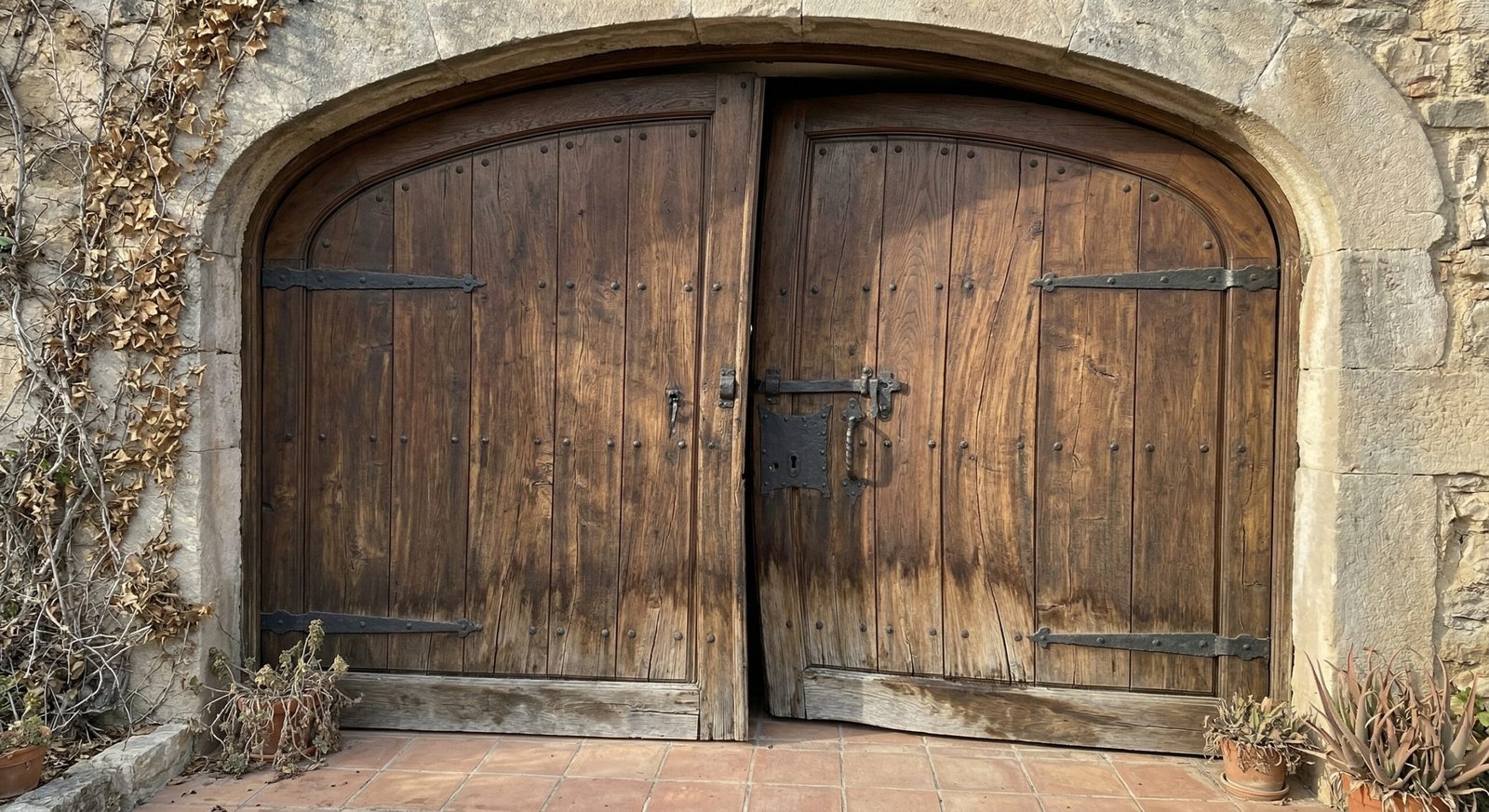
Protecting Wood Doors from Summer Heat
The UV index in Sand Canyon is relentless. Beyond the cosmetic peeling, UV rays break down the lignin in the wood, causing structural bowing. A bowed door panel creates friction as it moves through the track radius. This friction is sensed by the logic board as "weight," causing the motor to work at a higher amperage. Over time, this bakes the electronics and leads to premature failure of the drive assembly.
Kinetic Warning Signs: Identifying the Struggle
Your garage door system will tell you it's out of balance long before it stops moving entirely. Ignoring these signs in a heavy carriage door is a recipe for a snapped cable or a fried motor.
1. The 'Mid-Point' Failure
The definitive test for kinetic balancing is the manual lift. Pull your emergency release cord and lift the door halfway by hand. A balanced heavy timber door should hover in place. If it crashes to the floor or rockets upward, the torsion springs are incorrectly tensioned. In Sand Canyon, we often see springs that have lost their "memory" due to thermal fatigue from the heat.
2. Logic Board 'Phantom' Reversals
If your door starts to close and then abruptly reverses without an obstruction, your motor’s force settings are being triggered. While many homeowners suspect the photo-eye sensors are dirty (a common issue with Sand Canyon dust), it is often the motor sensing the extreme drag of an unbalanced wood door. The motor "thinks" it has hit an object because the weight is too much to handle.
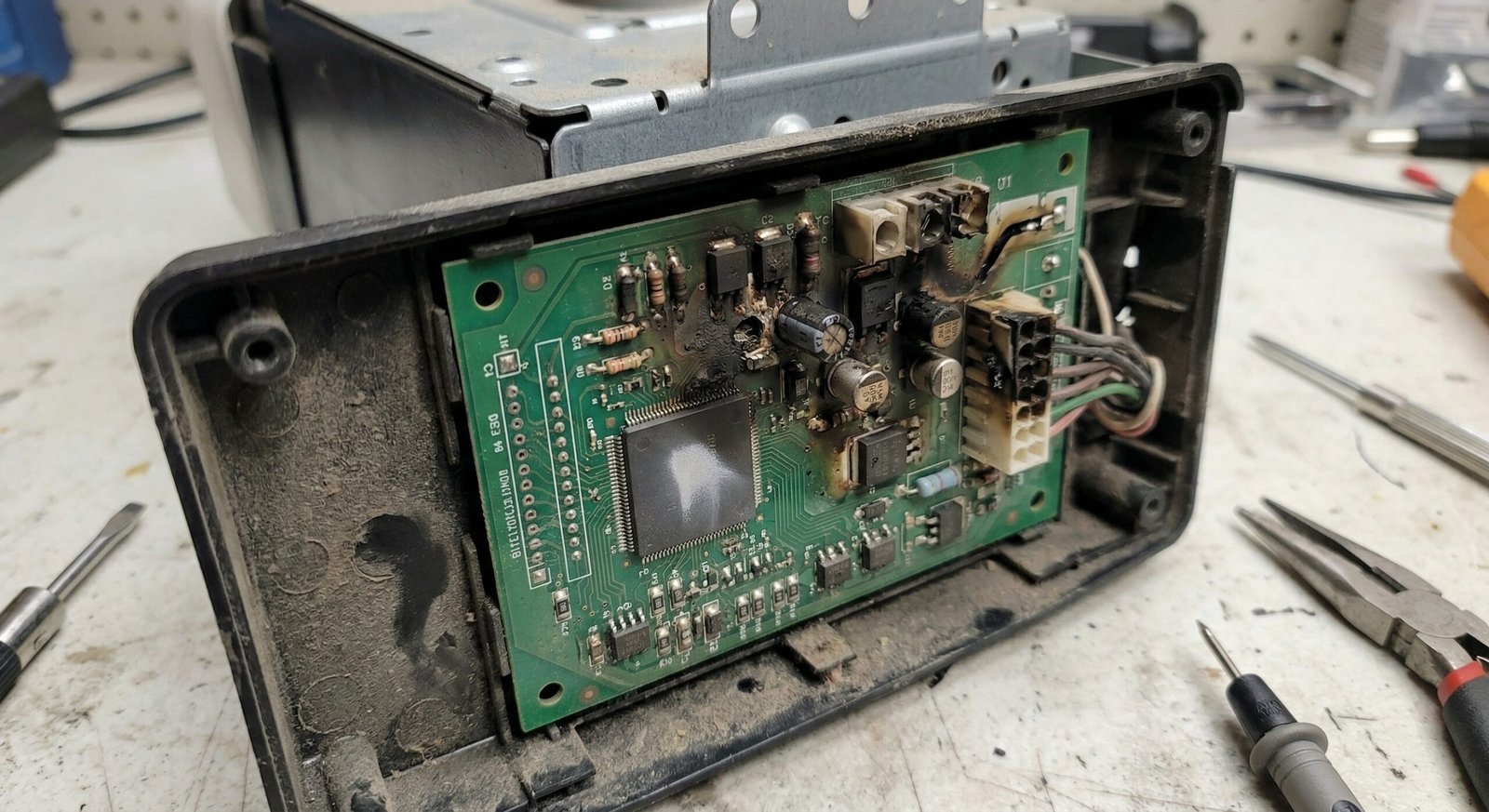
Combating Sand Canyon Dust in Your Tracks
Sand Canyon is a wind tunnel for silica and equestrian dust. This grit enters the tracks and acts as an abrasive, grinding down your rollers and adding friction to the lift.
Track Solvent Flushes vs. Traditional Grease
Applying heavy grease to tracks in the 91387 is a mechanical death sentence. Grease traps dust, creating a thick sludge that hinders movement. We perform track solvent flushes to strip away this debris, followed by dry PTFE lubrication. This ensures that the nylon rollers can glide without the "stuttering" that often precedes a cable failure.
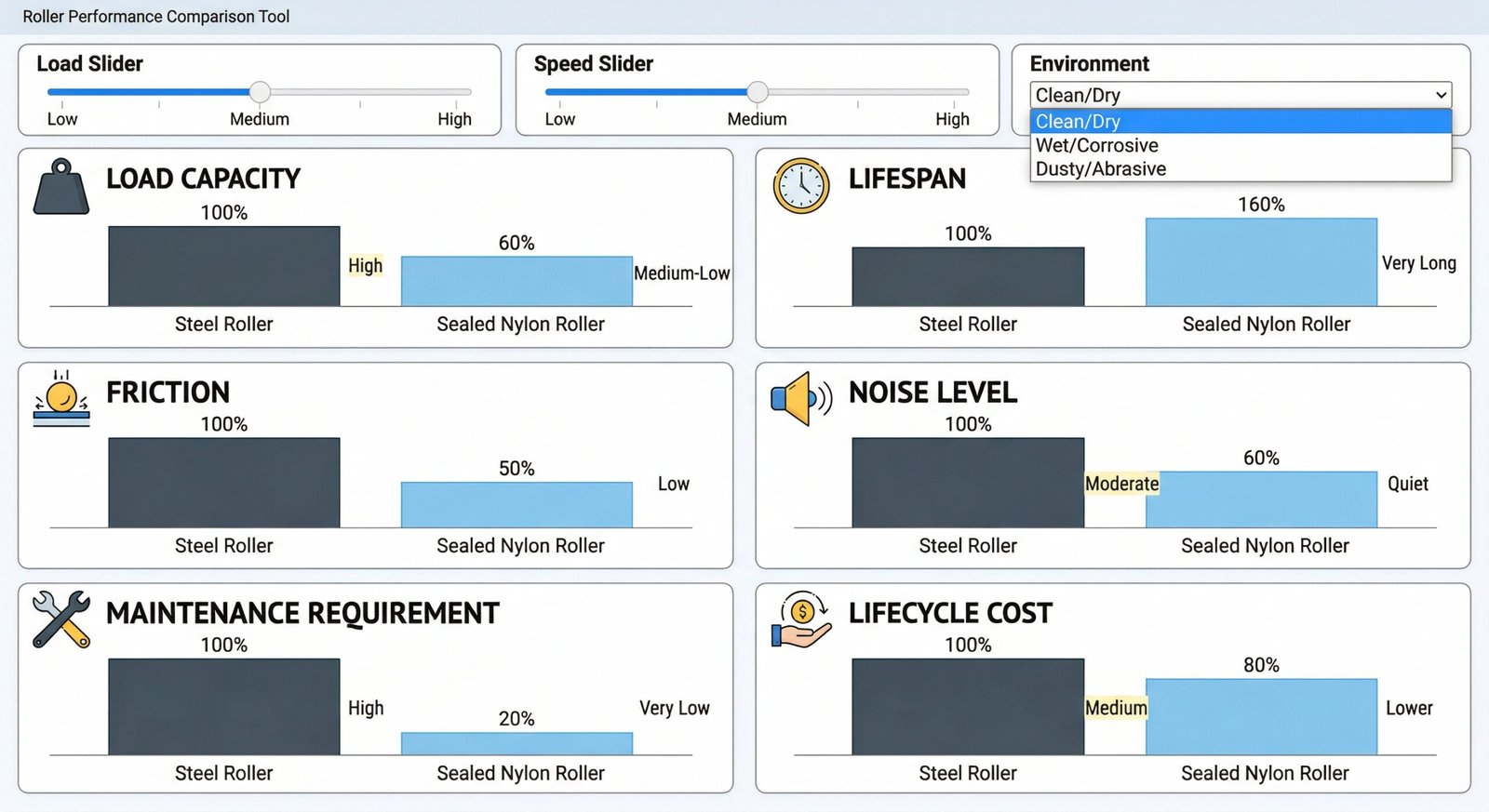
The Upgrade to Sealed Nylon Rollers
For high-end estates, unsealed steel rollers are insufficient. The 91387 silt penetrates the bearing race, causing them to seize. Upgrading to high-cycle, sealed nylon rollers provides the shock absorption needed for heavy timber while keeping the canyon grit out of the bearings.
Annual Maintenance Checklist for 91387 Homeowners
To preserve the structural integrity of your carriage-style doors, this checklist must be performed annually, preferably before the peak SCV summer heat begins.
- Kinetic Balance Test: Verify the door hovers at the mid-way point when operated manually.
- Torsion Spring Inspection: Check for "spring sag" or rust caused by canyon humidity.
- Track Solvent Flush: Remove silica dust and old grease from the vertical and horizontal tracks.
- Nylon Roller Audit: Inspect for flat spots or seized bearings that add friction.
- Weatherstripping Integrity: Ensure the perimeter seals haven't baked and cracked in the sun.
- Bottom Seal Compression: Check that the bottom seals are blocking dust and rodents effectively.
- Photo-Eye Sensor Polish: Clean lenses and confirm the brackets haven't vibrated loose from high winds.
- Hardware Torque Test: Tighten all lag bolts; heavy wood doors vibrate hardware loose over time.
- Logic Board Surge Protection: Verify the opener is plugged into a dedicated surge protector.
- Battery Backup Cycle: Ensure SB-969 compliance by testing the motor during a simulated power outage.
MASTER TECH TIP: If your heavy timber door makes a rhythmic "thumping" sound as it opens, your rollers are flat-spotting because the door is out of balance. The extra weight is literally crushing the rollers against the track.
Restore Your Estate's Equilibrium
The physics of Sand Canyon are working against your heavy doors every day. Don't wait for a torsion spring to snap or a logic board to cook.
Schedule a Structural Audit