The Dangers of Unbalanced Wooden Garage Doors: When to Call a Pro for Spring Tuning
In the expansive ridgetop estates and equestrian properties of Sand Canyon (91387), the garage door is not merely a utility—it is a massive structural architectural component. Homeowners in this unique Santa Clarita micro-climate often favor heavy timber doors and custom carriage-style builds to match the rugged elegance of the canyon. However, these 600lb to 800lb wood doors are governed by the unforgiving laws of physics and the volatile Santa Clarita environment.
The extreme SCV summer heat, high-velocity wind tunnels, and pervasive silica dust create a mechanical "perfect storm" that rapidly targets the balance of your door. As a master technician with 20 years of experience serving high-end Santa Clarita estates, I have seen firsthand how a door that is "just a little bit heavy" can lead to a catastrophic $4,000 failure overnight. Understanding the gravity of kinetic balancing is the only way to protect your investment in the 91387.
The Physics of Imbalance in Heavy Timber Doors
A garage door system is essentially a giant scale. On one side, you have the dead weight of the door panels. On the other, you have the torque generated by the torsion springs. When these two forces are in perfect equilibrium, the door is "balanced."
Protecting Wood Doors from Summer Heat
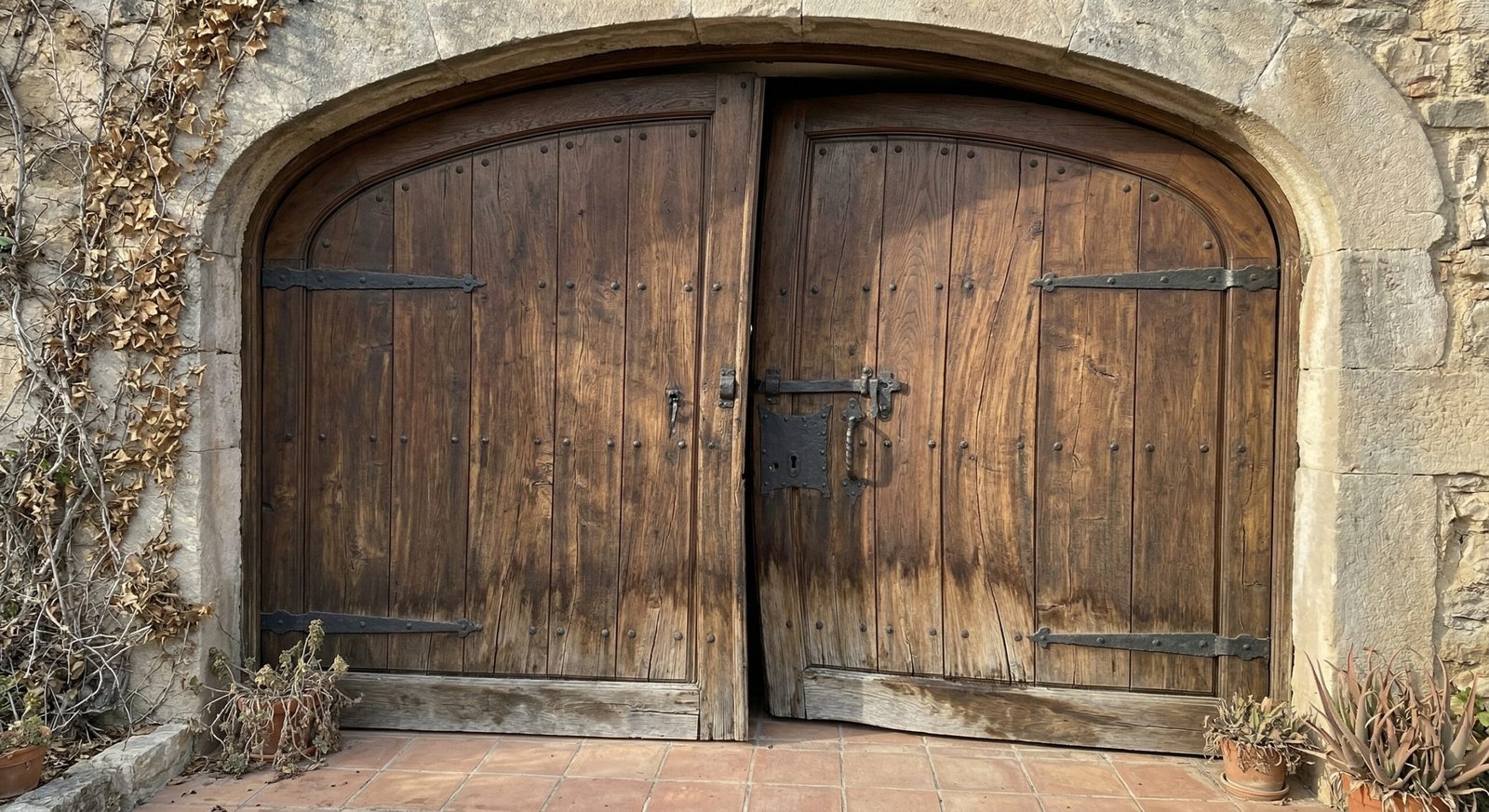
In Sand Canyon, wood is a living material. When the intense SCV sun bakes a dark-stained mahogany or cedar door, the exterior fibers shrink while the cooler interior fibers remain expanded. This causes the door to bow and warp, fundamentally changing the way it travels through the track radius. A warped door creates massive friction, which the motor interprets as weight. This friction destroys your system's kinetic balancing, forcing the motor to draw lethal levels of amperage to complete a cycle.
Diurnal Swelling and Weight Fluctuation
Sand Canyon properties face significant diurnal temperature shifts. A heavy timber door can absorb moisture from the morning canyon mist and then bake in 110-degree heat by 3:00 PM. This cycle causes the door's actual weight to fluctuate. If your torsion springs aren't precisely calibrated to handle these shifts, the "heavy" door will eventually win the war against your motor.
Kinetic Warning Signs: When the Balance Fails
An unbalanced door rarely fails silently. It leaves a trail of kinetic warning signs that most homeowners overlook until the torsion springs snap or the motor gears strip.
1. The Motor Rail 'Bow'
Watch your automatic opener while the door is rising. If you see the long steel rail bowing upward or shaking violently during the first three feet of travel, your door is severely out of balance. The motor is literally trying to rip itself off the ceiling to lift a door that the springs are no longer supporting.
2. Logic Board Failures and Phantom Reversals
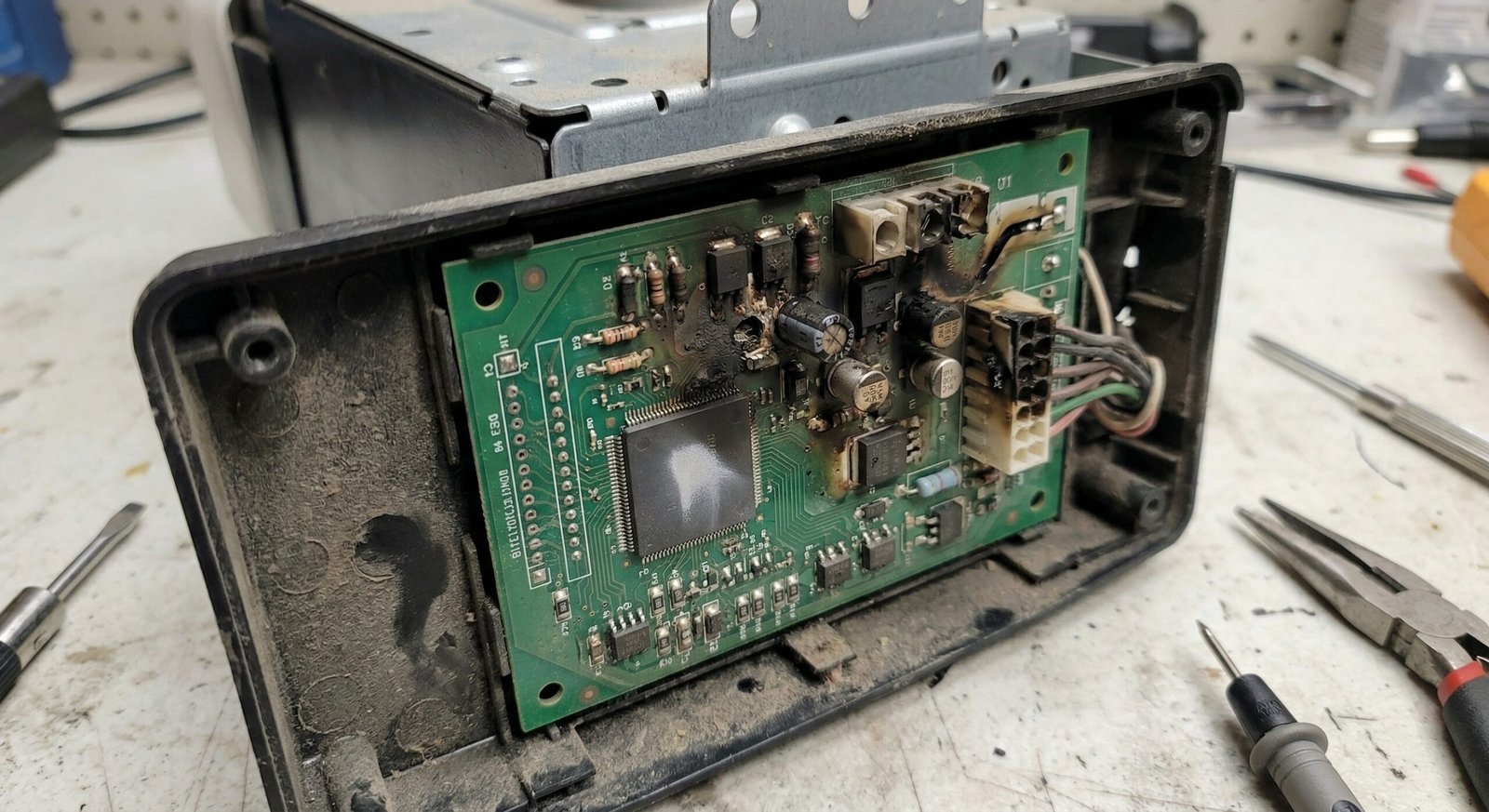
Modern openers are controlled by sensitive logic boards. These boards have internal force-limit settings. When an unbalanced heavy wood door drags, the motor overheats, and the logic board will often trigger a "phantom reversal," where the door opens by itself or stops halfway. In Sand Canyon, we see an influx of fried logic boards during the summer because homeowners keep forcing unbalanced doors to run, effectively baking the circuitry.
Combating Sand Canyon Dust in Your Tracks
If you live near the wash or the equestrian trails, dust is your #1 mechanical enemy. Silica dust enters the track assembly and bonds with traditional lubricants to create a thick, abrasive paste.
Track Solvent Flushes vs. Traditional Grease
Homeowners often try to "fix" a heavy-sounding door by spraying more grease into the tracks. This is a mechanical death sentence in the 91387. We perform track solvent flushes to strip away the grit. A clean track allows the nylon rollers to glide with zero resistance. If your tracks are clogged with canyon silt, the friction adds an artificial "weight" to the door, which throws off the kinetic balance and snaps springs prematurely.
The Switch to Sealed Nylon Rollers
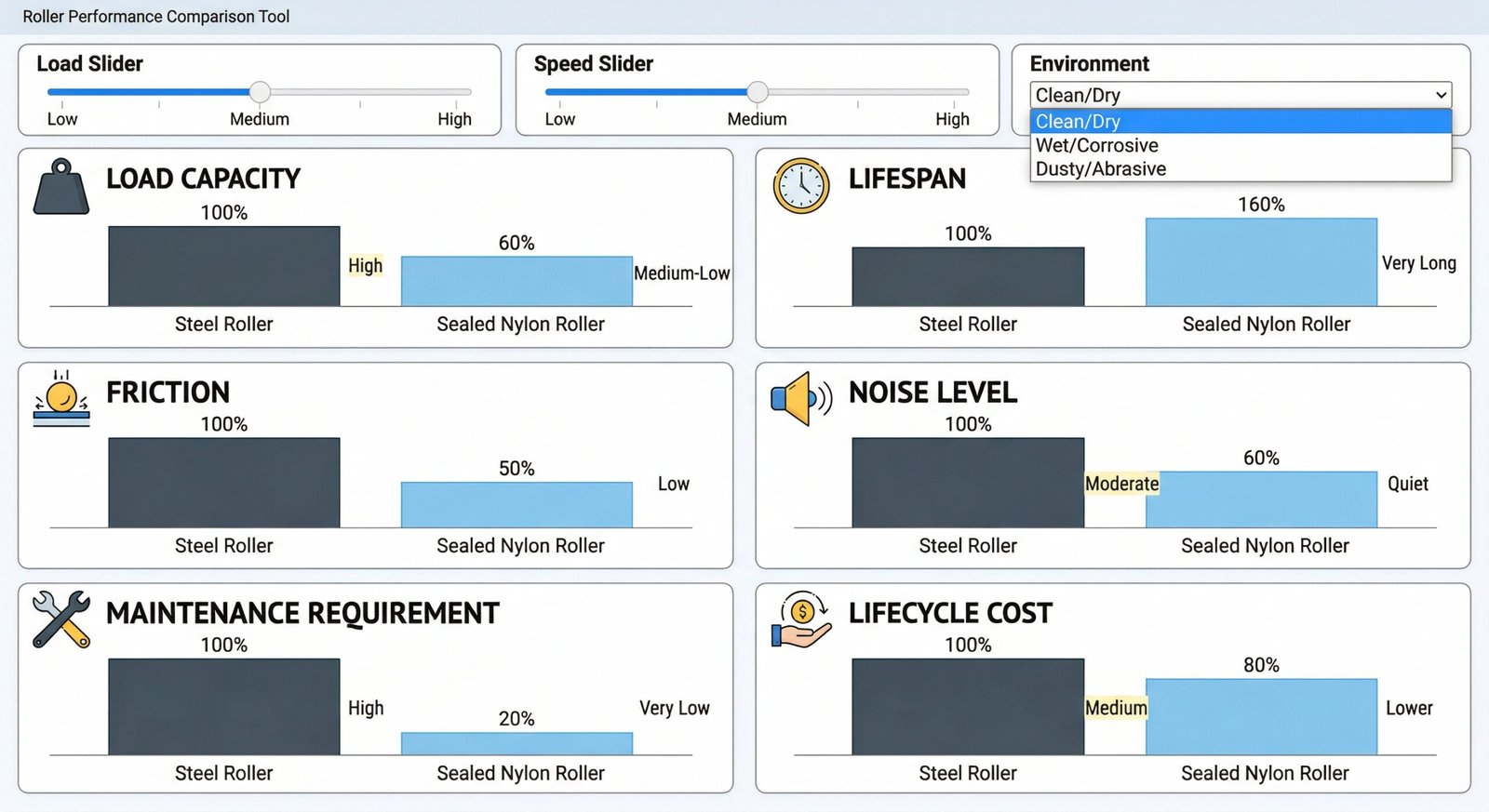
For Sand Canyon estates, unsealed steel rollers are obsolete. The 91387 dust seizes the bearings, turning the rollers into "slides" that grind against the track. Upgrading to high-cycle, sealed 13-ball bearing nylon rollers is the only way to ensure the door remains balanced and quiet through the SCV heatwaves.
The Danger Zone: Why Pro Tuning is Non-Negotiable
Tuning a spring for a 150lb aluminum door is one thing; tuning a torsion spring for a custom carriage door is a high-risk engineering task. The amount of stored energy in those coils is enough to shatter bones or slice through steel cables. In Sand Canyon, where the wind-load can add lateral pressure during the tuning process, the risk is even higher.
Photo-Eye Sensors and Wind Vibration
Even your safety system is affected by balance. High canyon winds vibrate the tracks; if the door is unbalanced, that vibration is amplified, knocking photo-eye sensors out of alignment and leaving your estate's primary entrance vulnerable and non-functional.
91387 Annual Maintenance Checklist
- Manual Lift Test: Disconnect the motor and lift the door. It should hover at the mid-point. If it falls, call a pro immediately.
- Torsion Spring Inspection: Look for gaps in the coils or signs of "spring sag" caused by SCV thermal fatigue.
- Track Solvent Flush: Strip all silica dust and old grease from the vertical and horizontal tracks.
- Nylon Roller Audit: Inspect for flat spots or seized bearings that add drag to the system.
- Weatherstripping Integrity: Check for dry rot or UV cracking that allows canyon dust to infiltrate.
- Bottom Seal Compression: Verify the seal hasn't "baked" onto the driveway, causing the door to stick and surge.
- Logic Board Surge Check: Confirm the opener is protected by a dedicated surge suppressor from canyon grid spikes.
- Photo-Eye Lens Polish: Clean lenses and secure brackets against high-velocity canyon wind vibration.
- Hardware Torque Test: Heavy wood doors vibrate hardware loose; tighten all lag bolts and hinge screws.
- Battery Backup Test: Ensure SB-969 compliance by testing the motor during a simulated PSPS power outage.
In Sand Canyon, a garage door that is out of balance is a ticking time bomb. The sheer mass of a heavy timber door means that when a part fails, it fails with enough force to cause catastrophic property damage or severe injury. Protecting your estate means respecting the physics of the 91387 environment.
Is Your Heavy Wood Door Winning the War?
If you hear straining, see bowing, or feel a heavy lift, your door is out of balance. Don't wait for the snap.
Schedule a Kinetic Audit