

One Garage Door Spring Broke—Should You Replace Both Springs?
A homeowner guide to matched spring pairs, cycle history, second-spring condition, door balance, safety, cost and when replacing one or both springs makes technical sense.
One spring already broke? Stop repeated opener use if the door is heavy, crooked or unstable. Call (661) 449-2694 to ask Next Hour Garage Door Repair Santa Clarita about current spring service availability.
If one garage door spring breaks, should you replace both?
If both springs were installed together and have the same cycle history, replacing both is often reasonable because the second spring may have similar fatigue. It is not an absolute rule. A newer, healthy remaining spring may be kept if it can be matched correctly and the final door balance is verified.
One Spring Broke: Why the “Replace One or Both?” Question Matters
If your garage door uses two springs and one of them breaks, the obvious question is whether you should replace only the broken spring or replace both at the same time. The answer is not a universal rule. It depends on whether the springs are a matched pair, whether they were installed together, how many cycles they have accumulated, the condition of the remaining spring, the door's weight and balance, and whether the replacement spring can be matched correctly to the existing one.
In many two-spring residential garage door systems, replacing both springs is a reasonable recommendation when the springs are the same age and have shared the same opening-and-closing cycles. The unbroken spring may have nearly the same fatigue history as the spring that failed. Replacing only one can leave an older spring paired with a new one, and that remaining older spring may fail later. However, replacing both is not automatically required in every situation. If the second spring is newer, has a different service history, or can be accurately matched and is still in good condition, a one-spring replacement may be technically appropriate.
For Santa Clarita homeowners, the best decision is based on spring matching, cycle history, condition and balance rather than a sales script. This guide explains how two-spring systems work, why springs often age together, when replacing both can make sense, when one may be enough, what the technician should inspect, what the opener and cables have to do with the decision, and which safety red flags mean the door should stop being operated.
Should You Replace Both Garage Door Springs if One Breaks?
If both springs were installed together, are the same design, and have experienced the same cycle history, replacing both is often reasonable because the unbroken spring may have similar fatigue. But it is not an absolute rule. A technician should inspect the remaining spring, confirm matching specifications, evaluate door balance and explain whether replacing one or both is technically justified.
Replace One Spring or Both? Quick Decision Table
| Situation | Replacing Both Often Makes Sense | Replacing One May Be Reasonable |
|---|---|---|
| Both springs were installed together | Yes, because both likely share the same cycle history | Only if there is a specific technical reason the remaining spring should stay |
| Remaining spring is visibly corroded or damaged | Yes | Usually not |
| Remaining spring is much newer than the broken one | Not automatically | Possibly, if it can be matched correctly |
| Door uses a matched dual-torsion setup | Often, especially if the pair has aged together | Possible if specifications and balance can be restored accurately |
| One spring was replaced recently | Not necessarily | Often worth considering if the newer spring is healthy and compatible |
| Spring specifications are unknown | May be safer to redesign the pair correctly | Only after accurate identification and matching |
| Door balance changed after previous spring work | Potentially | Only if a correct one-spring repair restores balance |
This table is a starting point, not a substitute for measuring the actual springs and door. The correct repair should leave the door properly counterbalanced after the work is complete.
How a Two-Spring Garage Door System Works
A common two-spring torsion system has two springs mounted on the same torsion shaft above the door. The springs work together to create the torque needed to counterbalance the door's weight. Cable drums on the ends of the shaft wind and unwind the lift cables as the door moves.
If one spring breaks, the remaining spring can still retain some stored torque, but the system is no longer operating as designed. The door may become much heavier, the opener may lift only partway, and cable tension can change. The unbroken spring is not proof that the door is safe for normal use.
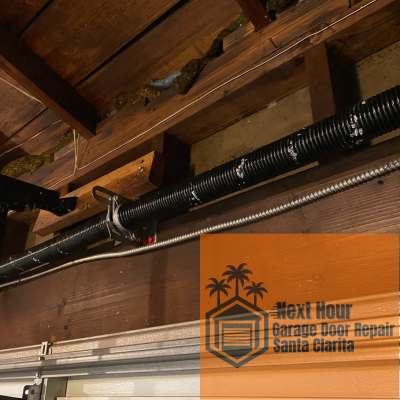
Some garage doors use a single torsion spring instead of two. Others use extension springs along both sides of the tracks. The “replace both?” question is most relevant when the system is designed around a pair of springs that work together.
Why Two Springs Often Reach the Same Fatigue Zone
If two springs were installed at the same time on the same door, they usually experience the same opening-and-closing cycles. Each time the door opens and closes, both springs work. That means both accumulate fatigue together, even if only one breaks first.
DASMA's technical guidance on factors affecting garage door spring cycle life explains that spring cycle performance is affected by design, handling, installation and door usage. The practical point for homeowners is that shared usage matters. If both springs started service together and have operated together for thousands of cycles, the unbroken spring can have substantial remaining fatigue even though it has not yet fractured.
Springs do not necessarily break on the same day because no two pieces of spring wire are perfectly identical. Small differences in material, corrosion, surface condition or load can make one fail first. The second spring can still have a similar cycle history.
Reason #1 to Replace Both: The Springs Were Installed as a Matched Pair
A matched pair is selected so the two springs together produce the torque needed for the door. The pair may use identical springs or two different springs designed to work together, depending on the door engineering. If both were selected as a system and installed together, replacing the pair can simplify restoring the intended balance.
The concern with replacing only one spring is not that “new and old can never work together.” It is that the technician must know exactly what the remaining spring is and select a replacement that works correctly with it. If the old spring's specifications are uncertain, corroded, altered or previously replaced with a non-matching part, simply installing another spring that looks similar can produce poor balance.
Reason #2 to Replace Both: The Remaining Spring Has the Same Cycle History
Cycle history is one of the strongest reasons homeowners choose to replace both. If both springs have operated together since the same installation, the second spring has experienced the same number of door cycles as the one that broke.
That does not prove the second spring will fail immediately. It means the second spring may be at a similar stage of fatigue. Replacing both at the same time can reduce the chance of paying for another spring-service visit soon after the first repair if the remaining spring fails later.
For a low-use garage, that risk may feel different than for a high-use household where the garage is the primary entry and the door cycles many times each day. The homeowner's actual use should be part of the conversation.
Reason #3 to Replace Both: The Second Spring Shows Corrosion or Damage
Visible condition matters independently of cycle count. If the second spring has meaningful corrosion, deep surface damage, deformation or another defect, keeping it just because it has not broken yet may not be a strong choice.
A technician should inspect the spring wire from a safe position and look for signs that reduce confidence in remaining service life. Homeowners should not sand, grind or manipulate a loaded spring to inspect it more closely.
If the second spring looks compromised and the first spring has already failed, replacing the pair can be the technically cleaner repair.
Reason #4 to Replace Both: Restoring Accurate Door Balance May Be Easier With a New Pair
Garage door springs are not decorative parts; they are calibrated counterbalance components. The final goal after replacement is a door that is correctly balanced for its weight and hardware.
If the remaining old spring has lost some effective performance, pairing it with a new spring can make balancing more complicated. The technician may be able to match the new spring and restore balance, but that depends on knowing the old spring's actual specifications and condition.
Replacing both can create a known starting point: two springs selected together for the current door. This can be especially useful if previous spring work is undocumented or the current pair does not appear to match.
Reason #5 to Replace Both: Reducing the Chance of a Second Breakdown Soon After the First
For many homeowners, convenience matters. A spring failure can trap a vehicle, make the garage difficult to secure, or interrupt the household's normal routine. If the second spring has the same age and cycle history, replacing both can reduce the chance that the household faces another spring failure soon after the first repair.
This is not a guarantee. New springs can also fail for unusual reasons, and replacing both does not make the system maintenance-free. The point is that replacing the equally aged second spring removes one known wear item from the immediate future.
When Replacing Only the Broken Spring May Be Reasonable
There are situations where replacing only the failed spring can be technically reasonable. The most obvious example is when the second spring was replaced recently and has a clearly different service history. If the newer spring is healthy, correctly specified and can be matched with the replacement, replacing it again may not provide much additional value.
Another situation is a system where one spring was intentionally changed during an earlier repair and the remaining spring's specifications are documented. A technician may be able to install a correct matching spring and restore balance without discarding the newer spring.
The key is evidence. “Only one is broken” is not enough by itself to justify replacing one. “The second spring is newer, properly matched, in good condition and the door balances correctly with the proposed replacement” is a much stronger technical reason.
What Does It Mean to Match a Replacement Spring Correctly?
Matching garage door springs requires more than comparing the color or looking at the coil. On a torsion system, relevant characteristics can include wire diameter, inside diameter, length, winding direction and the torque needed for the door. The system also has to work with the cable drums and door height.
If the door's weight has changed because of insulation, glass, reinforcement or panel replacement, simply copying the old spring may no longer be appropriate. The technician should make sure the replacement spring setup matches the door that exists now.
For a paired spring system, the question becomes how the two springs combine to create the required torque. A new spring should not be selected in isolation from the remaining spring.
Does the Answer Change for Torsion vs. Extension Springs?
Yes, because the hardware and failure patterns are different. A two-spring torsion system uses springs on a common shaft. An extension spring system typically uses one spring on each side of the door along the horizontal tracks. If one extension spring breaks, the left and right sides can become uneven quickly.
For a deeper comparison of the two systems, review our guide to torsion and extension spring systems. It explains counterbalance, safety cables, cycle life, headroom and conversion factors.
On paired extension systems, replacing both springs is often discussed for the same basic reason as dual torsion: the pair may have shared age and cycles. But the technician also needs to inspect pulleys, lift cables and safety cables before finalizing the repair.
Safety Comes Before the One-Spring-vs.-Two-Spring Decision
Once a spring has broken, the garage door can be much heavier than normal. The opener is not designed to replace the lost counterbalance. Repeated opener use can strain the motor, rail, trolley and top door section.
DASMA's garage door safety guidance warns homeowners about high-tension springs, cables and related hardware. Do not wind or unwind torsion springs, loosen winding cones, adjust cable drums, remove bottom brackets or reconnect lift cables under tension.
If the door is hanging crooked, a cable is loose, a roller has left the track or the door is partially open and unstable, keep people away from it and stop operating the opener. The replacement decision should be made only after the system is secured and inspected.
Why Spring Fatigue Is Not Always Visible
One reason the replace-one-or-both decision can be difficult is that spring fatigue is not always obvious from across the garage. A spring can look intact while still having accumulated a large number of cycles. The lack of a visible crack does not mean the spring is “like new.”
That is why shared service history matters. If both springs were installed together and one has already reached failure, the second spring deserves more scrutiny than a spring that was installed only a few months ago.
Visual inspection is still useful because corrosion, deformation and damage can strengthen the case for replacement. But homeowners should not expect to see a clear countdown on the spring. Mechanical fatigue can exist before a visible fracture appears.
What Happens to the Garage Door Opener When One Spring Breaks?
The opener may be the first part the homeowner notices because the motor suddenly sounds strained or the door opens only a few inches. But the opener may be reacting to the spring failure rather than causing the problem.
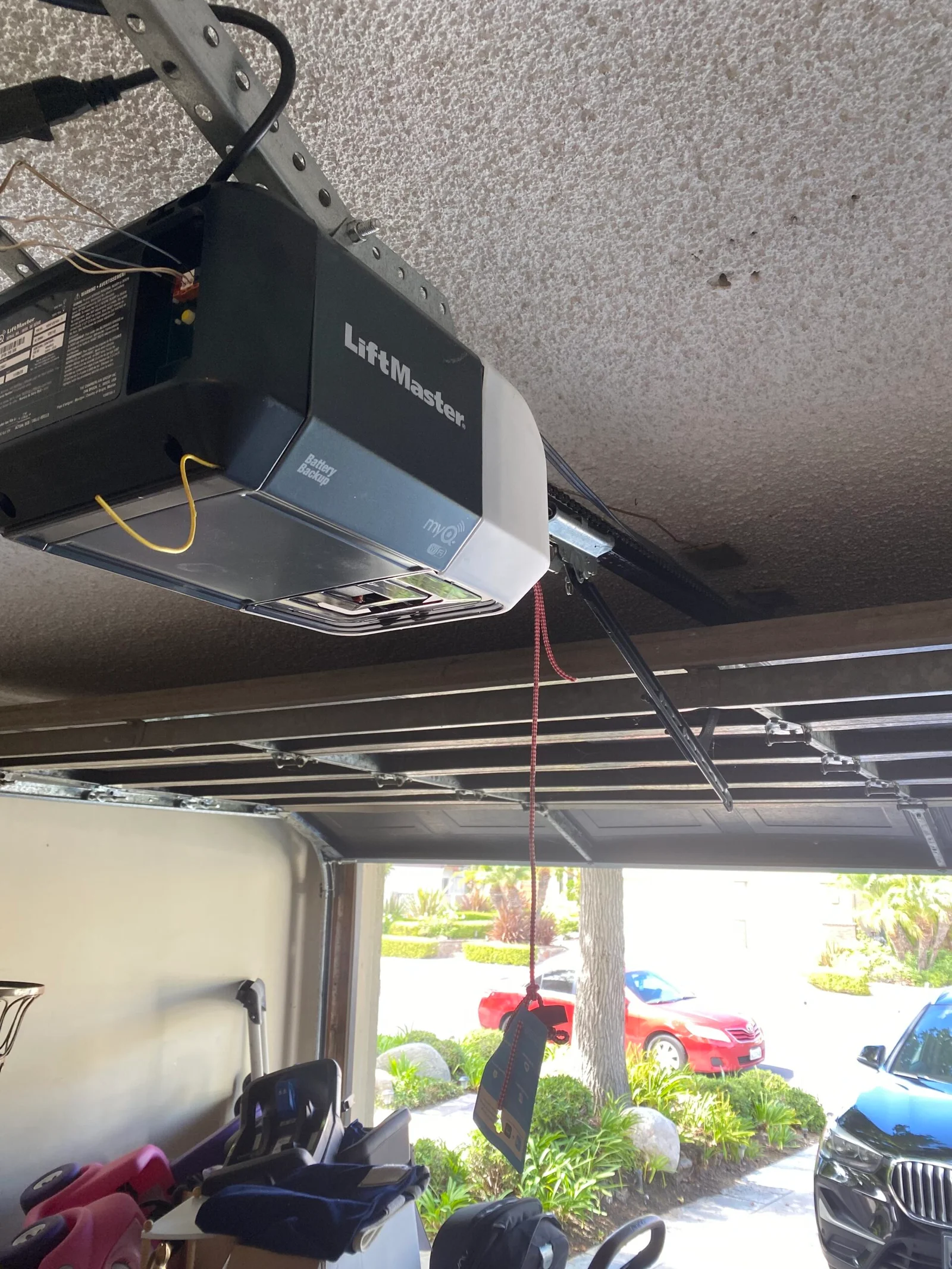
After spring repair, the opener should be tested only after the door is mechanically balanced. If the opener was repeatedly used with a broken spring, its drive components or motor system may deserve inspection for damage, but opener replacement should not be assumed automatically.
Cables and Drums Should Be Inspected When a Spring Breaks
A broken torsion spring can change cable tension. If the door moves unevenly, a cable can become slack or come off the drum. Continuing to operate the door in that condition can create additional damage.
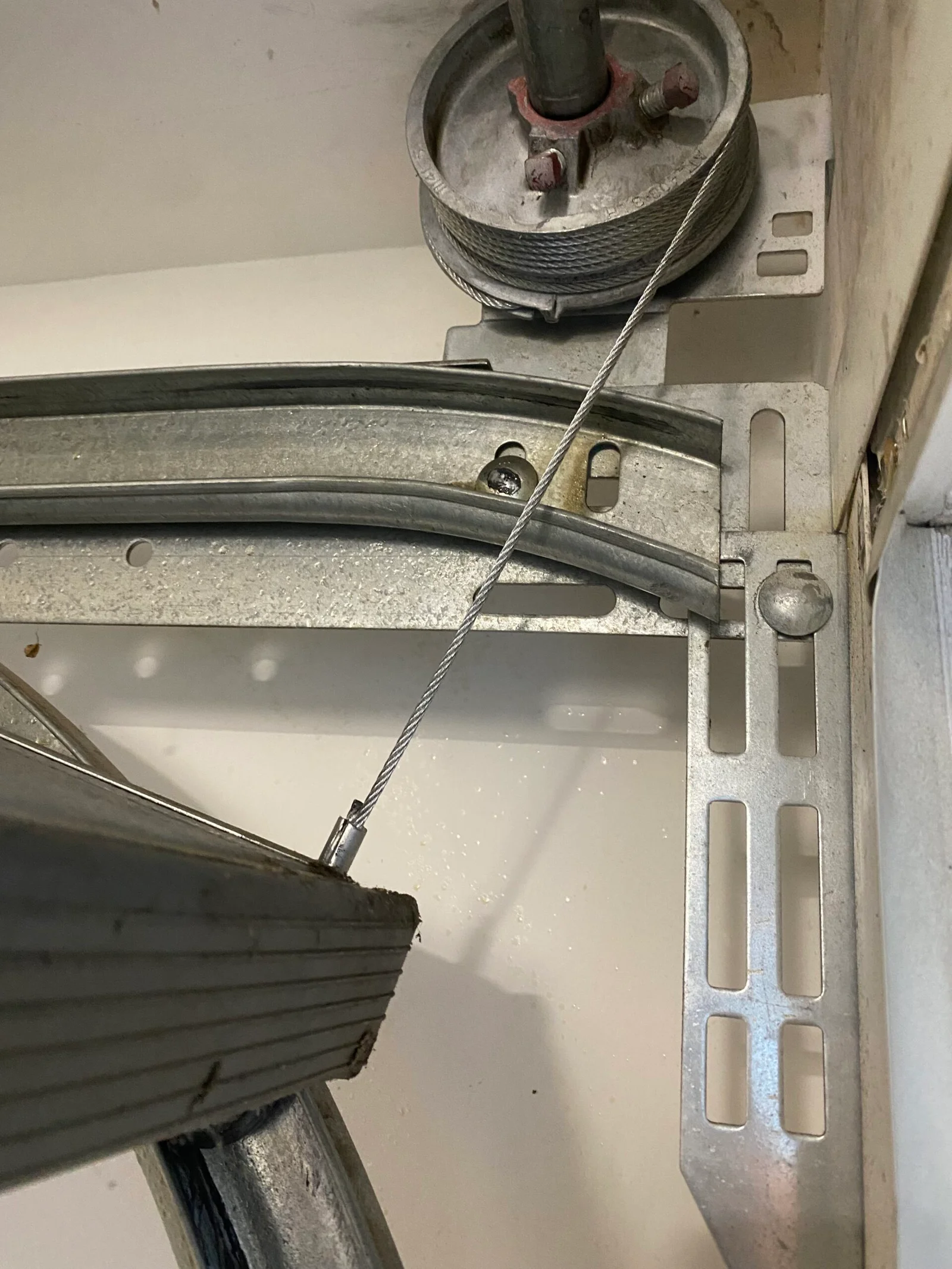
The spring decision should therefore include more than the springs. The technician should inspect drums, lift cables, bearings, rollers and track alignment. If a cable is frayed or a drum is damaged, those issues can affect the final repair scope.
What Should Be Checked on the Remaining Spring?
The second spring should be evaluated for visible corrosion, physical damage, unknown repairs, mismatched size, unusual spacing, prior paint or identification marks, and whether it appears to be from the same installation as the failed spring.
The technician should also consider the door's balance history. If the door was already difficult to lift before the break, the pair may not have been correctly matched. If the opener had been straining or the door would not stay controlled during prior service, simply duplicating the old spring setup may repeat the problem.
The remaining spring's condition is one of the biggest reasons this decision cannot be made responsibly from a phone call alone.
Not Sure Whether the Second Spring Should Stay?
The decision should come from the remaining spring's age, cycle history, condition and specifications—and whether the final spring pair correctly balances the door.
Door Weight Can Change the One-Spring-vs.-Two-Spring Recommendation
The spring pair has to counterbalance the actual garage door. If the door is unusually heavy, a correct dual-spring setup may be important for distributing the required torque. If one spring is replaced with a mismatched component, the system may no longer balance correctly.
Door weight can change over time when panels, insulation, glass or reinforcement are added. If previous modifications altered the door's weight, the old spring combination may not be the correct template for replacement.
A technician who recommends one-spring replacement should still verify that the completed pair can counterbalance the current door. If replacing both creates a more accurate spring design for the actual weight, that can be a stronger reason than age alone.
Age Matters, but Cycle History Usually Tells More of the Story
A spring's calendar age is useful context, but cycle count is often a better way to think about fatigue. A garage used once a day can age very differently from a garage used six or eight times a day.
If both springs are ten years old but the door is rarely used, the fatigue history may be lower than a much newer high-use garage. On the other hand, corrosion and unknown prior service can make an older spring less attractive to keep even if the cycle count seems modest.
For homeowners, the practical question is not just “How old is the second spring?” It is “How old is it, how heavily has it been used, and what condition is it in now?”
Should You Upgrade to High-Cycle Springs When Replacing Both?
If the garage door is used frequently, a higher-cycle spring option may be worth discussing. A higher cycle rating can provide more theoretical operating cycles before fatigue becomes likely, assuming the spring is correctly sized, installed and maintained.
High-cycle is not a universal necessity. A lightly used garage may not benefit enough to justify the added cost. Ask what the cycle rating is, how it compares with the standard option, and whether the higher-cycle design is appropriate for your door.
Do not accept “high-cycle” as a vague label. The recommendation should be tied to an actual spring specification and the household's usage.
Why “Same Size” Is Not Enough When Replacing a Spring Pair
Homeowners sometimes assume a spring can be matched by visual length or diameter alone. That can be misleading. Two springs that look similar can have different wire sizes or torque characteristics.
A correct spring selection should account for door weight and the complete counterbalance design. The goal is not to reproduce the appearance of the old spring; the goal is to restore correct balance.
If the technician cannot identify the remaining spring confidently, replacing the pair with a known matched setup can be the more controlled approach.
What if the Door Uses Two Extension Springs Instead of Two Torsion Springs?
Extension spring systems usually have a spring on each side of the door. The pair works through pulleys and cables to help counterbalance the door. If one extension spring breaks, the opposite side can continue to hold tension, which can make the door uneven.
Replacing both extension springs is commonly considered when both were installed together because the same age-and-cycle logic applies. The technician should also inspect pulley bearings, lift cables and safety cables. A new extension spring installed beside a heavily fatigued old spring can create inconsistent side-to-side behavior.
Extension-spring safety cables deserve special attention because they help contain a broken extension spring. If safety cables are missing or damaged, correcting that safety issue should be part of the repair discussion.
Does Replacing Both Springs Cost More?
Yes, replacing two springs generally involves more parts than replacing one, so the immediate repair cost can be higher. But the decision should also consider the condition and cycle history of the remaining spring, the likelihood of another service call, and whether replacing both creates a properly matched system.
Garage door spring replacement cost can vary based on spring specifications, door weight, number of springs, labor, cable or drum condition, additional damaged components, access and scheduling. This article does not publish fixed Next Hour Garage Door Repair pricing or promise free estimates.
Ask for the price difference between replacing one spring and replacing the pair, along with the technical reason for each option. That lets you compare immediate cost with the condition of the remaining spring.
When Replacing Only One Spring Can Become a False Economy
Replacing only one spring can save money today, but it can become false economy if the second spring has the same age and cycle history and fails soon afterward. The homeowner then pays for another visit and experiences another garage-door interruption.
This does not mean a second failure is guaranteed. It means the risk should be part of the decision. A homeowner who plans to keep the property and uses the door heavily may value replacing both more than a homeowner whose second spring is relatively new and well documented.
The best repair decision balances technical condition with the homeowner's tolerance for another near-term spring failure.
When Replacing Both Could Be Unnecessary
Replacing both can be unnecessary when the remaining spring is genuinely newer, was installed separately, is in good condition, and can be matched accurately with the replacement. For example, if one spring was replaced recently because of a manufacturing defect or isolated damage while the other spring is also relatively new and documented, replacing both again may add cost without a clear technical benefit.
It can also be unnecessary if the door's spring design intentionally uses non-identical springs and the remaining spring is still correct for the system. The technician should understand the engineered pair rather than assume “both must always be identical.”
The deciding factor should be restoring correct balance with reliable, compatible components.
What Not to Do After One Garage Door Spring Breaks
- Do not repeatedly press the opener to see if it can lift the door.
- Do not try to stretch or tighten the remaining spring.
- Do not loosen winding cones or spring anchor hardware.
- Do not adjust cable drums or bottom brackets.
- Do not reconnect a loose lift cable under tension.
- Do not stand beneath a crooked or unstable door.
- Do not assume the remaining spring is safe just because it is not visibly broken.
- Do not accept a replacement spring based only on visual appearance.
The homeowner's safest role is to recognize the failure, stop normal operation and have the system diagnosed.
Example: When Replacing One Spring Can Be the Better Technical Choice
Imagine a two-spring torsion door where the left spring was replaced recently after isolated physical damage, while the right spring is several years older and now breaks. The newer left spring has far fewer cycles and its specifications are documented.
In that situation, replacing only the failed right spring may be reasonable if the technician can match it correctly to the newer left spring and confirm that the completed system balances the door. Replacing the relatively new left spring again may provide little benefit.
This example shows why a blanket “always replace both” rule is too simplistic. The technical goal is a correctly matched, reliable spring system—not automatically replacing the maximum number of parts.
Example: When Replacing Both Springs Is the Stronger Choice
Now consider a two-spring torsion door where both springs were installed together many years ago, the household uses the garage several times per day, one spring breaks and the remaining spring shows surface corrosion. The homeowner has no documentation showing that the springs have different service histories.
In that situation, replacing both is often the stronger recommendation. Both springs share the same cycle history, the second spring already shows condition concerns, and replacing the pair gives the technician a known matched spring setup for the current door.
The immediate cost is higher than replacing one spring, but the repair removes the equally aged remaining spring and reduces the likelihood of another spring-related service interruption from that old pair.
What a Professional Dual-Spring Inspection and Repair Should Include
A professional visit should start by identifying the spring system and securing the door. The technician should confirm whether the door uses one torsion spring, two torsion springs or extension springs.
On a two-spring torsion system, the technician should inspect both springs, measure or identify spring specifications, inspect the shaft, bearings, drums and lift cables, and assess the door's weight and balance requirement. If only one spring is proposed for replacement, the technician should be able to explain how the new spring will be matched to the remaining spring.
After replacement, the door should be checked for balanced movement before the opener is returned to normal service. Cables should remain seated correctly on the drums, and the door should travel without strong tilt, binding or abnormal resistance.
Three Common Spring-Pair Scenarios
Scenario 1: Both springs are the same age and one breaks
This is the strongest case for replacing both. The remaining spring has the same cycle history and may be approaching the same fatigue range. Replacing the pair gives the system two springs with the same new service starting point.
Scenario 2: One spring was replaced recently, the older spring breaks
Replacing only the newly failed older spring may be reasonable if the recent spring is healthy, correctly specified and can be matched accurately. The technician should still verify balance.
Scenario 3: Spring history is unknown
If the homeowner does not know when the springs were installed or whether they are a matched pair, the technician may recommend replacing both so the spring setup can be established with known specifications. The recommendation should be explained rather than treated as automatic.
Santa Clarita Usage Patterns Can Affect the Decision
Santa Clarita homeowners often use the garage as a primary vehicle entrance, which can create frequent daily cycles. A door used by multiple drivers may accumulate fatigue faster than a garage opened only occasionally.
Warm, dry garage conditions can also make lubrication and corrosion condition worth monitoring, but local heat does not automatically mean both springs must be replaced. The stronger reason is shared age, shared cycles and actual condition.
For a high-use household, the inconvenience of a second spring failure can carry more weight in the decision. For a lightly used garage with a newer remaining spring, the calculation may be different.
12 Questions to Ask Before Deciding Whether to Replace One Spring or Both
- Were both springs installed at the same time?
- Do both springs have the same cycle history?
- Is the remaining spring visibly corroded, damaged or deformed?
- Can the remaining spring's specifications be identified accurately?
- Is the proposed replacement correctly matched to the remaining spring?
- Will the door be checked for balance after the repair?
- Are the lift cables and drums still in good condition?
- Did the opener experience unusual strain after the spring broke?
- Is a higher-cycle spring option available for my door?
- What is the price difference between replacing one spring and both?
- What parts and labor are included in each option?
- Why is one-spring or two-spring replacement technically better for this specific door?
California homeowners who want to understand contractor classifications can review the CSLB D-28 Doors, Gates and Activating Devices classification and can verify current contractor information with the official CSLB Check a License tool. This article does not claim a specific Next Hour license number or classification.
Why Consider Next Hour Garage Door Repair Santa Clarita for a Broken Spring?
Next Hour Garage Door Repair Santa Clarita | Garage Spring & Opener Repair is a local option for homeowners dealing with broken torsion springs, paired spring systems, heavy doors and spring-related cable or opener problems.
A useful recommendation should explain whether the remaining spring has the same age and cycle history, whether the pair is correctly matched, what condition the second spring is in, and how the repair will restore correct door balance. The decision should come from the actual spring system rather than a blanket rule.
For current service availability, call (661) 449-2694, review the garage door spring repair service in Santa Clarita, or view Next Hour Garage Door Repair Santa Clarita on Google Maps.
Santa Clarita Valley Service-Area Context
The primary geographic focus of this guide is Santa Clarita, California, including the 91387 local context and the broader Santa Clarita Valley. Supporting service areas may include Valencia, Canyon Country, Saugus, Newhall, Stevenson Ranch, Castaic and Hasley Canyon when relevant to current service coverage.
These community references do not imply separate public offices. The replace-one-or-both decision depends on the spring system, cycle history, door weight and condition—not on the neighborhood.
Frequently Asked Questions About Replacing One or Both Garage Door Springs
If one garage door spring breaks, should I replace both?
Often, yes, when both springs were installed together and have the same cycle history. The unbroken spring may have similar fatigue. But replacing both is not mandatory in every case; the remaining spring's age, condition, specifications and ability to match the new spring should be evaluated.
Can I replace only the broken torsion spring?
Yes, in some cases. Replacing one may be reasonable if the second spring is newer, healthy, correctly specified and can be matched accurately. The final door balance should confirm that the spring pair works correctly.
Why do garage door companies recommend replacing both springs?
The main technical reason is shared fatigue. Springs installed together usually experience the same cycles, so the second spring may be near the same fatigue range even though it has not broken yet.
Will the second spring break soon after the first?
It might, but there is no guaranteed timeline. If both springs are the same age and have the same cycle history, the remaining spring has similar accumulated use. Its actual condition still matters.
Is it cheaper to replace one spring?
Usually the immediate parts cost is lower when replacing one spring, but the total value depends on the condition of the second spring and whether another service visit may be needed later.
Do both springs have to be identical?
Not always. Some two-spring torsion systems can be engineered with non-identical springs that work together to produce the required torque. What matters is that the pair is correctly designed for the door and produces proper balance.
Can I use the garage door opener if one spring is broken?
Normal use is not recommended. A broken spring can make the door much heavier and place abnormal load on the opener. Stop repeated opener operation and have the counterbalance system inspected.
Should I upgrade to high-cycle springs if I replace both?
It can make sense for a high-use garage, but the spring still must be correctly sized for the door. Ask for the actual cycle rating and the difference between the standard and higher-cycle options.
What else should be inspected when a spring breaks?
The technician should inspect lift cables, cable drums, bearings, rollers, tracks, door balance and the opener if it was used after the spring failed.
Is replacing garage door springs a DIY job?
No. Torsion springs and related cables and drums operate under high tension. Homeowners should not wind or unwind springs, loosen winding cones, adjust cable drums or reconnect lift cables under tension.
One Spring Broke? Get the Remaining Spring Evaluated Before You Decide
If one spring has broken, the decision is not simply “one is broken, so replace one” or “always replace both.” The right answer comes from the age, cycle history, condition and specifications of the remaining spring and whether the final system can be balanced correctly.
Ask About Current Spring Repair Availability
Call Next Hour Garage Door Repair Santa Clarita | Garage Spring & Opener Repair at (661) 449-2694. Describe whether your door has one spring or two, whether one spring is visibly broken, and whether the door is heavy, crooked or difficult to move.
One Response