
Garage Door Opens Slowly in Santa Clarita? Springs, Rollers, Tracks & Opener Causes
A homeowner guide to spring balance, rollers, tracks, cables, door weight, opener resistance, travel sensing and safe troubleshooting.
Door slow, heavy or crooked? If you see a broken spring, loose cable, off-track roller or unstable door, stop operating it. Call (661) 449-2694 to ask Next Hour Garage Door Repair Santa Clarita about current service availability.
Why is a garage door opening slowly in Santa Clarita?
A garage door can open slowly because the springs are not counterbalancing the door correctly, rollers or tracks are adding resistance, cables or drums are uneven, or the opener motor or travel sensing is struggling. Check the mechanical door first. If it is heavy, crooked, jerky or visibly damaged, stop operating it instead of increasing opener force.
A Slow-Opening Garage Door Is a Symptom, Not a Diagnosis
If your garage door has started opening more slowly than it used to, the opener motor is only one possible cause. The door can slow down because the spring system is no longer counterbalancing the weight correctly, rollers are dragging, a track is bent or dirty, a hinge is binding, a cable or drum is creating uneven tension, or the opener is detecting more resistance than normal.
The most useful way to troubleshoot a slow garage door is to separate the system into two parts: the mechanical door and the automatic opener. The mechanical door includes the springs, cables, drums, rollers, hinges, tracks and panels. The opener includes the motor unit, rail, trolley, belt or chain, travel sensing, RPM sensing, controls and related electronics. The opener is designed to move a door that is already properly balanced; it should not compensate for a damaged or poorly counterbalanced door.
That distinction is especially important when a door still opens but seems to labor, hesitate, move unevenly or take longer to reach the fully open position. Increasing force settings without identifying mechanical resistance can hide the symptom while allowing the underlying problem to continue.
This guide explains the most common reasons a garage door can open slowly in Santa Clarita, what homeowners can safely observe, which symptoms point more strongly toward springs, rollers, tracks or the opener, and when it makes sense to stop testing the door and request professional garage door repair.
Why Is My Garage Door Opening Slowly?
A garage door can open slowly because the springs are not counterbalancing the door correctly, rollers or tracks are creating resistance, cables or drums are uneven, or the opener motor, drive system or travel sensing is struggling. If the door feels heavy, crooked, jerky or visibly damaged, stop operating it. The mechanical door should be checked before opener settings are changed.
First Question: Has the Door Always Been Slow, or Did the Speed Change?
A garage door that has always opened at a measured, consistent speed is different from a door that suddenly became slower. Opener models vary in how fast they move a door, and some systems intentionally use controlled acceleration and deceleration near the ends of travel. The concern is usually a noticeable change from the door's normal behavior.
If the door was smooth last month and now takes noticeably longer to open, listen for what changed. Did the opener become louder? Does the door hesitate at the same height every time? Does one side move faster? Does the door start normally and then slow? Did the problem begin after spring work, insulation, a panel replacement or a collision with the track?
Those details help separate normal opener behavior from new mechanical resistance or an opener fault.
Mechanical Door Problem or Opener Problem? Start With the Difference
Opener manufacturers themselves distinguish between a door that is mechanically hard to move and an opener that has an internal problem. Chamberlain Group's guidance for a door that will not travel fully explains that an opener is intended to move a door that is already balanced and easy to lift, and it directs troubleshooting toward door balance and resistance before assuming the opener itself has failed.
That principle applies to slow opening too. A motor can sound like the problem because it is the component making noise, while the real cause is a heavy or binding door.
Signs the mechanical door may be the problem
- Door feels unusually heavy
- One side rises ahead of the other
- Door jerks or binds at one height
- Rollers wobble, drag or scrape
- Track is visibly bent or obstructed
- Spring is visibly broken or separated
- Cable is slack, frayed or off a drum
Signs the opener may be the problem
- Door moves smoothly by hand when safely disconnected
- Motor speed sounds inconsistent
- Opener stops or displays a diagnostic code
- Rail, trolley, belt or chain movement is abnormal
- Problem appears only under automatic operation
- Travel or RPM sensing appears inconsistent
Cause #1: The Springs Are Not Counterbalancing the Door Correctly
Garage door springs do the heavy counterbalance work. When the springs are broken, fatigued, incorrectly sized or no longer matched to the door, the opener has to move more of the door's actual weight.

A broken torsion spring often shows a visible gap in the coil. A spring does not have to be fully broken to create a balance concern; incorrect spring sizing or a change in door weight can also alter how heavy the door feels.
If your slow-opening problem began after spring replacement, added insulation or panel work, the relationship between correct spring sizing and door weight is especially relevant. A spring can physically fit the shaft and still be wrong for the current door.
Do not attempt to add spring tension or adjust winding cones to make the door open faster. Torsion springs store substantial mechanical energy, and spring adjustment is not a homeowner speed-control setting.
Cause #2: Worn, Dirty or Binding Rollers Are Adding Resistance
Rollers guide the garage door through the vertical and horizontal tracks. If a roller bearing is worn, a wheel is damaged, a stem is binding or debris interferes with movement, the opener must overcome additional resistance.
A single bad roller may create a hesitation at a specific location. Several worn rollers can make the entire opening cycle sound rough and slow. You may hear grinding, scraping, clicking or a change in pitch as the door moves.
From a safe position, look for rollers that wobble dramatically, appear cracked, fail to rotate normally or sit at an unusual angle. Do not remove a roller that is attached to a bottom bracket or other high-tension cable hardware.
Roller condition matters because a spring and opener can both be healthy while the door still moves slowly due to friction in the guide system.
Cause #3: Track Resistance, Damage or Obstruction Is Slowing the Door
Tracks do not pull the garage door open; they guide the rollers. But any deformation, obstruction or alignment issue can create resistance. A bent vertical track, damaged horizontal track, loose bracket or debris in the roller path can slow the door and sometimes make it jerk.
Look for obvious obstructions such as tools, storage items or accumulated debris near the track path. Also look for dents, gaps at brackets or places where a roller appears to rub instead of travel freely.
Do not hammer a badly bent track back into place while the door is loaded. If the door is crooked, partly off track or a roller has left the track, continued operation can turn a repairable alignment problem into a more serious door-structure or cable problem.
Cause #4: Hinges or Panel Joints Are Binding
Sectional garage doors bend through the curved track because hinges allow the panels to articulate. Dry, damaged or loose hinges can add friction or cause the door to move unevenly.
Watch the panel joints as the door transitions from vertical to horizontal. If a section appears to hesitate, flex unusually or make a sharp popping sound at the same point in travel, hinge or panel alignment deserves inspection.
Loose hardware can sometimes be visible, but homeowners should avoid working around bottom brackets, spring anchor hardware or other components connected to high-tension cables. A visual inspection is safer than disassembly.
Cause #5: Cable or Drum Problems Are Creating Uneven Lift
On a torsion system, the spring turns a shaft and cable drums wind the lift cables. Both sides need to lift in a coordinated way. If a cable is frayed, displaced, slack or not seating correctly on a drum, one side of the door can lag behind.
That uneven movement may feel like “slow opening,” but the more important symptom is asymmetry. One bottom corner may rise first, the door may tilt, or a cable may appear loose.
Do not reconnect a cable or adjust a drum under tension. Cable drums and bottom fixtures are part of the high-tension counterbalance system. A visibly loose or displaced cable is a stop-operating-the-door symptom, not a DIY speed adjustment.
Cause #6: The Door Became Heavier After Insulation, Glass or Panel Changes
If the garage door has been modified, the spring system may no longer match the actual door weight. Insulation, decorative overlays, reinforcement, glass or replacement panels can add weight.
An opener may still be able to move the door, but it can do so more slowly because the counterbalance system is no longer carrying the intended share of the load. The motor is then working against extra effective weight.
This cause is easy to miss when the slow opening appears weeks or months after a modification. Ask whether the door's spring setup was recalculated after the weight changed.
Cause #7: The Opener Motor or Drive System Is Losing Performance
If the door itself moves smoothly and is properly balanced, attention shifts to the opener. The motor, internal drive gear, belt, chain, rail, trolley or related components can develop wear that affects speed.
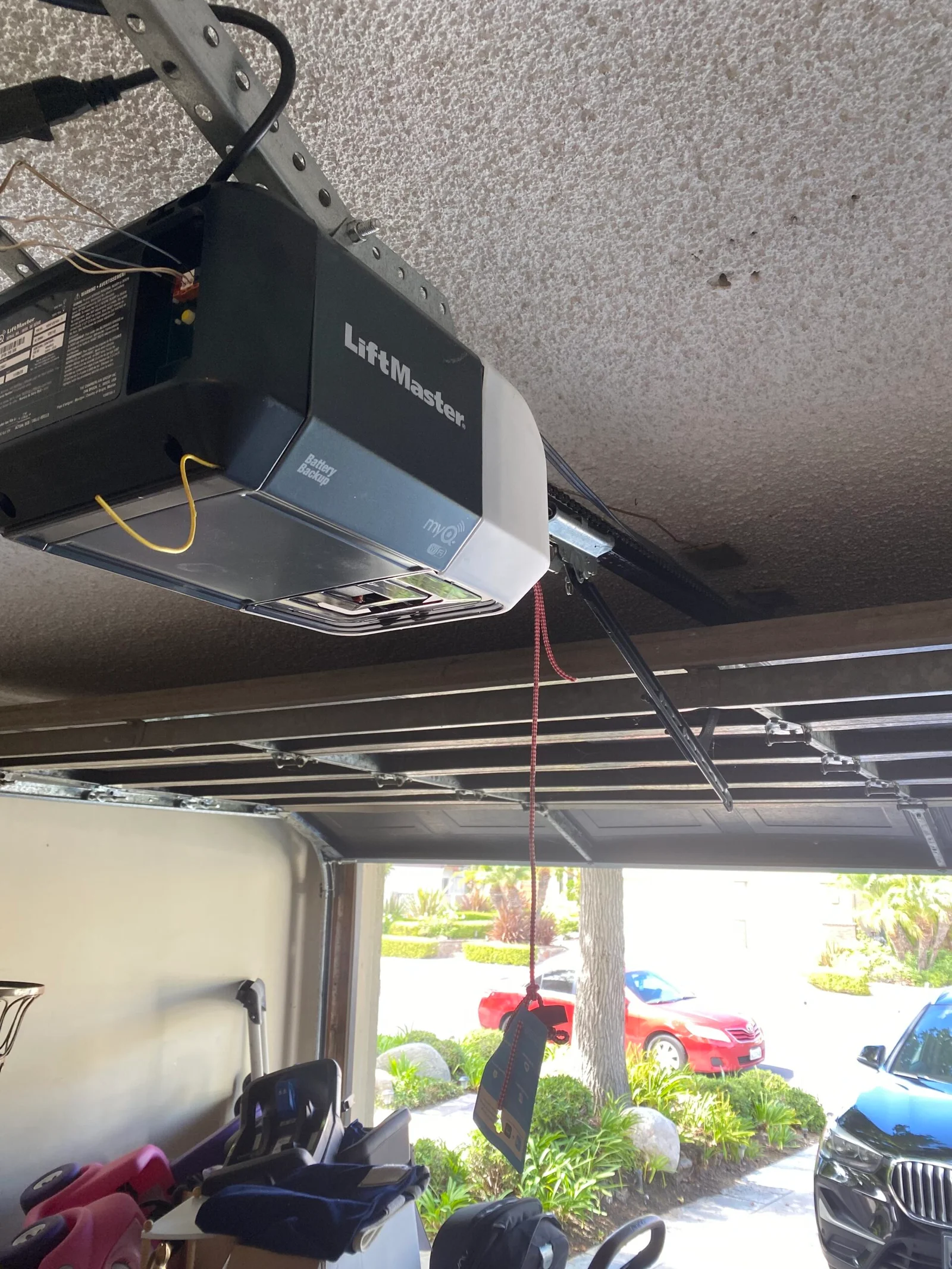
Listen for changes in motor sound. A motor that hums, surges or changes pitch can indicate that the opener is working harder than normal. A chain or belt that has unusual slack or movement may also deserve inspection.
Do not assume the opener needs replacement because it is slow. Mechanical resistance should be ruled out first, and the opener's actual diagnostic information should be checked where available.
Cause #8: Travel, RPM or Resistance Sensing Is Detecting a Problem
Many modern openers monitor motor movement and door travel. Chamberlain Group's diagnostic guidance explains that some opener systems can identify unexpected resistance or motor-speed changes during opening and may stop or alter operation when the expected movement is not detected.
If the door opens slowly and the opener displays a diagnostic code or flashing pattern, record the pattern before resetting anything. The code can help distinguish mechanical resistance from a travel-module, RPM-sensing or internal opener issue.
A diagnostic code is not a reason to bypass safety behavior or increase force immediately. It is information about what the opener is detecting.
Cause #9: Dry or Poorly Maintained Moving Parts Are Increasing Friction
Garage doors have multiple moving points: rollers, hinges, bearings and spring-related hardware. Appropriate maintenance can reduce unnecessary friction and help the door move more smoothly.
Maintenance does not mean spraying every visible part with a random product. Tracks should generally be kept clean rather than coated with heavy grease that attracts dirt. Lubrication should follow the door or hardware manufacturer's instructions for the specific component.
If lubrication briefly improves a noisy hinge but the door remains heavy or crooked, the underlying problem may be elsewhere. Maintenance helps healthy components move properly; it does not repair a broken spring, bent track or frayed cable.
Cause #10: Heat, Dust and Garage Conditions Can Expose an Existing Weakness
Santa Clarita's warm, dry environment can create hot garage interiors and dusty conditions. Those factors do not automatically cause a door to open slowly, but they can make marginal lubrication, aging opener components and dirty moving parts more noticeable.
A slow door should still be diagnosed mechanically. Avoid explanations such as “the heat did it” unless there is evidence that a specific component is overheating or affected by operating temperature.
The practical local approach is to keep the system clean, monitor changes in sound and movement, and investigate a new slowdown instead of assuming seasonal conditions are the only cause.
What the Movement Pattern Can Tell You
| What you notice | Possible causes | What matters most |
|---|---|---|
| Slow from the first inch upward | Heavy door, weak/incorrect springs, opener load | Check balance and obvious spring condition |
| Starts normal, then slows at one height | Roller, track, hinge, panel or opener sensing issue | Look for repeatable resistance point |
| One side rises slower | Cable, drum, roller, track or uneven spring issue | Stop if door becomes crooked |
| Slow only under automatic operation | Opener motor, drive, travel or RPM sensing | Mechanical door should first be confirmed smooth |
| Slow after insulation or panel work | Door weight changed | Spring sizing and balance may need recalculation |
| Slow plus grinding or scraping | Roller, track, hinge or drive-system friction | Locate the sound; do not force operation |
| Slow plus visible spring gap | Broken torsion spring | Stop operation and request service |
| Slow plus loose cable | Cable/drum or spring-system problem | Do not adjust the cable or drum |
These patterns narrow the possibilities, but they are not one-to-one diagnoses. Several problems can produce similar symptoms.
Safe Homeowner Checks for a Garage Door That Opens Slowly
Homeowners can gather useful information without touching high-tension components. Use the following checks only when the door is stable and there is no visible broken spring, loose cable, off-track condition or severe structural damage.
- Watch both sides of the door. Do the bottom corners rise together, or does one side lag?
- Listen for a repeatable sound. Grinding, scraping, popping or motor surging can help locate the area of resistance.
- Look at the tracks. Check for visible debris, dents or obvious obstructions.
- Observe the rollers. Look for cracked wheels, severe wobble or a roller that is not following the track normally.
- Look at the torsion spring from a distance. A visible gap in the coil can indicate a broken spring.
- Check visible cables without touching them. Slack, fraying or a cable off the drum is a stop-and-call symptom.
- Record opener lights or diagnostic codes. Do this before unplugging or resetting the unit.
- Remember recent changes. Spring replacement, insulation, panel repair or an impact can be relevant.
If the door is fully closed, stable and your opener manufacturer specifically provides a safe manual-disconnect procedure, that procedure can help determine whether the mechanical door moves freely. If the door is heavy, unstable, partly open, visibly damaged or has a broken spring, do not disconnect it for testing.
If the Door Is Slow Only at the Beginning of Opening
A door that is slow for the first foot of travel and then speeds up can point toward a counterbalance or initial-resistance issue. The door is transitioning from fully closed, where the spring system and weather seal are under their normal closed-position conditions.
Check whether the bottom seal is sticking to the floor, whether the door seems unusually heavy at the start, and whether the opener motor sounds strained immediately. A broken or weak spring can be especially noticeable during the initial lift because the opener is trying to move a door that is not properly counterbalanced.
Do not pry the door upward or increase opener force to overcome strong resistance. If the door does not break free smoothly, identify why.
Slow Door or Slow Opener?
The right repair depends on separating mechanical resistance from an opener problem. Springs, rollers, tracks, cables and balance should be checked before opener force is increased.
If the Door Slows Near the Top of Travel
A slowdown near the top can involve roller transition through the horizontal track, opener travel sensing, rail or trolley behavior, or resistance in the upper track area. Watch whether the slowdown happens at the same point every time.
If the mechanical door moves smoothly through that position but the opener slows, hesitates or stops, opener diagnostics become more relevant. If the door physically binds or a roller hesitates, the mechanical track and roller system deserves attention.
Do not adjust travel limits simply to force the door farther if the door is actually binding.
Why Manual Testing Has to Be Done Carefully
Online troubleshooting often tells homeowners to pull the emergency release and lift the door by hand. That can be useful in the right condition, but it is not appropriate for every slow-opening door.
If a spring is broken, the door may be far heavier than expected. If a cable is loose or the door is crooked, disconnecting the opener can remove one of the things helping hold the door in position. If the door is partly open, it can drop.
Only consider manual movement when the door is fully closed, stable, free of visible high-tension damage and the opener manufacturer's instructions support the procedure. Otherwise, skip the test and request professional diagnosis.
Stop Operating the Door if You See Any of These Red Flags
- A visible gap in a torsion spring
- A broken or stretched extension spring
- A loose, frayed or displaced lift cable
- A door that is crooked or one-sided
- A roller that has left the track
- A badly bent track
- A door that drops, slams or will not remain controlled
- A panel that is separating or folding abnormally
- Grinding accompanied by visible structural movement
- The opener repeatedly stalls while trying to lift a heavy door
Continuing to operate a visibly damaged door can add damage to cables, rollers, panels, tracks and opener components.
Do Not Use Opener Force Settings as the First Fix
Force settings are not a substitute for correct door balance. If the opener is slowing because the door is mechanically heavy, increasing force can make the motor continue pushing against a condition that should have been repaired.
Travel and force adjustments should be made according to the opener manufacturer's instructions and only after the mechanical door is confirmed to be in serviceable condition. Modern openers may also learn or monitor force automatically, which makes random adjustment even less appropriate.
When the symptom is “it opens slowly,” the first question is not “How do I make the motor pull harder?” It is “Why is the door requiring more effort than before?”
How Rollers and Tracks Can Make the Door Slow Without Looking Dramatically Broken
Not every roller or track problem produces an obvious derailment. A bearing can drag, a stem can bind in a hinge, or a track can be slightly deformed at one location. The door may still complete the cycle, just more slowly.
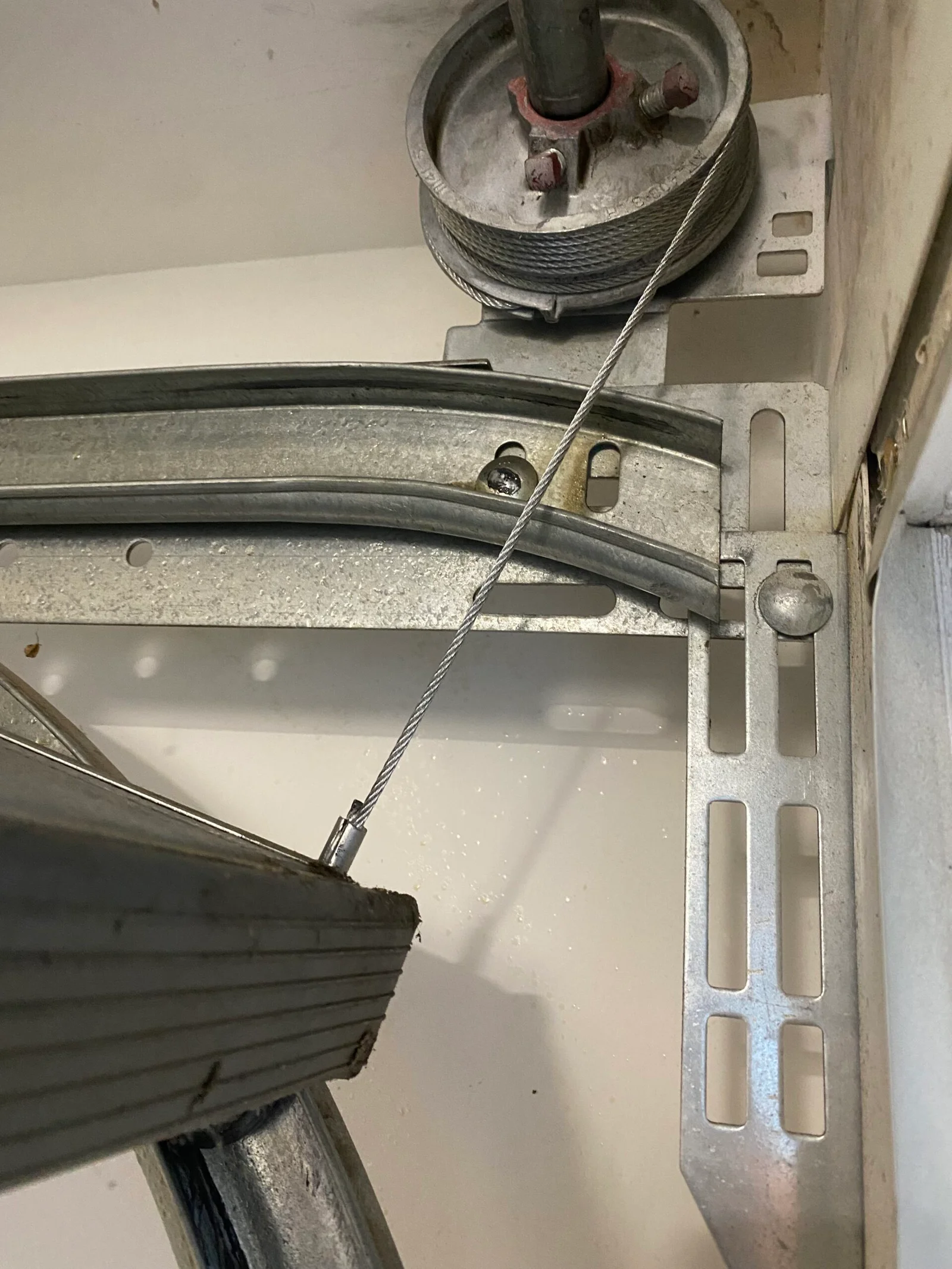
If the slowdown occurs at exactly the same place on every opening, mark the approximate door position and watch which rollers and hinges are moving through the curved track at that moment. That observation can help a technician reproduce the problem quickly.
Do not loosen track brackets while the door is in a stressed position. Even a small alignment change can affect roller travel and door geometry.
Slow Opening After Spring Replacement Can Point to a Balance or Sizing Issue
If the door opened normally before spring replacement and became noticeably slower afterward, the new spring setup deserves evaluation. The spring may be technically functional but not correctly matched to the door's actual weight or system.
A spring that is too weak can leave the door heavy. A spring that is too strong can create other balance problems, particularly during closing. On a two-spring system, mismatched springs can also affect how the door behaves through travel.
The repair should be judged by final balance, not by whether the new spring physically fits on the shaft.
If Lubrication Does Not Fix the Slow Movement
Lubrication can reduce friction at appropriate points, but it cannot correct bad geometry or failed components. If the door remains slow after normal manufacturer-approved maintenance, avoid repeatedly adding more lubricant.
Too much product can attract dust and make the track area dirtier. More importantly, a heavy door, damaged roller, bent track or weak opener will not be repaired by lubrication.
Persistent slow movement after basic maintenance is a reason to move from maintenance to diagnosis.
When the Opener Becomes the More Likely Cause
The opener becomes more likely when the mechanical door is confirmed to move smoothly, stay controlled and show no major spring, cable, roller or track problem, but automatic operation remains slow.
At that point, diagnosis can focus on the motor, drive gear, rail, trolley, belt or chain condition, travel system, RPM sensing, logic board and manufacturer diagnostic codes. Some openers may also have intentionally reduced movement under specific fault or setup conditions.
A technician should use the opener's model-specific information rather than assuming every motor unit uses the same troubleshooting steps.
Can Maintenance Fix a Slow Garage Door?
Sometimes maintenance resolves a minor friction problem, but it depends on the cause. Cleaning debris from the track area, addressing a manufacturer-approved lubrication point or tightening ordinary non-tension hardware can help a healthy door move more smoothly.
Maintenance will not repair a broken spring, restore a damaged cable, straighten a severely bent track, repair a failing motor or correct the wrong spring size. If the door has a safety red flag, maintenance should not be used to postpone repair.
A useful maintenance routine is preventive. It helps identify changes early before a small resistance problem becomes a door that barely moves.
If the Opener Is Slow Even After a Power Reset
Some homeowners unplug the opener briefly and restart it when operation seems abnormal. A reset can clear a temporary electronic state, but it does not correct a mechanical door problem or repair worn opener components.
If the slowdown remains after power is restored, record any diagnostic lights and observe whether the problem appears at the same position. A repeatable slowdown is useful evidence.
Do not use repeated resets as a substitute for investigating a door that is visibly heavy or binding.
Santa Clarita Context: Heat and Frequent Use Can Make a Marginal System More Noticeable
In Santa Clarita, garages can experience high interior temperatures, direct sun and dusty conditions. These are legitimate operating conditions to consider, especially for older openers and moving hardware, but they should not be used as a shortcut diagnosis.
Frequent daily use may be more important. A garage used by multiple drivers or as the family's primary entrance experiences more operating cycles. Springs, rollers and opener components all accumulate use.
If the door becomes slow during a warm period, the useful question is still whether the mechanical door is balanced and free-moving and whether the opener is operating normally—not simply whether the day is hot.
What Affects the Cost to Repair a Slow-Opening Garage Door?
There is no responsible fixed price without diagnosis because “opens slowly” can describe several different repairs. A worn roller is a different job from a broken spring, cable repair, track correction or opener motor problem.
Cost can vary with the failed component, parts, labor, door dimensions, door weight, spring system, number of springs, roller type, track damage, cable or drum condition, opener condition, installation complexity and scheduling.
This article does not publish fixed Next Hour Garage Door Repair pricing or promise free estimates. Ask what is actually causing the slowdown and which parts or labor are included in the recommended repair.
12 Questions to Ask Before Approving Repair for a Slow Garage Door
- Is the door mechanically heavy, or is the opener itself slow?
- Are the springs correctly counterbalancing the door?
- Do the rollers move freely?
- Is either track bent or creating resistance?
- Are the lift cables and cable drums in serviceable condition?
- Does the door move evenly on both sides?
- Did added insulation or panel work change the door weight?
- Does the opener show a diagnostic code?
- Are the opener motor, drive gear, belt, chain, rail and trolley working normally?
- Will the door balance be checked before opener settings are adjusted?
- What part is actually causing the slow movement?
- What parts and labor are included in the proposed repair?
California homeowners who want to verify current contractor information can use the official California Contractors State License Board Check a License tool. This article does not claim a specific Next Hour license number or classification.
Why Consider Next Hour Garage Door Repair Santa Clarita for a Slow-Opening Door?
Next Hour Garage Door Repair Santa Clarita | Garage Spring & Opener Repair is a local option for homeowners dealing with slow garage door movement involving springs, rollers, tracks, cables or opener components.
A useful diagnosis should identify whether the door is mechanically resistant or whether the opener itself has the fault. That means checking counterbalance, rollers, tracks, cable condition and door movement before recommending opener adjustments or replacement.
For current service availability, call (661) 449-2694, review garage door services in Santa Clarita, or view Next Hour Garage Door Repair Santa Clarita on Google Maps.
Santa Clarita Valley Service-Area Context
The primary geographic focus of this guide is Santa Clarita, California, including the 91387 local context and the broader Santa Clarita Valley. Supporting communities can include Valencia, Canyon Country, Saugus, Newhall, Stevenson Ranch, Castaic and Hasley Canyon when relevant to service coverage.
These are service-area references only and do not imply separate public offices in each community. A slow-opening garage door should be diagnosed from its actual springs, rollers, tracks, cables and opener condition regardless of neighborhood.
Frequently Asked Questions About Garage Doors Opening Slowly in Santa Clarita
Why is my garage door opening slower than usual?
A new slowdown can come from poor spring balance, worn rollers, track resistance, cable or drum issues, added door weight, or an opener motor or sensing problem. Mechanical door resistance should be checked before opener force settings are changed.
Can a weak garage door spring make the door open slowly?
Yes. If the spring system is not counterbalancing enough of the door's weight, the opener must work harder and the door can move slowly or stop early.
Can bad rollers make a garage door open slowly?
Yes. Worn, binding or damaged rollers can add friction in the tracks and cause slow, jerky or noisy movement.
Can a bent track slow down a garage door?
Yes. A bent, obstructed or misaligned track can create resistance as rollers pass through it. A severely bent or off-track door should not be forced.
How do I know if the opener or the door is causing the slow movement?
If the mechanical door is stable and can be safely evaluated, a door that moves smoothly without the opener points more toward an opener issue. A heavy, binding or crooked door points more toward mechanical components.
Should I increase the garage door opener force if the door is slow?
Not as the first step. Increased force can mask a heavy or binding door. The spring balance, rollers, tracks, cables and other mechanical parts should be checked first.
Why did my garage door become slow after spring replacement?
The new spring setup may need its balance and sizing verified, especially if the door now feels heavier or behaves differently. The spring should match the door's actual weight and system.
Can hot Santa Clarita weather make a garage door open slowly?
Heat can affect the garage environment and may make marginal lubrication or aging components more noticeable, but it is not a complete diagnosis. The mechanical door and opener should still be inspected for the actual cause.
Is it safe to keep using a slow garage door?
Only if the door remains stable and has no safety red flags. Stop using it if you see a broken spring, loose cable, crooked door, off-track roller, severe binding or other visible damage.
When should I call for garage door repair?
Request service when the slowdown is new and persistent, the door is heavy or uneven, there is visible spring or cable damage, the opener repeatedly stalls, or safe basic observation does not identify a simple obstruction.
Garage Door Still Opening Slowly? Diagnose the Resistance Before It Gets Worse
A slow garage door is easiest to repair when the root cause is identified early. If the door is heavy, crooked, scraping, jerking, showing a spring gap or cable problem, stop repeated operation. If the mechanical door is smooth but automatic opening remains slow, the opener can then be diagnosed more directly.
Ask About Current Garage Door Repair Availability
Call Next Hour Garage Door Repair Santa Clarita | Garage Spring & Opener Repair at (661) 449-2694 and describe when the slowdown occurs, whether the door moves evenly, and whether you see any spring, roller, track or cable symptoms.
4 Responses