High-Cycle Garage Door Springs: Are They Worth It for Santa Clarita Homes?
A homeowner guide to spring cycle ratings, high-use garages, standard vs. high-cycle options, door weight, balance, cost, safety and replacement decisions.
Spring already broken? Stop repeated opener use if the door is heavy or unstable. Call (661) 449-2694 to ask Next Hour Garage Door Repair Santa Clarita about current spring service availability and available spring options.
Are high-cycle garage door springs worth it in Santa Clarita?
They can be. High-cycle springs are most valuable for Santa Clarita homes that use the garage door frequently because a higher cycle rating can extend the theoretical replacement interval. For low-use garages, a standard spring may already be enough. The upgrade only makes sense when the spring is correctly sized for the door and the price difference is reasonable.
High-Cycle Garage Door Springs: The Question Is Not Just “Do They Last Longer?”
High-cycle garage door springs sound simple: choose a spring with a higher cycle rating and it should last longer. In principle, that is the idea. But whether the upgrade is actually worth it for a Santa Clarita homeowner depends on how often the garage door is used, the spring design, the weight of the door, whether the spring is correctly sized, the condition of the rest of the door system, and how long the homeowner expects to keep using the same door.
A garage door spring is a counterbalance component. It stores and releases mechanical energy so the opener—or a person lifting the door manually—does not have to move the full dead weight of the door. Every complete open-and-close event uses part of the spring's finite fatigue life. A household that cycles the door once or twice per day will use that fatigue life very differently from a household that uses the garage as the main entrance, has multiple drivers, and cycles the door repeatedly throughout the day.
That is why the right question is not simply “Are high-cycle springs better?” It is: Does the additional cycle rating provide meaningful value for this particular door and this household's real usage? For many high-use Santa Clarita homes, the answer can be yes. For some low-use garages, a correctly selected standard-cycle spring may be completely reasonable.
This guide explains how high-cycle springs work, how cycle ratings should be interpreted, what can shorten spring life, which households are most likely to benefit, how high-cycle options compare with standard springs, what the upgrade may change during replacement, and what homeowners should ask before approving the work.
Are High-Cycle Garage Door Springs Worth It?
High-cycle garage door springs can be worth it for Santa Clarita homes that use the garage door frequently, especially multi-vehicle households or garages used as a primary entrance. A higher cycle rating provides more theoretical operating life, but only when the spring is correctly engineered for the door. For low-use garages, a standard-cycle spring may still be a sensible value.
What Does “High-Cycle Garage Door Spring” Actually Mean?
A high-cycle spring is designed for a larger number of opening-and-closing cycles than a lower-cycle spring option for the same door. One cycle is one complete opening and closing of the garage door. Spring cycle ratings are engineering targets—not calendar guarantees.
DASMA's technical guidance on factors affecting garage door spring cycle life explains that cycle performance can be affected by spring design, handling, installation and how the door is used. That matters because two springs with different cycle ratings are not simply “cheap versus premium.” The higher-cycle option must still be designed to provide the correct torque for the specific door.
On torsion systems, cycle life can be influenced by wire size, spring length, inside diameter, required torque, material characteristics and how the spring is configured for the door. A longer or larger-wire spring may achieve a higher cycle design while still producing the torque needed to counterbalance the same door.
Why Cycle Rating Is More Useful Than a Simple Number of Years
Calendar age can be misleading. A garage door spring installed ten years ago on a lightly used detached garage may have fewer accumulated cycles than a spring installed three years ago on a high-use family garage.
The basic planning formula is:
This is only a theoretical estimate. Actual service life can be shorter or longer because spring sizing, corrosion, physical damage, installation, door balance and operating conditions all matter.
Still, the formula is useful because it shows why high-cycle springs can make more sense for one homeowner than another. If a household uses the garage door six times per day, it consumes spring cycles three times as fast as a household averaging two cycles per day.
Standard vs. High-Cycle Springs: Illustrative Lifespan Math
The table below uses simple cycle math to show why usage matters. These figures are examples, not a promise that a spring will last exactly this many years.
| Spring rating | 2 cycles/day | 4 cycles/day | 6 cycles/day | 8 cycles/day |
|---|---|---|---|---|
| 10,000 cycles | About 13.7 years | About 6.8 years | About 4.6 years | About 3.4 years |
| 20,000 cycles | About 27.4 years | About 13.7 years | About 9.1 years | About 6.8 years |
| 30,000 cycles | About 41.1 years | About 20.5 years | About 13.7 years | About 10.3 years |
| 50,000 cycles | About 68.5 years | About 34.2 years | About 22.8 years | About 17.1 years |
Theoretical cycle math does not mean a 50,000-cycle spring is guaranteed to stay in service for decades. Corrosion, changes in door weight, physical damage, installation issues and component wear can end spring service earlier. The table simply demonstrates how much daily use changes the value of a higher cycle rating.
Who Benefits Most From High-Cycle Garage Door Springs?
High-cycle springs are most compelling when the garage door is used frequently. A household with two or three vehicles, different work schedules, school runs, deliveries through the garage, and family members using the garage as the main entrance can accumulate cycles quickly.
They can also make sense for rental properties, multigenerational households, home offices with frequent vehicle movement, and properties where an unexpected spring failure would create a major access problem.
Another good candidate is a homeowner who already knows the current spring failed after heavy daily use. If the door itself is in good condition and the household expects to keep the same door for years, paying for more engineered cycle life can be a rational upgrade.
High-cycle springs are less compelling when the garage door is rarely used, the homeowner expects to replace the entire door soon, or the additional cycle capacity is not meaningfully higher than the standard option being compared.
When a Standard-Cycle Spring May Be Enough
A standard-cycle spring can be completely appropriate for a low-use garage when it is correctly sized and installed. If the garage stores a weekend vehicle, opens only a few times per week, or serves a detached space that is not used as the household's main entrance, a high-cycle upgrade may offer little practical value.
The decision should compare the actual cycle ratings, not labels. If the “standard” option already has more than enough theoretical life for the homeowner's expected usage, paying extra for a much higher rating may not change the real ownership experience.
A standard spring is not automatically inferior. Correct sizing, balance, installation and system condition matter more than marketing language.
How to Estimate Whether Your Santa Clarita Home Is High-Use
For one normal week, count complete garage door open-and-close events. Do not guess based only on the number of cars. Include school trips, errands, walking through the garage, retrieving stored items, dog walks, evening departures and weekend activity.
Then divide the weekly total by seven to estimate average cycles per day. You do not need a perfect engineering measurement. The purpose is to understand whether your household is a low-use, moderate-use or high-use environment.
- Low use: roughly 1–2 cycles per day
- Moderate use: roughly 3–4 cycles per day
- High use: roughly 5–8 cycles per day
- Very high use: more than 8 cycles per day
These categories are not industry ratings; they are homeowner planning ranges that make cycle math easier to understand.
How High-Cycle Torsion Springs Are Designed
A torsion spring must produce the correct torque for the door. To increase theoretical cycle life, the spring designer may use a different wire size, diameter or length while preserving the torque requirement. This can result in a physically longer spring or a different coil geometry than the lower-cycle option.
That is why a high-cycle spring may not look identical to the old spring. The correct question is whether the new spring is engineered for the door's weight and drum geometry—not whether it visually matches the old coil.
Spring engineering should not be reduced to “bigger is better.” A spring with more material but incorrect torque can create poor balance. The high-cycle option must be calculated for the same door.
Door Weight Still Controls Spring Selection
Garage door springs are counterbalance devices, so door weight is fundamental. A lightweight single steel door and a large insulated double door require very different spring torque.
If a homeowner added insulation, decorative glass, reinforcement or replacement sections, the door may now weigh more than it did when the original springs were selected. A high-cycle upgrade is a good time to confirm that the current spring setup still matches the door.
Choosing a high-cycle spring without confirming door weight can simply preserve an old sizing mistake. Correct balance should come first; cycle-life optimization comes second.
High-Cycle Springs and Two-Spring Systems
When a door uses two torsion springs, the pair should be designed to work together. If one spring breaks and the homeowner is considering a high-cycle upgrade, the decision may involve replacing both springs so the new pair has matching specifications and a common starting point.
For a deeper explanation of that decision, review our guide to replacing one or both garage door springs. It explains when replacing both is often reasonable and when a newer, healthy remaining spring may be kept.
If the homeowner chooses high-cycle springs, the pair should be engineered for the door. Mixing one high-cycle spring with an older unrelated spring can be technically possible in some designs, but it should never be done by guesswork.
Do High-Cycle Springs Make the Garage Door Opener Last Longer?
High-cycle springs do not directly “upgrade” the opener. The opener benefits when the door is correctly balanced because it does not have to compensate for a weak or failed spring system.
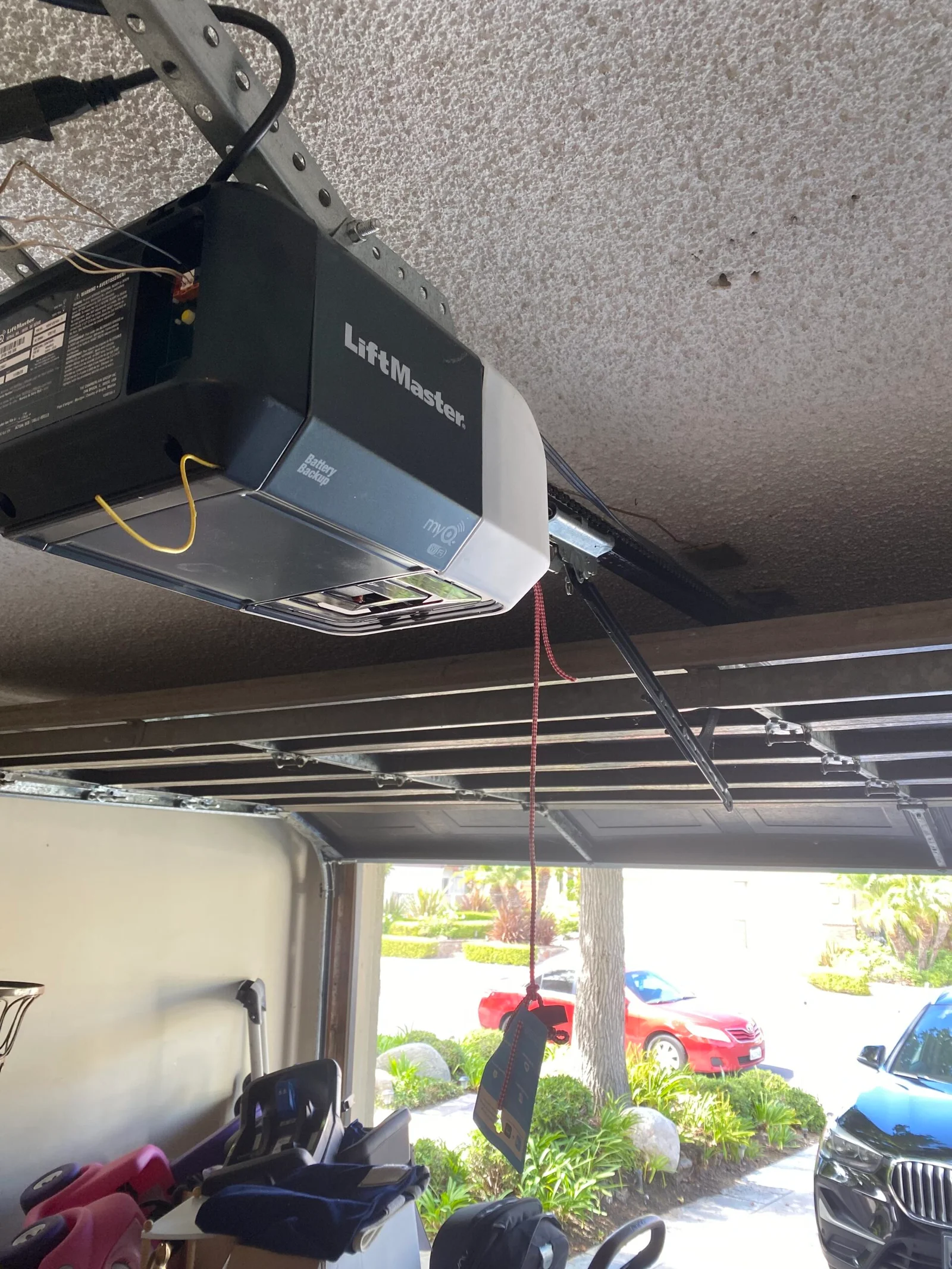
If a standard spring and a high-cycle spring are both correctly designed for the door, either can provide proper counterbalance. The high-cycle spring's advantage is theoretical fatigue life, not extra lifting force.
Do not accept an argument that a high-cycle spring is necessary because your opener is “stronger.” The spring should match the door, not the motor horsepower.
The Engineering Tradeoff Behind a High-Cycle Spring
A garage door spring has to satisfy two requirements at once: produce the correct torque for the door and survive a target number of cycles. Those goals interact. A designer cannot simply keep increasing wire size without changing other dimensions because the spring would then produce different torque.
High-cycle designs often become physically longer or use a different diameter so the spring can provide the needed torque while reducing stress per cycle. This is why high-cycle replacement sometimes requires more shaft space than the original spring.
If the garage has limited header width or unusual center-support hardware, the technician should confirm that the proposed high-cycle spring physically fits the system. In some cases, a two-spring high-cycle configuration may be more practical than one very long spring.
A High-Cycle Spring Is Only Valuable if the Door Balances Correctly
Correct balance is the quality-control test after spring replacement. A properly counterbalanced door should not depend on the opener to hold or lift its full weight. If the door is still unusually heavy, rises on its own, or behaves unevenly, the spring setup may not be correct.
A high cycle rating cannot compensate for poor balance. In fact, a long-life spring that is incorrectly sized can create a long-term operating problem for the opener, cables, rollers and door structure.
The homeowner should ask whether the finished door will be balance-tested after the spring installation.
Corrosion and Physical Damage Can End Spring Life Before the Cycle Rating
Cycle ratings assume the spring remains in serviceable physical condition. Corrosion, pitting, scratches and other damage can reduce confidence in remaining life even when the calculated cycle count is low.
Santa Clarita is generally dry, but individual garages vary. Irrigation overspray, water intrusion, chemical storage, cleaning products or condensation can expose spring wire to corrosive conditions.
A high-cycle spring is therefore not a reason to ignore visual inspection. The spring should still be checked for corrosion and damage during routine garage door maintenance.
Does Santa Clarita Heat Make High-Cycle Springs More Important?
Warm and hot garage conditions are relevant context, but heat alone is not a reliable reason to upgrade to high-cycle springs. Fatigue from repeated cycling, spring design, corrosion, damage, sizing and installation are more direct factors.
Hot, dry conditions can affect lubrication and make noise or friction elsewhere in the door more noticeable. Dust can also accumulate around moving hardware. Those conditions support good maintenance, but they do not automatically change the spring cycle rating you need.
The stronger reason for a high-cycle upgrade is frequent door use combined with a desire for more theoretical service life.
High-Cycle Springs Are Still High-Tension Components
A higher cycle rating does not make a garage door spring safer to adjust by hand. Torsion springs store substantial mechanical energy. Winding cones, winding bars, set screws, spring anchors, shafts and cable drums require proper procedures and tools.
DASMA's garage door safety guidance warns homeowners about high-tension spring and cable components. Do not wind or unwind torsion springs, loosen winding cones, adjust cable drums, remove bottom fixtures or reconnect lift cables under tension.
The homeowner's role is to observe symptoms, stop using a damaged door and have the spring system evaluated professionally.
Comparing Standard vs. High-Cycle Springs?
Ask for the actual cycle rating of each option, the installed price difference, and how the proposed spring matches your door weight and daily usage.
What Can Shorten the Life of a High-Cycle Spring?
A high-cycle spring is not immune to premature failure. Several conditions can shorten real-world service life:
- Incorrect spring sizing for the actual door weight
- Physical damage to the spring wire
- Corrosion or deep surface pitting
- Improper installation or winding
- Door weight changes after spring selection
- Excessive side loading or hardware alignment problems
- Damaged cable drums or bearings
- Operating a door with binding rollers or tracks
- Very high daily cycle use
This is why a high-cycle spring should be viewed as one part of a complete garage door system rather than a standalone upgrade.
One High-Cycle Spring vs. Two High-Cycle Springs
Some doors use one torsion spring, while others use two. If a one-spring door is being upgraded, the technician may recommend a higher-cycle single spring if the shaft space and spring design allow it. On heavier doors, two springs may offer a practical way to distribute the required torque.
The number of springs should not be chosen solely for marketing appeal. The system should be engineered for the door's weight, width, height, drum geometry and available shaft space.
On a two-spring door, replacing both springs with a matched high-cycle pair can create a clean starting point. The two new springs then share the same service history and cycle rating.
Does Maintenance Help High-Cycle Springs Reach Their Intended Life?
Maintenance cannot guarantee that a spring reaches its full cycle rating, but keeping the door system in good mechanical condition reduces unnecessary resistance and helps identify developing problems.
Useful homeowner maintenance includes visual checks of springs and cables from a safe distance, listening for new sounds, keeping photo-eye sensors clean, and observing whether the door moves smoothly. Manufacturer-approved lubrication of appropriate components can also support smooth operation.
Do not confuse maintenance with spring adjustment. Tension changes, winding, cable-drum work and spring replacement are not homeowner maintenance tasks.
How to Decide Whether the Upgrade Cost Is Worth It
The value of a high-cycle spring depends on the price difference and the expected increase in cycle capacity. If the high-cycle option costs modestly more but offers substantially more cycles for a high-use household, it can be a strong value.
If the garage door is rarely used, the homeowner may never consume the extra cycle capacity before replacing the door for another reason. In that case, the standard option may be more economical.
Because actual Next Hour Garage Door Repair pricing has not been supplied here, this article does not publish fixed prices or claim free estimates. Ask for the standard spring option, the high-cycle option, the stated cycle rating of each, and the total installed price difference.
A Simple Way to Compare Value: Cost per Theoretical Cycle
Homeowners can compare two spring options using a simple concept: installed cost divided by the spring's stated cycle rating. This is not a perfect economic model because real-world life can vary, but it helps compare the relative value of two options.
For example, if a high-cycle spring costs 30% more but provides 100% more theoretical cycles, the upgrade may offer favorable cycle value for a household that will actually use those cycles. If it costs 100% more but provides only a modest increase in rated cycles, the value may be less compelling.
The decision should also consider the inconvenience of spring failure. For a household that depends on the garage every day, avoiding another spring replacement can have practical value beyond the simple parts cost.
High-Cycle Spring Decision Matrix
| Home / usage situation | High-cycle value | Why |
|---|---|---|
| 1–2 cycles per day | Low to moderate | Standard spring may already provide long theoretical life |
| 3–4 cycles per day | Moderate | Upgrade may extend replacement interval meaningfully |
| 5–8 cycles per day | High | Household consumes spring cycles quickly |
| Garage is primary home entrance | High | Door cycles can be much higher than vehicle count suggests |
| Door may be replaced soon | Low | Extra spring cycle life may never be used |
| Long-term ownership + high use | High | More likely to use the added cycle capacity |
| Unknown door balance or damaged hardware | Delay decision | Fix sizing and mechanical problems before paying for cycle upgrade |
Four Santa Clarita Household Scenarios
Scenario 1: Two commuters and school schedules
The garage door opens and closes multiple times every morning and evening. This is a strong high-cycle candidate because the household consumes spring cycles quickly.
Scenario 2: Garage is the family's primary entrance
The door is used for walking the dog, taking out trash, retrieving storage and entering the home. Again, high-cycle springs can make sense because vehicle count alone understates the actual use.
Scenario 3: Weekend-use detached garage
The door opens only a few times per week. A standard spring may already provide more theoretical cycle life than the homeowner is likely to use.
Scenario 4: Long-term homeowner with a high-use door
The homeowner expects to keep the same door for many years and wants to reduce the chance of another spring replacement. A properly engineered high-cycle option can be attractive.
Standard vs. High-Cycle Springs: What Should Stay the Same?
The door should receive the same correct counterbalance regardless of cycle rating. A high-cycle spring should not make the door “lighter” than a standard spring. Both options should be designed so the door is properly balanced.
The opener should not need different force settings simply because a high-cycle spring is installed. Cable drums should remain compatible with the door height and spring torque. Lift cables should be correctly seated and tensioned.
The main difference is the spring's engineered fatigue life, not the basic job it performs.
Do Not Confuse Cycle Rating With Warranty
A spring's stated cycle rating is an engineering performance target, while a warranty is a separate commercial promise with its own terms. A high-cycle spring can have a high theoretical rating without a long warranty, and a warranty can contain conditions that do not match the full expected spring life.
This article does not claim any specific warranty for Next Hour Garage Door Repair Santa Clarita. If warranty matters to your decision, ask for the written terms separately from the spring's cycle rating.
When to Upgrade: Before Failure or After a Spring Breaks?
Most homeowners consider high-cycle springs when a spring has already failed because the replacement decision is unavoidable. That is the simplest time to compare options.
Preventive replacement can also make sense when an existing spring is near a known cycle limit, has visible corrosion or serves a high-use household where unexpected failure would be particularly disruptive. But age alone should not be used as a universal replacement rule.
If the existing spring is healthy and the door is low-use, replacing it early simply to “upgrade” may not provide enough value to justify the work.
12 Questions to Ask Before Upgrading to High-Cycle Springs
- What cycle rating does the standard spring option have?
- What cycle rating does the high-cycle option have?
- How many cycles per day does my household probably use?
- How is the high-cycle spring engineered differently?
- Does the spring match my actual door weight?
- If I have two springs, will both be replaced as a matched system?
- Are my cables, drums and bearings still in good condition?
- Will the finished door be checked for proper balance?
- What is the installed price difference between the options?
- What written warranty applies, if any?
- Is a high-cycle upgrade useful for my expected years of ownership?
- What maintenance should I follow after installation?
California homeowners who want to understand contractor classifications can review the CSLB D-28 Doors, Gates and Activating Devices classification and can verify current contractor information with the official CSLB Check a License tool. This article does not claim a specific Next Hour license number or classification.
What a High-Cycle Spring Recommendation Should Include
A professional recommendation should begin with the current door, not the spring catalog. The technician should identify the spring system, confirm the door's weight or spring requirements, inspect the cables and drums, evaluate the current springs, and ask how frequently the door is used.
If the door has two springs, the pair should be evaluated together. If one spring has failed, the age and condition of the second spring should be considered. If the system has been modified, the old spring specifications may no longer be the best reference.
After installation, the door should be balance-tested before normal opener use. High-cycle value depends on having the right spring on the right door.
High-Cycle Springs Do Not Fix Cable, Roller or Track Problems
A door can still operate poorly even with new high-cycle springs if a cable is frayed, a drum is damaged, a roller is binding or a track is misaligned. Those problems create resistance or uneven movement that spring replacement alone does not solve.
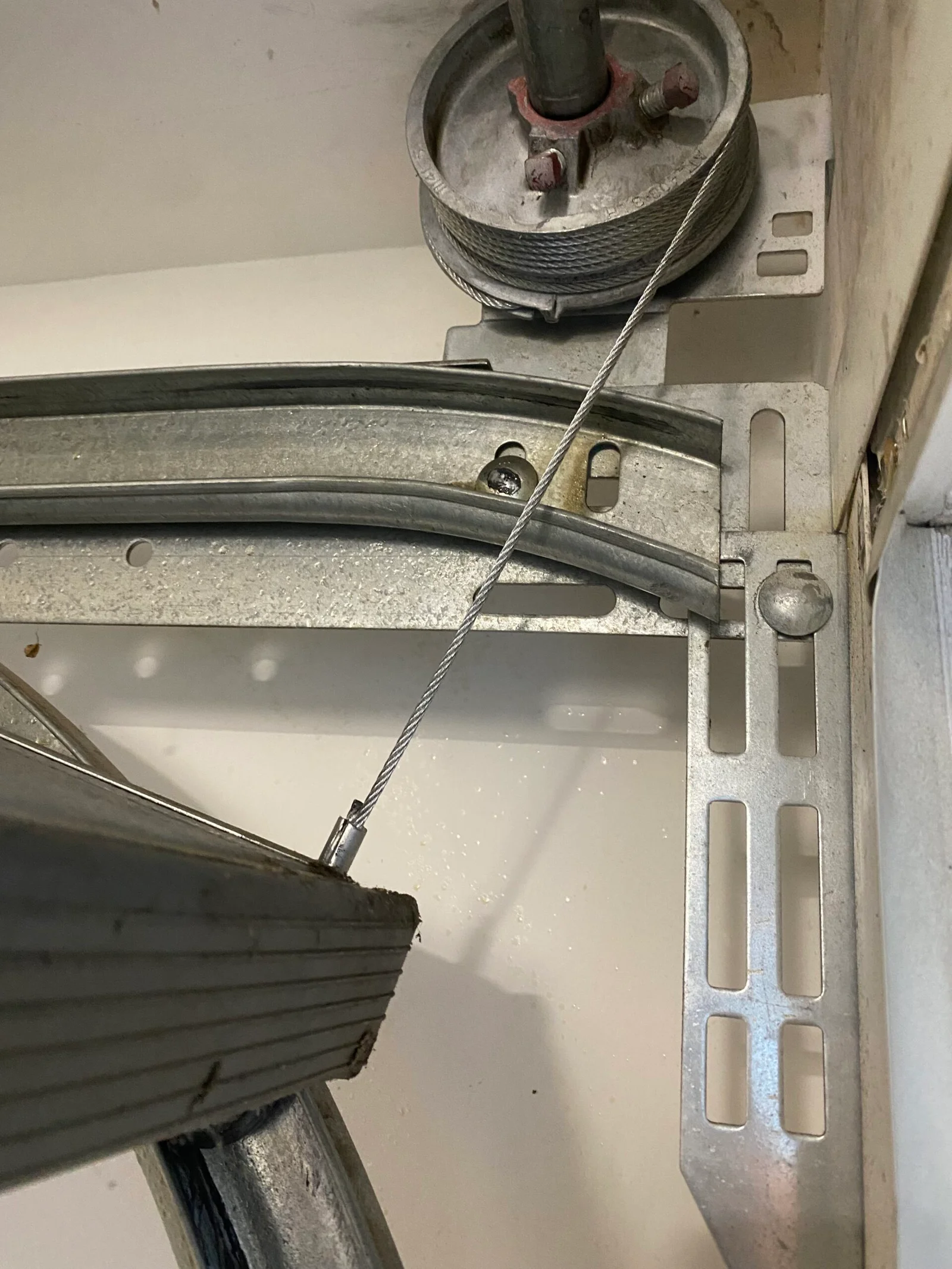
If the door is crooked, noisy, off track or binding, the technician should diagnose those symptoms separately from the spring cycle-life decision.
Why Consider Next Hour Garage Door Repair Santa Clarita for High-Cycle Spring Options?
Next Hour Garage Door Repair Santa Clarita | Garage Spring & Opener Repair is a local garage door repair option for homeowners comparing standard and high-cycle spring replacement.
A useful recommendation should explain the cycle rating, the household's likely usage, the door's weight, whether one or two springs are required, and whether the rest of the door system is in good enough condition to benefit from the upgrade.
For current service availability, call (661) 449-2694, review the garage door spring repair service in Santa Clarita, or view Next Hour Garage Door Repair Santa Clarita on Google Maps.
Santa Clarita Valley Service-Area Context
The primary geographic focus of this guide is Santa Clarita, California, including the 91387 local context and the broader Santa Clarita Valley. Supporting communities can include Valencia, Canyon Country, Saugus, Newhall, Stevenson Ranch, Castaic and Hasley Canyon when relevant to service coverage.
These are service-area references only. They do not imply separate physical offices. Whether high-cycle springs are worth it depends on the door and household usage, not the neighborhood name.
Frequently Asked Questions About High-Cycle Garage Door Springs
What are high-cycle garage door springs?
High-cycle springs are designed for more opening-and-closing cycles than lower-cycle spring options. They still must be correctly sized for the door's weight and counterbalance requirements.
Are high-cycle garage door springs worth it?
They can be worth it for high-use garages, especially homes that cycle the door many times per day. Low-use garages may get enough value from a standard-cycle spring.
How many cycles do garage door springs usually have?
Cycle ratings vary by spring design. A common comparison may involve 10,000-cycle, 20,000-cycle, 30,000-cycle or higher-rated options, but homeowners should ask for the actual rating being proposed for their door.
How do I estimate how long a high-cycle spring will last?
Divide the spring's rated cycles by average cycles per day and then by 365. This gives a theoretical year estimate, not a guarantee, because corrosion, installation, damage and door condition also affect service life.
Do high-cycle springs make the garage door opener work less?
Not because of the cycle rating itself. Both standard and high-cycle springs should counterbalance the door correctly. The opener benefits from proper balance, not simply from a higher spring cycle number.
Should I replace both springs when upgrading to high-cycle springs?
Often, yes, when a two-spring system uses an aged matched pair. The second spring's condition and cycle history should be evaluated before deciding whether to replace one or both.
Are high-cycle springs safer?
They are not inherently safer to adjust. High-cycle torsion springs still store substantial mechanical energy and should not be wound, unwound or adjusted by homeowners.
Can a high-cycle spring still break early?
Yes. Corrosion, physical damage, incorrect sizing, poor installation, door modifications or other mechanical problems can shorten real-world spring life.
Is a high-cycle spring always the best value?
No. The best value depends on the price difference, cycle-rating difference, household usage and how long the homeowner expects to keep the door.
What should I ask before buying a high-cycle spring?
Ask for the standard and high-cycle ratings, the installed price difference, how the spring matches your door weight, whether both springs should be replaced, and whether the final door will be balance-tested.
Are High-Cycle Springs Worth It for Your Garage?
If your garage door is used frequently, a high-cycle spring can provide meaningful additional theoretical service life. If the garage is rarely used, the standard option may already be sufficient. The best decision comes from comparing actual cycle ratings, installed cost, door weight and household usage.
Ask About Standard and High-Cycle Spring Options
Call Next Hour Garage Door Repair Santa Clarita | Garage Spring & Opener Repair at (661) 449-2694 to ask about current service availability and spring options for your garage door.
High-Cycle Spring Upgrade Checklist
Before approving a high-cycle spring, make sure the recommendation answers the following practical questions. A useful upgrade should be specific to your garage door rather than based on a generic “premium spring” label.
- The standard spring cycle rating is clearly stated.
- The high-cycle spring cycle rating is clearly stated.
- The household's approximate daily door use is considered.
- The spring is sized for the actual door weight.
- The spring will physically fit the shaft and available space.
- Two-spring systems are treated as a matched system when appropriate.
- Cables, drums, bearings, rollers and tracks are inspected.
- The final door will be checked for proper balance.
- The homeowner understands that cycle rating is not a guarantee.
- The installed price difference is clear.
If those questions are answered, the homeowner can make a much better value decision than simply choosing the spring described as “better.”
How Long Do You Plan to Keep the Garage Door?
Your expected ownership horizon can change whether a high-cycle upgrade makes financial sense. If the garage door itself is relatively new, structurally sound, and likely to remain in service for many years, paying for more spring cycles can be easier to justify because there is more time to use that additional fatigue life.
If the door is already near the point where major panel, track, hardware, or replacement work may be needed, the extra spring cycle capacity may never be fully used. In that situation, a correctly sized standard spring can sometimes be the more practical choice while the homeowner plans for a larger door replacement later.
The same logic applies when a home may be sold soon. High-cycle springs can still be a quality repair choice, but the homeowner should weigh the extra cost against how long they expect to benefit from the upgrade. There is no universal answer. The most useful recommendation compares cycle rating, daily use, current door condition, expected ownership, and installed price together.
3 Responses