Torsion vs. Extension Springs: Which Garage Door Spring System Is Better for Santa Clarita Homes?
A homeowner guide comparing counterbalance, safety, cycle life, headroom, high-cycle options, maintenance and conversion factors.
Broken spring or door suddenly heavy? Stop repeated opener use and keep people away from an unstable door. Call (661) 449-2694 to ask Next Hour Garage Door Repair Santa Clarita about current spring service availability.
Torsion or extension springs: which is better for a Santa Clarita home?
For many modern sectional garage doors, a correctly sized torsion spring system is often the stronger all-around choice because it uses a shaft and cable drums for controlled counterbalance. Extension springs can still be appropriate on compatible doors, especially where the existing layout is designed for them. The right system depends on door weight, headroom, hardware, cycle needs and safety equipment.
Torsion vs. Extension Springs: The Better System Depends on the Door, Layout and Priorities
When a Santa Clarita homeowner hears that a garage door needs spring work, one of the first questions is often whether a torsion spring or an extension spring system is better. The two systems perform the same basic job—counterbalancing the weight of the garage door—but they do it in very different ways. Torsion springs rotate on a shaft above the door. Extension springs stretch and contract along the sides of the horizontal tracks.
For many modern sectional garage doors, a properly designed torsion system is often the more controlled and compact choice because the spring force is applied through a shaft and cable drums. Extension springs can still be appropriate on compatible doors, especially where the existing hardware and headroom are designed for them. The right answer is not “torsion is always better” or “extension is always cheaper.” The right answer depends on the door's weight, available space, current hardware, cycle requirements, safety equipment, condition and whether the homeowner is repairing an existing system or considering a conversion.
This guide compares torsion vs. extension springs for Santa Clarita homes from the homeowner's point of view. It covers how each system works, where the springs are located, how balance is created, safety differences, safety cables, cycle life, high-cycle options, noise, maintenance, space requirements, door weight, opener strain, replacement signs, conversion questions, cost factors and what to ask before approving spring work.
Which Garage Door Spring System Is Better for Santa Clarita Homes?
For many modern residential sectional doors, a correctly sized torsion spring system is often the stronger all-around choice because it provides controlled counterbalance through a shaft and cable drums and keeps the main spring assembly above the door. Extension springs can still work well on compatible doors, but they should have proper safety containment. The best system depends on the door, headroom, hardware and usage—not the spring label alone.
Torsion vs. Extension Springs at a Glance
| Factor | Torsion Springs | Extension Springs |
|---|---|---|
| Typical location | On a shaft above the garage door opening | Along the horizontal tracks on each side |
| How force is applied | Spring winds and unwinds, rotating a shaft and cable drums | Spring stretches and contracts as the door moves |
| Counterbalance control | Force is distributed through the torsion shaft/drum system | Force is applied through stretched springs and pulley/cable hardware |
| Safety containment | Spring remains on a shaft when correctly installed | Safety cables are important to contain a broken extension spring |
| Headroom / layout | Requires appropriate header/shaft space | Can suit some track layouts where side-mounted extension hardware is already used |
| Cycle life | Depends on engineered cycle rating, sizing and use | Depends on engineered cycle rating, sizing and use |
| Maintenance focus | Spring, shaft, bearings, drums, cables, balance | Springs, pulleys, cables, safety cables, track hardware, balance |
| Conversion potential | Can replace an extension setup when door/header conditions allow | Often retained when existing door and track system are designed for it |
This comparison describes common residential configurations. Exact spring design, hardware and compatibility should be determined from the actual garage door rather than from a generic chart alone.
How a Torsion Spring Garage Door System Works
A torsion spring is typically mounted on a steel shaft above the garage door opening. When the door closes, the spring is wound and stores energy. When the door opens, the spring releases controlled torque through the shaft. Cable drums at the ends of the shaft wind and unwind the lift cables that are attached near the bottom of the door.
The important point is that the spring is not simply “lifting from the middle.” The shaft, drums and lift cables work together as a counterbalance system. Correct spring selection is based on the torque needed to offset the door's weight through its travel.
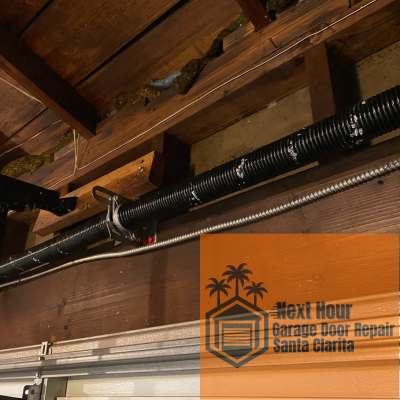
Because the main spring assembly sits above the opening, the horizontal track areas are not occupied by stretching springs. This can produce a clean mechanical layout on many modern residential garage doors.
How an Extension Spring Garage Door System Works
Extension springs are usually installed along the horizontal tracks, one on each side of the garage door. Instead of twisting around a shaft, they stretch as the door closes and contract as the door opens. The spring force is transferred through pulleys and cables to help counterbalance the door.
The geometry is different from a torsion system, but the job is the same: reduce the effective weight that the homeowner or opener has to move. A correctly set extension system should allow controlled, balanced travel. A worn, mismatched or damaged extension spring can make one side of the door behave differently from the other.
Because extension springs physically stretch beside the tracks, their containment hardware matters. DASMA's garage door safety guidance states that extension spring systems need a safety cable running through the spring and secured at both ends so a broken spring can be contained instead of becoming a dangerous projectile.
The Core Difference Is How Each System Counterbalances Door Weight
Both spring systems are designed to counterbalance the door, but the way force is transferred changes the feel and hardware of the system. Torsion springs use rotational torque on a shaft. Extension springs use linear stretch and pulley/cable movement.
For homeowners, the practical question is whether the door stays level and controlled. If one extension spring weakens differently from the other, the door can become uneven. On a torsion system, spring torque is transferred through the common shaft and drums. A two-spring torsion setup can also share the lifting requirement between springs.
Neither design eliminates the need for correct sizing. A spring system that does not match the door's weight can cause poor balance, opener strain and rough movement regardless of whether it is torsion or extension.
Which System Usually Provides More Controlled Balance?
For many sectional residential doors, torsion systems are commonly favored when the goal is controlled, predictable counterbalance because torque is transferred through the shaft and drums. This can make it easier to engineer the lifting system around the door's actual weight and drum geometry.
Extension springs can also balance a door correctly, but the system has more side-specific moving components, including pulleys and stretch springs. If the left and right sides do not match in spring condition, cable length or pulley performance, the door can begin to rise unevenly.
A technician should not decide that a torsion system is “better” just because it is torsion. The existing door and hardware should be inspected first. A well-designed, properly maintained extension setup can be serviceable, while an incorrectly sized torsion setup can perform poorly.
Safety Comparison: Torsion vs. Extension Springs
Garage door springs store significant mechanical energy. Both systems require professional caution, and neither should be treated as a casual DIY adjustment. The safety differences come primarily from how the spring is physically contained and how the system is serviced.
A torsion spring is mounted around a shaft. When it breaks, the spring remains positioned on that shaft in a typical correctly installed system, although the door can become extremely heavy and cable tension can change. An extension spring stretches beside the track. If it breaks without proper containment, the spring or hardware can move violently.
This is why safety cables are so important on extension spring systems. DASMA specifically advises that a safety cable run through an extension spring and be secured so the broken spring remains contained. If you see extension springs without safety cables, that is a legitimate reason to request a professional safety inspection.
Homeowners should not wind or unwind torsion springs, loosen winding cones, remove spring anchor hardware, adjust cable drums, reconnect lift cables under tension, or disassemble an extension spring/pulley system while the door is loaded.
Does a Torsion Spring Last Longer Than an Extension Spring?
Not automatically. Spring life should be compared by cycle rating and actual system design, not only by whether the spring is torsion or extension. Either type can be manufactured to different cycle expectations.
DASMA Technical Data Sheet #190 on factors affecting spring cycle life discusses both torsion and extension springs and explains that handling, installation and door usage can affect cycle performance. That is important because a spring's theoretical rating can be influenced by how the spring is installed and how frequently the door is used.
For a Santa Clarita homeowner, the best comparison is: What is the cycle rating of the torsion option? What is the cycle rating of the extension option? How many times does the household use the door each day? Is the spring properly sized for the actual door?
For a deeper explanation of cycles and replacement signs, review our guide to garage door spring lifespan. That previous article explains why daily use can make the same cycle-rated spring last very different numbers of years in different homes.
Can You Get High-Cycle Torsion or Extension Springs?
Higher-cycle spring designs are possible, but the spring must still be engineered for the door. A higher cycle target is achieved through spring design choices such as wire size, coil diameter, length and required torque or stretch characteristics.
Homeowners who use the garage door frequently may want to ask whether a higher-cycle option is available for their specific system. This can be especially relevant when the garage is the primary household entrance and the door cycles many times every day.
Do not choose a spring solely because a marketing label says “high-cycle.” Ask what the actual cycle rating is, how the spring matches the door weight, and what hardware or conversion work would be required.
Main Components in a Torsion Spring System
A torsion spring system is more than the spring itself. The spring mounts on a shaft, typically supported by end bearing plates and a center bearing or spring anchor arrangement. Cable drums sit near the shaft ends, and lift cables run from those drums to the lower portion of the door.
When the spring turns the shaft, the drums wind or unwind cable in a controlled relationship with door travel. If a drum is damaged, a cable is frayed, or a bearing binds, the door can behave poorly even when the spring is still intact.
This matters during repair because replacing the spring without inspecting the rest of the torsion hardware can miss a second problem. A crooked door after spring replacement, for example, may indicate cable/drum setup or track alignment rather than the new spring itself.
Main Components in an Extension Spring System
Extension systems also rely on several components. The springs are mounted beside the horizontal tracks, while pulleys and cables transfer spring force to the door. Attachment points, pulley bearings, cable routing and safety cables all affect how the system operates.
A pulley that binds can make one side of the door move differently. A cable that stretches, frays or slips can create uneven travel. An extension spring can also weaken or break on one side, making the door noticeably crooked.
When an extension spring needs replacement, the complete left and right lifting system should be inspected so the new spring is not installed into a worn pulley or damaged cable arrangement.
Headroom and Garage Layout Can Decide the Better Spring System
Spring choice is partly a space-and-hardware decision. Torsion systems need room above the door opening for the shaft, spring assembly, bearing plates and cable drums. Extension springs occupy space beside the horizontal tracks and depend on pulley/cable routing.
In a garage with limited headroom or an unusual track configuration, the existing extension setup may have been chosen for a reason. In another garage, there may be enough header space to install a torsion shaft cleanly. Conversion should be evaluated from measurements rather than assumed possible.
Ceiling storage, door height, track type, opener location and framing can all affect the decision. A homeowner considering conversion should ask what additional hardware is needed beyond the spring itself.
Door Weight and Spring Sizing Matter More Than the Spring Name
A heavy insulated double door, a lightweight single steel door and a custom wood door place very different demands on the counterbalance system. The spring needs to be selected for the real door weight and geometry.
For torsion systems, spring torque and drum geometry are critical. For extension systems, spring stretch characteristics and matched left/right behavior matter. If the door has been modified with insulation, glass, reinforcement or replacement panels, its weight may no longer match the original spring setup.
A spring that “fits on the shaft” or “looks the same” is not necessarily correct. Proper spring selection should be based on measurements and door requirements.
What the Spring System Means for the Garage Door Opener
The opener is not the primary lifting system. The springs counterbalance the door, and the opener moves a door that should already be balanced. If either torsion or extension springs are broken, weak or mismatched, the opener may hum, strain, slow down or stop after lifting only partway.
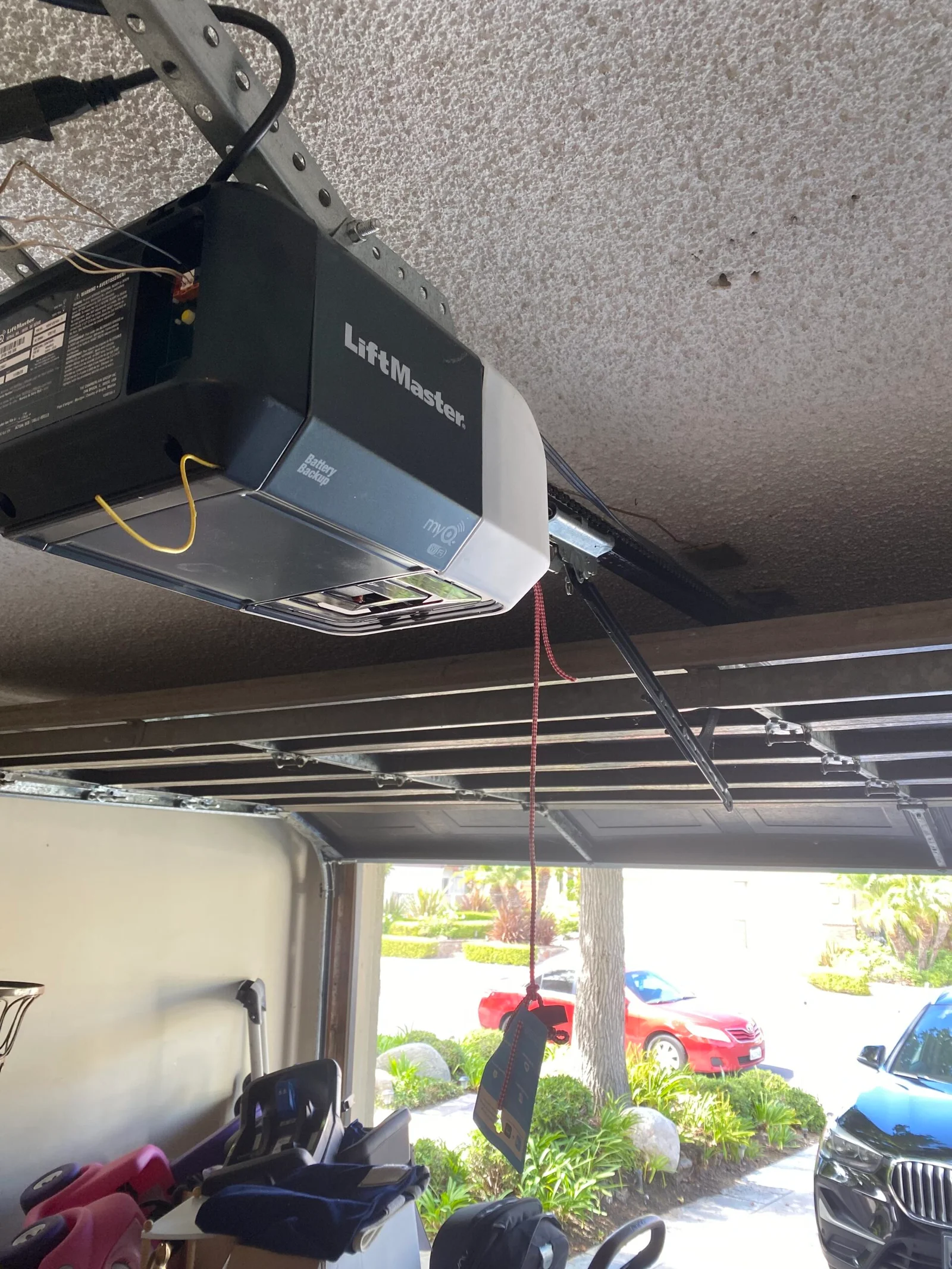
Increasing opener force is not a repair for a failed counterbalance system. The spring system should be evaluated first, followed by rollers, tracks, cables and other sources of resistance.
Which Spring System Is Quieter?
There is no universal noise winner because total garage door sound comes from rollers, hinges, tracks, bearings, springs, opener drive and panel movement. A torsion system can sound different because the spring winds on a shaft, while extension systems add pulley and stretch-spring movement on both sides of the door.
If a door is noisy, identify the sound source before converting spring systems. A grinding roller will remain a grinding roller after a spring conversion. A loose hinge will still rattle. A worn opener chain can still transmit vibration.
Spring noise alone should not be used as the only reason to choose one system over the other.
Maintenance Differences Between Torsion and Extension Spring Systems
Torsion-system maintenance focuses on visual spring condition, shaft and bearing behavior, cable drums, lift cables, balance and manufacturer-recommended lubrication points. Extension-system maintenance includes spring condition, pulleys, cables, safety cables, attachment points, track hardware and balanced left/right operation.
Homeowners can safely perform visual checks from a distance, listen for changes and keep accessible parts clean. They should not adjust spring tension, drum set screws or loaded cable hardware.
If an extension system lacks safety cables, or the safety cable is loose, damaged or incorrectly routed, that is not a cosmetic maintenance item. It should be corrected as part of system safety.
Replacement Signs Are Similar Even Though the Systems Are Different
Regardless of spring type, the homeowner should watch for changes in door weight and balance. A broken torsion spring can show a visible gap in the coil. A broken extension spring may appear separated, elongated or disconnected. In both systems, the door can become much heavier.
Other warning signs include the opener lifting only a few inches, the door becoming crooked, a cable hanging loose, a loud bang, visible corrosion or damage, and a door that no longer moves smoothly through its travel.
The exact failure pattern differs by system, but the response is the same: stop repeated opener operation and have the counterbalance system inspected.
Comparing Repair With Torsion Conversion?
The answer should come from the actual door: weight, headroom, spring condition, safety cables, cables/drums or pulleys, daily usage and the condition of the rest of the hardware.
Single Torsion Spring, Dual Torsion Springs, or Two Extension Springs?
Spring-system comparison becomes more detailed when you look at the number of springs. Many residential torsion doors use one or two torsion springs. Extension systems commonly use a matched spring on each side.
A two-spring torsion setup can distribute the required torque across two springs. If one breaks, the other spring may retain some counterbalance, but the door should still not be operated normally because the system is no longer balanced as designed.
Extension systems depend on left/right matching. If one side breaks or weakens, the door can become uneven quickly. Do not attempt to “make the other side match” through DIY adjustment.
How Torsion and Extension Springs Fail Differently
Torsion spring failure
A torsion spring commonly breaks across a coil, leaving a visible gap. The door becomes much heavier because the spring can no longer produce the intended counterbalance torque. Cables can lose normal tension, and the opener may lift only a short distance.
Extension spring failure
An extension spring can break or separate along the track area. Because the spring is stretched under load when the door is closed, proper containment is critical. A safety cable helps prevent the spring from traveling freely if it fails.
Uneven deterioration
On paired systems, the two springs may not deteriorate identically. One side can weaken or fail before the other. That can make a door crooked, place unusual load on rollers and tracks, or change cable behavior.
In both systems, repeated operation after a clear spring failure can add damage. The safest response is to stop cycling the opener and have the complete counterbalance system inspected.
Extension Spring Safety Cables Are Not Optional Decoration
One of the most important differences for homeowners is the need for a containment cable through an extension spring. When an extension spring breaks, the stored energy can release suddenly. A properly installed safety cable helps keep the spring contained along the track area.
DASMA's safety guidance is direct: if your garage door has extension springs, a safety cable should run through the spring and be secured at the ends. If your existing extension system does not have this protection, ask for a safety inspection before continuing to treat the system as normal.
A safety cable is not the same as the lift cable that helps move the door. The lift cable is part of the counterbalance operation; the safety cable is containment for the extension spring.
Should You Convert Extension Springs to a Torsion System?
Conversion can make sense when the existing extension system is worn, the homeowner prefers a shaft-and-drum counterbalance system, the door and framing have suitable space, and the conversion can be engineered correctly. But conversion is not automatically necessary every time an extension spring breaks.
A proper conversion can require more than replacing springs. The door may need a torsion shaft, drums, bearing plates, compatible lift cables, spring anchor hardware and other changes depending on the existing setup. The door should be weighed or otherwise correctly specified so the torsion springs match the required torque.
If the extension system is serviceable, properly contained with safety cables and appropriate for the garage layout, replacing it with compatible extension springs may also be reasonable. The homeowner should compare the condition of the entire system and the cost/benefit of conversion.
When a Torsion Conversion May—or May Not—Make Sense
| Situation | Why torsion may make sense | Why extension may still be reasonable |
|---|---|---|
| Existing extension springs repeatedly need attention | Opportunity to redesign counterbalance around shaft/drum system | If the real problem is poor pulleys or incorrect springs, a proper extension repair may solve it |
| Garage has adequate header space | Can support standard torsion hardware layout | No need to convert solely because space exists |
| Homeowner wants simplified side-track hardware | Torsion moves spring assembly to header/shaft area | Existing extension hardware may already work well |
| Extension springs lack safety cables | Conversion removes the stretching spring configuration | Proper safety cables can also correct containment deficiency |
| Door is unusually heavy | Torsion can be engineered with matched spring torque | Extension can still be designed for some compatible doors if system allows |
| Low-headroom or unusual track setup | Depends on exact layout and available specialty hardware | Existing extension configuration may be more practical |
Repair the Existing System or Convert It?
The right choice depends on what is wrong with the current system. If one spring has failed but the tracks, pulleys, cables and attachments are in good condition, a straightforward spring replacement may be the most practical repair. If the hardware is worn throughout, the homeowner may want to compare a broader rebuild or conversion.
Conversion also makes more sense when it solves a real objective: improved counterbalance layout, simplified side hardware, compatible high-cycle spring options, or removal of an old extension system that no longer suits the door.
A reputable recommendation should explain what would stay, what would change, why conversion is compatible and how the door will be balanced afterward.
Torsion vs. Extension Springs: Practical Pros and Tradeoffs
Torsion spring advantages
- Centralized shaft-and-drum counterbalance arrangement
- Main spring assembly is above the door instead of stretching beside the tracks
- Common choice for modern sectional residential doors
- Can be designed with one or multiple springs depending on the door
- High-cycle options may be available when engineered for the door
Torsion considerations
- Requires compatible header space and shaft hardware
- Spring winding and drum adjustment are high-tension professional tasks
- Conversion from extension involves additional hardware and labor
- Correct spring torque and door weight matching are essential
Extension spring advantages
- Can work well on doors already designed around side-track spring hardware
- May fit certain low-headroom or existing track layouts
- Replacement can preserve the existing system when other hardware is serviceable
Extension considerations
- Safety containment cables are important
- Pulleys and left/right cable hardware add additional wear points
- One-side failure can quickly create uneven movement
- Conversion may be attractive when the overall system is old or worn
Santa Clarita Conditions: Heat and Daily Use Matter, but They Do Not Pick the Spring Type for You
Santa Clarita's warm, dry environment can make spring lubrication, corrosion condition and garage heat worth monitoring, but local climate does not automatically make torsion springs “the only correct” system. Spring design, cycle rating, door weight and installation matter more than broad climate claims.
Daily use can be more important. A garage used for multiple commuter vehicles and as the family's main entrance can consume spring cycles quickly. In that situation, asking about higher-cycle options can be more useful than debating torsion versus extension in the abstract.
Direct sun, dust and hot garage conditions can also make existing wear more noticeable. The correct response is to inspect the actual spring, cables, pulleys, drums, rollers and door balance.
For High-Use Santa Clarita Garages, Compare Cycle Rating First
If a household cycles the door many times every day, the homeowner should ask for the actual cycle rating of the proposed spring system. A high-cycle torsion setup may be attractive, but the comparison should be against the actual extension alternative, not against a generic assumption.
The same principle applies to rental properties, multigenerational homes and households with multiple drivers. High daily use can make spring fatigue arrive in fewer calendar years.
Cycle rating does not replace proper sizing. A high-cycle spring that is wrong for the door is not a better spring.
How Door Construction Can Influence the Spring Decision
Door material and construction affect weight. Non-insulated steel, insulated steel, wood, composite and doors with decorative glass can have very different counterbalance requirements. Even two doors with the same width and height can weigh very different amounts.
If the door has been upgraded or modified, the existing spring system may no longer reflect the current weight. Adding insulation, reinforcement or new panels can change the balance requirement.
Whether the final solution is torsion or extension, the spring system should be recalculated around the door that exists today.
Cables, Pulleys and Drums: The Supporting Hardware Changes With the Spring System
Torsion systems rely on cable drums at the shaft ends. Extension systems commonly use pulleys and cable routing along each side. These supporting components wear and can create symptoms that look like spring problems.
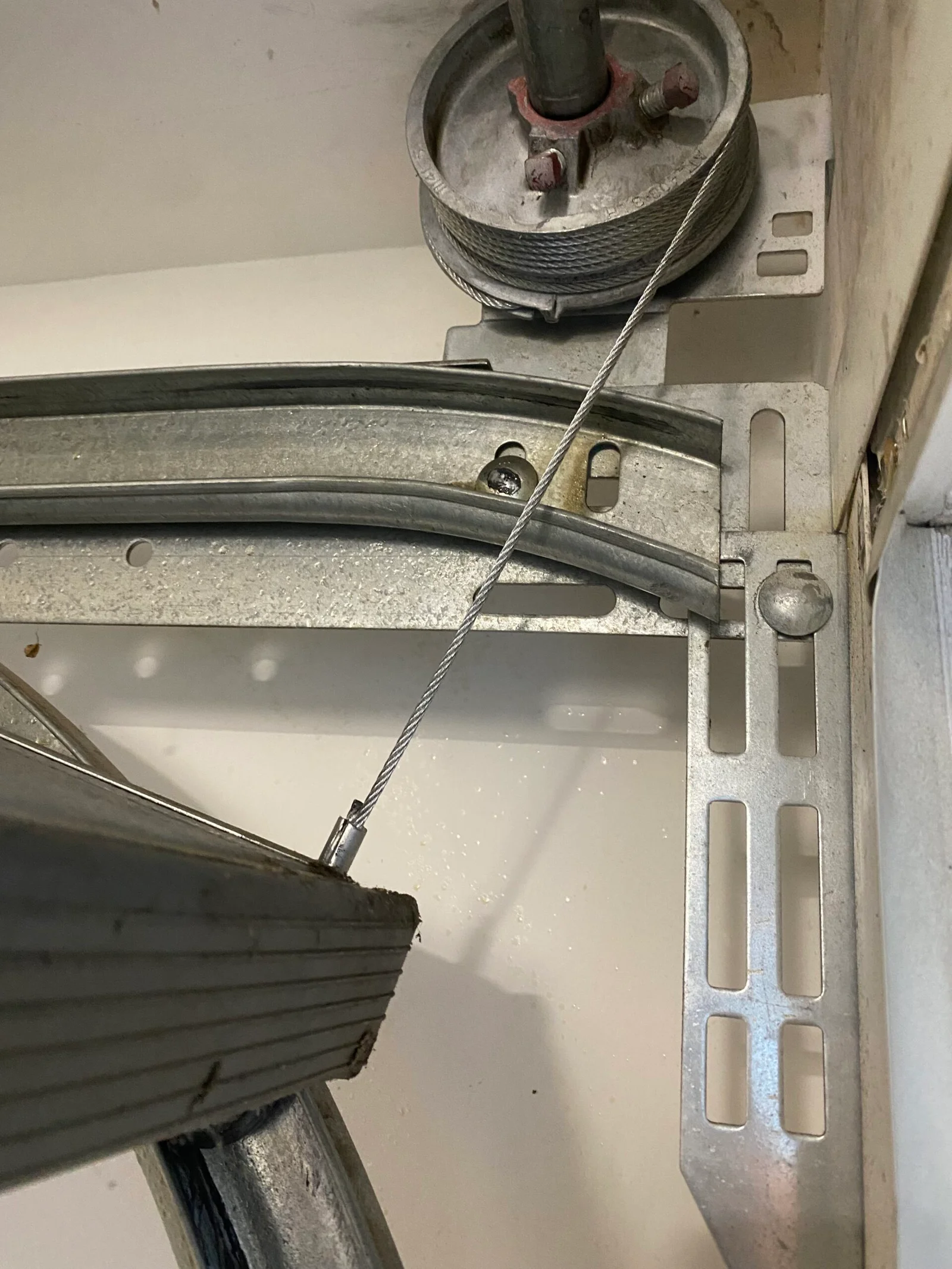
A frayed lift cable, worn pulley bearing or damaged drum can affect door balance. If the door is crooked, diagnosis should include the complete lifting system rather than replacing springs automatically.
Does Your Garage Door Opener Care Whether You Have Torsion or Extension Springs?
The opener cares mainly about whether the door is properly balanced and moves smoothly. A correctly designed torsion door and a correctly designed extension-spring door can both be moved by a compatible opener.
What the opener should not do is compensate for a failed spring system. If the motor strains, stalls or pulls a crooked door, inspect the counterbalance and track system first.
Spring conversion should not be sold as an opener upgrade unless there is a clear mechanical reason. The opener may benefit from a smoother balanced door, but the spring choice itself does not replace proper opener sizing and safety setup.
A Simple Decision Framework for Santa Clarita Homeowners
If the existing system is working and you are planning ahead, start by identifying what you already have. A homeowner with a healthy torsion system usually has no reason to convert to extension springs. A homeowner with a healthy extension system does not automatically need conversion either.
If a spring has failed, inspect the whole system. On a torsion door, inspect the shaft, drums, cables, bearings and balance. On an extension door, inspect both springs, pulleys, lift cables, safety cables and attachment points.
If the hardware is broadly worn or the homeowner wants a different layout, compare conversion. Ask whether torsion conversion is mechanically compatible, what hardware is required, how the door will be weighed or specified, and what cycle rating is available.
If the garage has unusual headroom, track geometry or structural constraints, those limitations may decide the system before preference does. A spring system has to fit the door and garage safely.
What Affects the Cost of Torsion vs. Extension Spring Work in Santa Clarita?
Cost depends on the actual repair scope. Replacing a pair of extension springs is different from converting an extension system to torsion. Replacing one or two torsion springs is different from repairing cables, drums, bearings or damaged track hardware at the same time.
Variables can include spring specifications, number of springs, door weight, door height, cable condition, pulley or drum condition, bearing condition, conversion hardware, labor, access, installation complexity and scheduling.
This article does not publish fixed Next Hour Garage Door Repair pricing or promise free estimates. Ask for a written explanation of the spring type, parts being changed, conversion hardware if any, labor included and final balance/safety testing.
Questions to Ask Before Approving Torsion or Extension Spring Work
- What spring system is currently installed on my door?
- Is the existing system correctly matched to the door weight?
- What is the cycle rating of the recommended spring?
- If I have extension springs, are proper safety cables installed?
- Are the lift cables, pulleys or cable drums still serviceable?
- If you recommend torsion conversion, what additional hardware is required?
- Is there enough headroom and framing space for the proposed torsion system?
- Will the final door be checked for proper balance?
- Will the opener be tested only after the mechanical door is balanced?
- What parts and labor are included in the quote?
- If two springs are present, are both matched in design and condition?
- What maintenance should I follow after the work is completed?
California homeowners can review the CSLB D-28 Doors, Gates and Activating Devices classification when learning about California contractor classifications, and can use the official CSLB Check a License tool to verify current contractor information. This article does not claim a specific Next Hour license number or classification.
Why Consider Next Hour Garage Door Repair Santa Clarita for Spring-System Diagnosis?
Next Hour Garage Door Repair Santa Clarita | Garage Spring & Opener Repair is a local option for homeowners comparing torsion and extension spring repair, replacement and conversion questions.
A useful recommendation should begin with the existing door: weight, spring type, spring condition, cable system, drums or pulleys, rollers, tracks, available headroom and how often the door is used. That approach makes the recommendation specific to the garage instead of assuming one spring type is always right.
For current service availability, call (661) 449-2694, review the garage door spring repair service in Santa Clarita, or view Next Hour Garage Door Repair Santa Clarita on Google Maps.
Santa Clarita Valley Service-Area Context
The primary geographic focus of this guide is Santa Clarita, California, including the 91387 local context and the broader Santa Clarita Valley. Supporting communities can include Valencia, Canyon Country, Saugus, Newhall, Stevenson Ranch, Castaic and Hasley Canyon when relevant to service coverage.
These community names describe service geography only. They do not imply separate public storefronts or offices. The torsion-vs-extension decision is made from the actual door and garage layout, not from the neighborhood name.
Frequently Asked Questions About Torsion vs. Extension Springs in Santa Clarita
Which is better, torsion or extension garage door springs?
For many modern sectional residential doors, a properly sized torsion system is often the stronger all-around choice because it applies counterbalance through a shaft and cable drums. Extension springs can still be appropriate on compatible doors, especially when the existing track and headroom are designed for them.
Are torsion springs safer than extension springs?
Both spring systems store substantial energy and require professional caution. Torsion springs are mounted on a shaft, while extension springs stretch beside the tracks and should have safety cables that contain the spring if it breaks.
Do torsion springs last longer than extension springs?
Not automatically. Lifespan depends on the spring's engineered cycle rating, sizing, installation, handling and daily door use. Compare actual cycle ratings rather than assuming one spring category always lasts longer.
What is an extension spring safety cable?
It is a containment cable that runs through an extension spring and is secured so a broken spring is less likely to fly freely. It is different from the lift cable that helps operate the door.
Can I convert extension springs to torsion springs?
Often, yes, when the door, header space, track setup and framing can support the required torsion shaft, drums, bearing plates, lift cables and spring hardware. Compatibility should be measured before conversion is recommended.
Is torsion conversion always worth it?
No. If an extension system is properly designed, safely contained and in good condition, replacement with compatible extension springs may be reasonable. Conversion should solve a real mechanical, safety or layout objective.
Which spring system is better for a heavy garage door?
The better system is the one correctly engineered for the actual door weight and geometry. Torsion systems are commonly used on heavier modern sectional doors, but spring specifications—not the label alone—determine correct counterbalance.
Can a garage door opener work with either spring system?
Yes, if the door is properly balanced and the opener is compatible with the door. The opener should not be used to compensate for a broken, weak or incorrectly sized spring system.
How do I know what spring system my garage door has?
A torsion spring is usually mounted on a shaft above the door opening. Extension springs are usually mounted along the horizontal tracks on both sides. If the system is unusual or partially enclosed, a technician can identify it safely.
When should I call for spring repair instead of continuing to use the door?
Call when the door becomes unusually heavy, a spring is visibly broken, the door opens only a few inches, a cable becomes loose, the door moves crooked, or there is a loud bang followed by a change in balance.
Need Help Deciding Between Torsion and Extension Springs?
If your spring system is broken, worn or no longer balancing the door correctly, the decision should begin with the actual garage door—not with a generic recommendation. Door weight, headroom, cables, pulleys or drums, cycle use and existing hardware all matter.
Ask About Current Spring Repair or Conversion Availability
Call Next Hour Garage Door Repair Santa Clarita | Garage Spring & Opener Repair at (661) 449-2694. Describe whether your door currently has a spring above the header or extension springs beside the tracks, and whether the door is heavy, crooked or visibly damaged.
2 Responses