How Long Do Garage Door Springs Last in Santa Clarita? Lifespan, Cycles & Replacement Signs
A homeowner guide to spring cycle ratings, daily use, torsion and extension systems, high-cycle options, fatigue, balance, warning signs and replacement decisions.
Spring visibly broken or door suddenly heavy? Stop repeated opener use and keep people away from an unstable door. Call (661) 449-2694 to ask Next Hour Garage Door Repair Santa Clarita about current spring repair availability.
How long do garage door springs last in Santa Clarita?
Garage door spring life depends on cycle rating, daily use, door weight, spring sizing, installation and condition. A spring rated for a certain number of cycles may last many years in a lightly used garage but far fewer years in a high-use household. Replace based on correct diagnosis and warning signs, not calendar age alone.
Garage Door Spring Lifespan in Santa Clarita: Think in Cycles, Not Just Years
When homeowners ask how long a garage door spring should last, the most useful answer is not a fixed number of years. Garage door springs are better understood in cycles. One complete opening and closing of the garage door is one cycle. A household that opens the door once in the morning and once in the evening uses far fewer cycles than a household that uses the garage as the main family entrance and moves several vehicles in and out every day.
That difference matters in Santa Clarita because many residential garages are used constantly for commuting, school runs, errands, deliveries, dog walks and household access. Two homes with the same spring system can reach the same cycle count years apart. Spring design, wire size, door weight, installation, corrosion, handling and the condition of the rest of the garage door can also influence how long the spring remains serviceable.
The safest way to think about spring life is to combine three questions: What is the spring's intended cycle life? How often is the door actually used? Is the door showing replacement signs? A spring that has reached a theoretical cycle estimate may still need condition-based diagnosis, while a newer spring can fail early if it is damaged, incorrectly sized, corroded or installed under poor conditions.
How Long Do Garage Door Springs Usually Last?
Garage door spring life depends on the spring's cycle rating, how often the door is used, door weight, spring sizing, installation quality and operating conditions. A spring rated for a given number of cycles can last many years in a lightly used garage or far fewer years in a high-use household. Replacement should be based on condition and correct diagnosis, not age alone.
What Is a Garage Door Spring Cycle?
A spring cycle is one complete opening and closing of the garage door. The spring twists or stretches as the door moves, repeatedly storing and releasing mechanical energy. Over thousands of repetitions, the spring wire experiences fatigue. That is why cycle life is more meaningful than a simple calendar-age estimate.
DASMA's technical guidance on factors affecting garage door spring cycle life explains that handling, installation and door usage can affect both torsion and extension spring performance. In other words, cycle life is not a guarantee that every spring reaches an identical number under every real-world condition.
The practical lesson is simple: a lightly used garage, a high-use commuter garage and a rental property can consume spring cycles at very different rates. When a technician asks how frequently the door is used, that is a relevant lifespan question, not small talk.
How Daily Garage Door Use Changes the Lifespan Estimate
Cycle math can be useful for planning if you know the spring's rated cycle life. The examples below are illustrations, not promises. Actual service life can differ because of spring design, installation, corrosion, damage, door balance and the condition of the rest of the system.
| Illustrative spring rating | Average cycles per day | Approximate theoretical years |
|---|---|---|
| 10,000 cycles | 1 | About 27 years |
| 10,000 cycles | 2 | About 14 years |
| 10,000 cycles | 4 | About 7 years |
| 10,000 cycles | 6 | About 4.5 years |
| 20,000 cycles | 4 | About 14 years |
| 30,000 cycles | 4 | About 20.5 years |
The basic calculation is cycle rating divided by cycles per day and then divided by 365. What matters is interpretation. A 10,000-cycle spring is not automatically a seven-year spring. It becomes roughly seven years only if the household averages about four full cycles every day and the spring actually performs to that rating.
How to Estimate Your Household's Garage Door Cycles
For one normal week, count how many complete open-and-close events happen in a day. Include vehicle departures and returns, school runs, deliveries that use the garage, exercise or dog-walk exits, weekend errands and evening use. Many homeowners underestimate their daily cycle count because the garage door has become part of the household routine.
A two-car household can accumulate cycles quickly when drivers have different schedules. A multigenerational home, rental property or household using the garage as its main entrance can add even more use. The spring does not know whether it is three years old or ten years old; it experiences repeated mechanical movement.
You do not need a perfect engineering count. The goal is to classify the door as low-use, moderate-use or high-use so that a replacement recommendation can match the way the garage is actually used.
Torsion vs. Extension Springs: Does One Last Longer?
Torsion and extension springs both have finite cycle lives, but they operate differently. A torsion spring winds around a shaft, commonly above the door, and works with cable drums and lift cables. An extension spring stretches along the horizontal track area on compatible systems.
Neither system should be judged by age or spring type alone. The relevant factors include the actual spring rating, wire and dimensions, door weight, installation, balance and daily use. A high-cycle torsion spring can outlast a lower-cycle spring, but that does not mean every torsion spring automatically lasts longer than every extension spring.
The better question is: what spring system is installed, what is its specification, and is it correctly matched to the door?
What Are High-Cycle Garage Door Springs?
High-cycle springs are designed for a greater number of operating cycles than a lower-cycle alternative. The engineering can involve wire size, coil diameter, spring length and the torque required for the specific door. The spring still has to match the door's weight and geometry.
High-cycle design can make sense for households that open the garage many times each day because the available cycle budget is larger. But “high-cycle” does not mean indestructible. Damage to the wire, corrosion, incorrect sizing, poor installation or a mechanically troubled door can still shorten useful life.
Ask what cycle rating is being recommended and why it fits the household's use. A useful recommendation should connect the spring specification to the actual door, not just to a marketing label.
Why Door Weight Matters to Spring Lifespan
Garage door springs are selected to counterbalance the actual weight and operating geometry of the door. A lightweight single-car steel door does not require the same spring characteristics as a large insulated double door or a heavier wood door.
If a spring is incorrectly sized, the door may not balance correctly. Too little lifting force can make the door feel heavy and force the opener to work harder. Too much spring force can make the door difficult to control in the opposite direction. Either condition can interfere with smooth operation and can add stress elsewhere in the system.
This is why spring replacement should not mean finding a coil that merely “looks similar.” Wire diameter, inside diameter, spring length, winding direction, door height, drum setup and actual door weight can all matter.
The Opener Is Not a Substitute for Healthy Springs
The spring system counterbalances the door. The opener then moves that balanced door through its travel. If a spring breaks or loses the ability to support the door correctly, the opener may sound strained, lift the door only a few inches or stop under load.
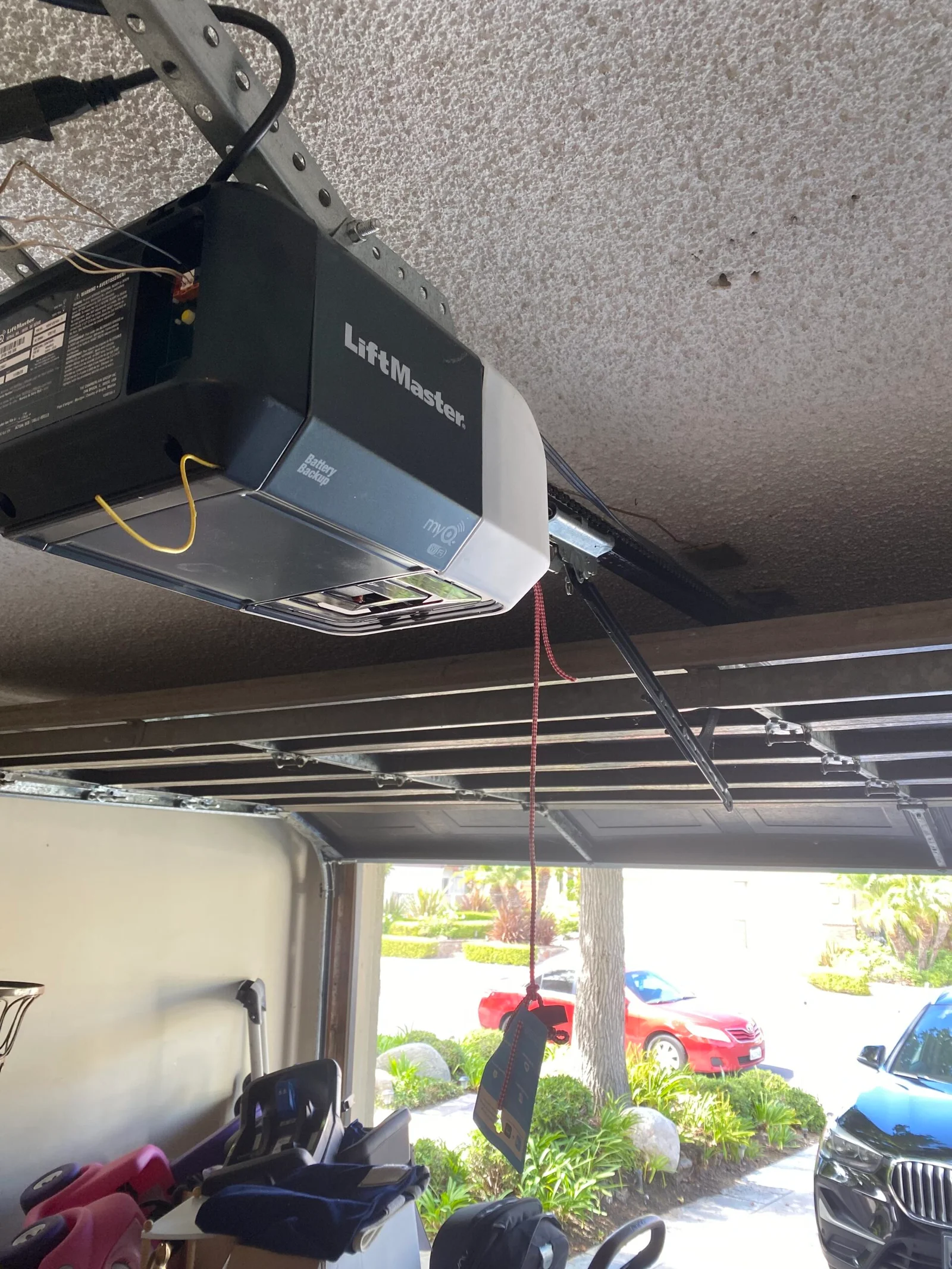
Repeated opener use with a broken spring can add load to the motor, rail, trolley and top section. If the door suddenly becomes heavy, treat that as a spring or balance warning first rather than increasing opener force.
Replacement Sign #1: A Visible Gap in a Torsion Spring
A broken torsion spring often shows a visible separation in the coil. Homeowners can usually see the gap from a safe distance above the door. Do not touch the spring, winding cone, shaft or cable drum to confirm the failure.
If the spring is broken, normal opener operation should stop until the system is inspected. The door can be much heavier than expected because the counterbalance force is no longer available.
Replacement Sign #2: The Door Suddenly Feels Much Heavier
A door that suddenly becomes difficult to lift is a strong counterbalance warning. The opener may strain or move the door only a short distance. The door may also fall more quickly during professional balance testing.
Do not interpret a heavier door as a reason to install a stronger opener. The spring system should be evaluated first. A properly selected opener assumes the door is already balanced.
Replacement Sign #3: The Door Opens Only a Few Inches
When an opener begins lifting the door but stops after a few inches, a broken spring is one possible cause. Other causes can overlap, including opener drive problems, track resistance or roller binding. The visible spring condition and door weight help narrow the diagnosis.
Do not keep cycling the opener. Each attempt can add stress while the root problem remains unresolved.
Replacement Sign #4: A Loud Bang From the Garage
A torsion spring can break while the door is closed, releasing stored energy and producing a sharp sound. Homeowners sometimes hear the bang even though no one was operating the door.
After a bang, look from a safe position for a spring gap, loose cable or change in door position. Do not climb onto a ladder next to the spring system to investigate closely.
Replacement Sign #5: The Door Becomes Crooked or Cable Tension Changes
The torsion spring, shaft, drums and lift cables work together. When spring tension is lost, cable tension can change. A cable may become slack or come off the drum, and the door can begin lifting unevenly.
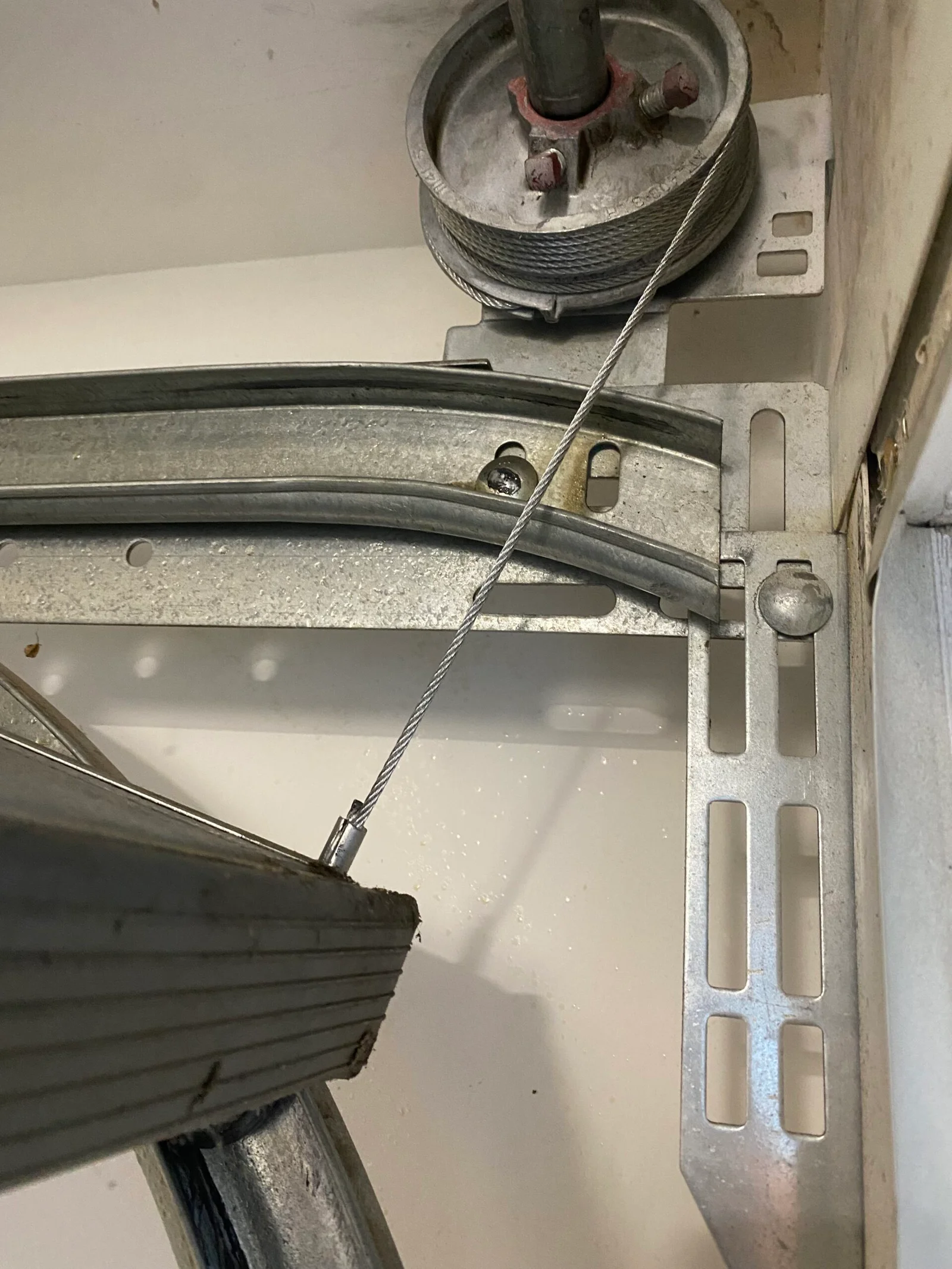
A crooked door can quickly become an off-track problem if it continues moving. Stop using the opener when one side is clearly higher or a cable is hanging loose.
Replacement Sign #6: New Noise From the Spring or Shaft Area
Noise alone does not prove a spring is near failure. Garage doors can squeak or pop because of hinges, rollers, bearings, panels and track movement. But a new sound from the spring or shaft area, especially when paired with poor balance or rough operation, deserves inspection.
Do not spray random products on high-tension hardware in an attempt to silence the spring. Follow manufacturer maintenance instructions and identify the actual source of the sound.
Replacement Sign #7: The Spring Is Corroded, Damaged or Deformed
Surface condition matters because spring wire is repeatedly stressed. Corrosion, deep rust, nicks, gouges and other physical damage reduce confidence in the spring's remaining service life. A spring with obvious damage should be professionally evaluated rather than treated as “still good because it has not broken yet.”
Replacement Sign #8: The Door No Longer Balances Correctly
A change in balance can indicate spring fatigue, incorrect spring selection, altered door weight or another mechanical problem. Homeowners should not diagnose spring fatigue by manipulating a visibly damaged or unstable door. A trained technician can evaluate balance safely and determine whether the spring system is still correctly matched to the door.
Can Maintenance Extend Spring Life?
Maintenance cannot make a spring last forever, but it can help the rest of the garage door operate without unnecessary resistance and can catch developing problems before they create more load. Smooth rollers, aligned tracks, healthy cables and secure hardware support normal operation.
For a broader routine, use our garage door maintenance in Santa Clarita checklist. It covers springs, rollers, cables, sensors, opener checks and the point where maintenance should stop and professional repair should begin.
This relationship matters because a spring does not work in isolation. If rollers bind or a track is bent, the door may feel heavy even though the spring is not the only problem.
Does Santa Clarita Heat Shorten Spring Life?
Hot, dry conditions are relevant operating context, but homeowners should be careful with simple claims such as “the heat broke the spring.” Normal seasonal temperature changes affect materials and lubrication, while spring failure is more directly tied to fatigue, cycle use, corrosion, physical damage, sizing, installation and overall system condition.
Heat can make lubrication condition and noise more noticeable, and dry conditions can increase dust around moving parts. If a spring breaks during a hot week, the timing alone does not prove the weather caused it. A useful diagnosis still asks about spring condition, cycle history, corrosion, door weight and balance.
Know the Cycle Rating—or Seeing Spring Warning Signs?
A proper spring recommendation should match the door's weight, current spring system, usage and balance. The opener should never be used to compensate for a failed counterbalance system.
How Rust and Corrosion Affect Spring Lifespan
Corrosion can weaken spring wire over time and can create rough areas that concentrate stress. The actual risk depends on the extent and location of the corrosion. Light surface discoloration is different from deep pitting or flaking rust.
Individual garage environments vary. Irrigation overspray, moisture sources, chemicals and condensation can all matter. If corrosion is visible, a technician can inspect the spring and related bearings, shaft and hardware. Do not sand, grind or chemically treat a loaded spring.
What Can Shorten a Garage Door Spring's Cycle Life?
DASMA's spring cycle-life technical sheet is useful because it separates an engineered cycle target from real-world conditions. The practical homeowner takeaway is that a spring performs as part of a system.
Physical damage
Nicks, scratches or other wire damage can create localized stress. A spring should be handled and installed without damaging the wire surface.
Incorrect installation
A spring that is not installed to the correct geometry or torque for the door can operate outside intended conditions and leave the door poorly balanced.
Door weight changes
Adding insulation, glass, reinforcement or heavier sections can change the door's weight. If the spring system is not recalculated, the original setup may no longer balance the door correctly.
Corrosion
Rust can damage the wire surface and reduce confidence in remaining life.
High daily use
A frequently cycled door reaches its cycle budget faster. This is one of the clearest reasons identical springs can have very different calendar lifespans.
If One Spring Breaks, Should Both Springs Be Replaced?
On a two-spring system, the answer depends on the age, condition, design and compatibility of the remaining spring. If both springs were installed together and have experienced the same number of cycles, the unbroken spring may have similar accumulated fatigue.
That does not make two-spring replacement an automatic rule in every case. The technician should explain whether the springs are matched, whether both were installed at the same time, whether the remaining spring shows wear or corrosion, and whether replacing one or both will restore correct balance.
Why Springs Often Seem to Fail Without Warning
Garage door springs can accumulate fatigue gradually while the door still appears to work normally. The homeowner may not feel a clear daily change because the spring continues supplying enough torque until the wire finally fractures. That is why a spring can seem fine on Tuesday and be broken on Wednesday.
Sometimes there are earlier clues: new spring-area noise, visible corrosion, changing door balance, opener strain or a second spring on a two-spring system beginning to carry more of the load. But not every spring gives an obvious warning before failure.
This is another reason calendar age is an imperfect predictor. A spring can be old and still operational, or relatively young and fail because of high cycles, damage or incorrect application. Condition, rating and usage tell a more complete story.
Why Matched Spring Pairs Matter
When a door uses two torsion springs, they work together to produce the required torque. The pair should be selected as a system for the door's weight and drum geometry. A mismatched replacement can leave the door poorly balanced even if both springs physically fit on the shaft.
Correct replacement is about engineering compatibility, not just visual similarity.
Four Santa Clarita Household Scenarios That Show Why Cycle Count Matters
One vehicle, low-use garage
A homeowner leaves once in the morning and returns once in the evening, with little extra garage use. Cycles accumulate slowly, so calendar age may become more important before a high cycle count is reached.
Two commuter vehicles
Two adults use the garage independently for work, errands and school pickup. The door may cycle several times per day, consuming the spring's cycle life more quickly.
Garage used as the family's main entrance
The door opens for vehicles, walking the dog, taking out trash and retrieving stored items. Daily cycles can be much higher than the homeowner realizes.
Rental or multigenerational property
Several drivers may have different schedules. High daily use can make a higher-cycle spring worth discussing when replacement is needed.
Are High-Cycle Springs Worth It for Santa Clarita Homes?
High-cycle springs can be worth considering for high-use garages because a higher cycle rating provides more theoretical operating life. The decision depends on incremental cost, actual daily use and how long the homeowner expects to keep the door.
Ask for the cycle rating being recommended and how it compares with the standard option. Do not choose a spring solely because it is described as “high-cycle.” It still needs to be correctly sized for the door.
Keep a Simple Spring Service Record
After spring replacement, save the invoice or service record and note the installation date, spring type and cycle rating if it is provided. Also note whether one spring or a pair was replaced. This information becomes valuable years later because the next technician can understand the system's history instead of starting with guesswork.
For high-use households, a service record also helps determine whether the spring achieved a reasonable lifespan for the actual usage. If a spring fails unusually early, the history can prompt questions about sizing, corrosion, door-weight changes or installation.
You do not need a complicated maintenance log. A photo of the invoice and a note in your phone can be enough.
Should Springs Be Replaced Just Because They Are Old?
Age alone is not a complete replacement rule. A low-use spring can have fewer accumulated cycles than a newer spring on a high-use door. Age can still matter because corrosion, wear and unknown service history add uncertainty.
If a spring is old but operating correctly, a technician can evaluate balance and condition. If the system has a known high cycle count, visible corrosion or other warning signs, proactive replacement may deserve consideration before an inconvenient break traps a vehicle.
When Preventive Spring Replacement May Make Sense
Preventive replacement can be reasonable when a spring is near the end of a known cycle rating, has significant corrosion, is part of a matched pair where the other spring failed, or serves a high-use household where an unexpected failure would create a major access problem.
It can also make sense when the door's weight or hardware has changed and the existing spring setup no longer produces correct balance. Preventive replacement should still be based on evidence and compatibility, not fear.
Why Spring Replacement Is Not a DIY Maintenance Task
Garage door springs store substantial mechanical energy. Torsion spring work can involve winding cones, winding bars, set screws, shaft torque and cable drums. Extension springs also operate under tension and require appropriate safety measures.
DASMA's garage door system safety guidance warns homeowners about springs, cables and related high-tension hardware. The safe homeowner role is observation: notice the gap, heaviness, noise, corrosion or cable change, then stop operating a damaged door.
Do not wind or unwind torsion springs, loosen spring brackets, adjust cable drums, remove bottom fixtures or reconnect lift cables under tension.
What Happens During Professional Spring Replacement?
Professional spring replacement begins with securing the door and confirming the spring system. The technician identifies the failed spring, inspects the shaft, drums, cables and bearings, and verifies replacement specifications for the door.
After the replacement spring is installed and tensioned with the proper procedure, the door should be checked for balance. Cables should remain seated correctly on the drums and the door should travel smoothly through the tracks. Only after the mechanical door is restored should the opener return to normal use.
On a two-spring system, the technician should explain the condition of the second spring and why one-spring or two-spring replacement is being recommended.
What Should Be Checked After Spring Replacement?
After replacement, the door should move smoothly and remain properly balanced. Lift cables should track correctly on the drums, rollers should remain in the tracks, and the opener should not sound like it is lifting excessive weight.
The technician should also check that the door reaches full open and closed positions without unusual binding. If the opener had been straining before repair, its operation should be evaluated after the mechanical door is restored.
A spring replacement is complete when the door system is functioning as a balanced system, not simply when a new coil is mounted above the door.
What a Professional Spring Lifespan Inspection Should Include
A useful spring inspection should identify the spring type, inspect wire condition, evaluate the shaft and bearings, check cable and drum condition, inspect door weight and balance, and verify that rollers and tracks are not adding abnormal resistance.
The spring's dimensions and door characteristics should be used to confirm replacement compatibility. On two-spring systems, both springs should be considered. If the opener has been straining, it can be tested after the mechanical door is restored.
The goal is to answer three questions: What failed? Why did it fail or wear? What spring configuration will correctly counterbalance this specific door?
What Affects Garage Door Spring Replacement Cost in Santa Clarita?
Spring replacement cost can vary with the spring system, number of springs, wire and dimensions, door weight, door height, labor, access, cable or drum condition, additional damaged components and scheduling. A single-spring residential door and a heavy two-spring door do not necessarily have the same repair scope.
This article does not publish fixed Next Hour pricing, promise free estimates or claim a guaranteed lowest price. Ask what spring is being recommended, whether one or both springs are included, what labor is included and whether cable, bearing or drum work is separate.
12 Questions to Ask Before Approving Spring Replacement
- What type of spring system does my door use?
- What spring dimensions or specifications match my door?
- What cycle rating is being recommended?
- How does my daily garage use affect expected lifespan?
- Is the door correctly balanced with the current spring?
- If one spring broke, what is the condition of the other spring?
- Are the lift cables and drums in serviceable condition?
- Are rollers or tracks adding abnormal resistance?
- Is the opener showing strain caused by poor balance?
- What parts and labor are included in the quote?
- Will the door be balance-tested after replacement?
- What documentation applies to the replacement spring?
California homeowners who want to verify contractor information can use the official California Contractors State License Board Check a License tool. This article does not claim a specific Next Hour license number or classification.
Why Consider Next Hour Garage Door Repair Santa Clarita for Spring Problems?
Next Hour Garage Door Repair Santa Clarita | Garage Spring & Opener Repair is a local garage door repair option for homeowners dealing with broken springs, heavy doors, spring-related cable changes and opener strain caused by poor counterbalance.
A useful spring recommendation should begin with the actual door: its weight, balance, spring type, dimensions, cable and drum condition, roller resistance and how frequently the door is used. That makes the spring selection about compatibility rather than simply replacing one coil with another.
For current service availability, call (661) 449-2694, review the verified garage door spring repair service in Santa Clarita page, or view Next Hour Garage Door Repair Santa Clarita on Google Maps.
Santa Clarita Valley Spring-Service Context
The primary geographic focus is Santa Clarita, California, including the 91387 local context and the broader Santa Clarita Valley. Supporting communities can include Valencia, Canyon Country, Saugus, Newhall, Stevenson Ranch, Castaic and Hasley Canyon when relevant to service coverage.
These are service-area references only. They do not imply separate public offices in each community. The same spring-lifespan principles apply throughout the area: identify the spring system, estimate usage, inspect condition and replace based on correct diagnosis.
Frequently Asked Questions About Garage Door Spring Lifespan in Santa Clarita
How long do garage door springs last in Santa Clarita?
Spring life depends on cycle rating, daily use, door weight, sizing, installation, corrosion and operating conditions. A lightly used spring can last much longer in calendar years than the same cycle-rated spring on a high-use door.
What is one garage door spring cycle?
One complete opening and closing of the garage door is one cycle. Spring lifespan is commonly discussed in cycles because the spring repeatedly stores and releases energy every time the door moves.
How many years can a 10,000-cycle spring last?
Theoretical lifespan depends on use. At about two cycles per day, 10,000 cycles is roughly 14 years; at four cycles per day, roughly 7 years. Actual life can differ because condition, installation, corrosion and balance also matter.
Do torsion springs last longer than extension springs?
Not automatically. Cycle rating, design, sizing, installation and use matter more than the category alone. Compare the actual rated system rather than assuming every torsion spring outlasts every extension spring.
What are signs a garage door spring needs replacement?
Common signs include a visible torsion-spring gap, a suddenly heavy door, a loud bang, the opener lifting only a few inches, cable tension changes, poor balance and visible corrosion or damage.
Should I replace both springs if only one breaks?
It depends on the system. If both springs were installed together and have the same cycle history, the remaining spring may have similar fatigue. The technician should explain the condition and compatibility of both springs.
Are high-cycle garage door springs worth it?
They can be worthwhile for high-use garages because a higher cycle rating provides more theoretical operating life. The spring still must be correctly sized and installed for the door.
Can Santa Clarita heat cause a garage door spring to break?
Heat alone is usually not a complete explanation. Fatigue, accumulated cycles, corrosion, damage, sizing and installation are more direct factors. Hot conditions can make lubrication and system issues more noticeable.
Can I keep using the opener after a spring breaks?
It is not recommended. A broken spring can make the door much heavier and force the opener to work beyond its intended role. Stop repeated opener use and have the counterbalance system inspected.
Is garage door spring replacement safe to do myself?
Spring replacement involves high-tension hardware and stored mechanical energy. Homeowners should not wind or unwind torsion springs, loosen winding cones or adjust cable drums.
Spring Near the End of Its Life—or Already Showing Warning Signs?
If your garage door has become heavy, the opener lifts only a few inches, a spring shows a visible gap, or cable tension has changed, stop repeated operation and have the counterbalance system diagnosed. Spring lifespan is useful planning information, but actual condition and correct sizing determine the repair.
Ask About Current Spring Repair Availability
Call Next Hour Garage Door Repair Santa Clarita | Garage Spring & Opener Repair at (661) 449-2694. Describe the door size, spring type if known, whether the spring is visibly broken, and whether the door is heavy or crooked.
Garage Door Spring Lifespan Myths That Can Lead to Bad Decisions
Myth: Every spring should last exactly ten years
Calendar lifespan varies because cycle use varies. A spring on a high-use door can reach its cycle rating much sooner than a spring on a low-use door.
Myth: A stronger opener can solve a weak spring
The opener is not the counterbalance system. A heavy door needs spring and balance diagnosis before opener force or motor size is considered.
Myth: If the spring is not broken, it is healthy
A spring can be corroded, incorrectly sized or part of an imbalanced system while still remaining in one piece. Condition and balance matter.
Myth: Heat is the main reason springs fail in Santa Clarita
Hot weather is operating context, but fatigue, cycles, corrosion, damage, sizing and installation are more direct factors.
Myth: Replacing one spring always means replacing both
The remaining spring should be evaluated for age, condition, compatibility and shared cycle history. The recommendation should have a technical reason.
Myth: High-cycle automatically means better for every homeowner
High-cycle springs can be valuable for frequent use, but correct sizing for the specific door remains essential. A high cycle rating does not excuse poor installation or mismatch.
2 Responses