
5 Common Garage Door Failures in Sand Canyon Estates (And How to Prevent Them)
If you own an estate or equestrian property in the 91387 zip code, you already know that Sand Canyon is not just a neighborhood—it is a demanding high-desert microclimate. The geography here creates a beautiful, rugged environment, but it acts as a brutal testing ground for residential mechanics. The sprawling properties tucked against the wash and the ridgelines face a unique combination of high-velocity wind tunnels, pervasive silica dust, and the extreme SCV summer heat.
Over the last two decades of wrenching on garage doors across Santa Clarita, I’ve seen firsthand how the Sand Canyon environment tears apart standard, builder-grade hardware. Your garage door is likely the largest and heaviest moving piece of machinery on your property. When you combine massive, custom architectural elements with high-desert physics, mechanical failures aren't a matter of "if," but "when." Here is a breakdown of the five most common garage door failures in Sand Canyon estates and the exact engineering protocols required to prevent them.
1. Torsion Spring Fatigue and Catastrophic Snapping
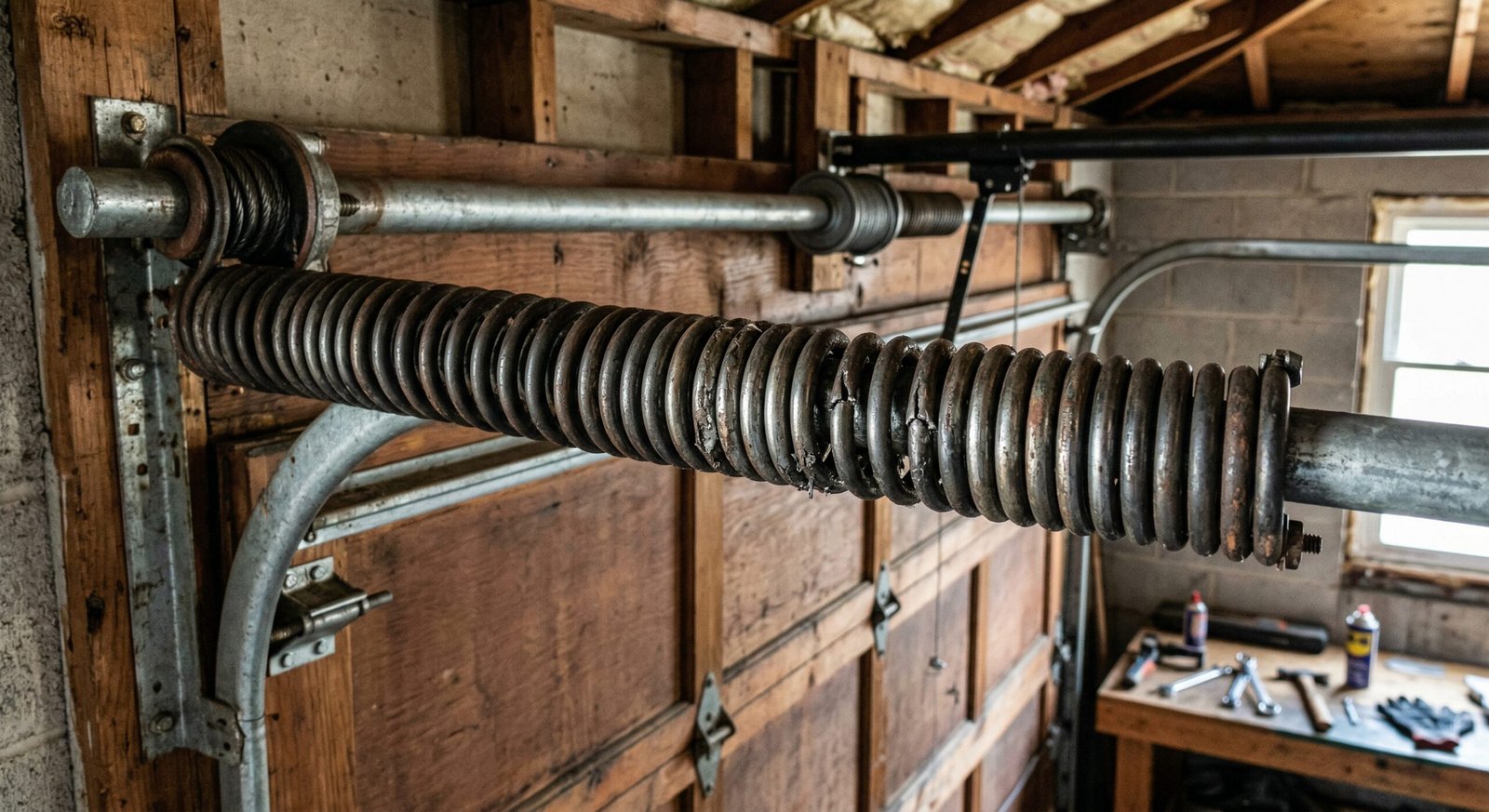
The torsion springs mounted above your garage door act as the primary muscle of the entire system. A common misconception among homeowners is that the motor lifts the door. In reality, the springs do 95% of the heavy lifting, while the motor simply guides the door along the rail.
In Sand Canyon, these springs are subjected to immense metallurgical stress. The extreme SCV summer heat bakes the steel, causing the molecular structure of standard raw-steel springs to degrade rapidly. When the temperature drops 40 degrees at night, this thermal cycling causes the steel to become brittle. Over a few short years, this leads to "spring sag," meaning the springs lose their lifting power.
Once the springs sag, the dead weight of the door transfers to your automatic opener. A motor designed to pull 15 pounds is suddenly trying to pull 150 pounds, leading to stripped nylon gears or a blown capacitor. To prevent this, we strictly utilize high-cycle, oil-tempered torsion springs. These springs are heat-treated to withstand extreme thermal expansion and contraction. Furthermore, achieving perfect kinetic balancing is non-negotiable. If you pull the emergency release cord, you should be able to lift a 500-pound door with two fingers, and it should hover weightlessly at the midway point.
2. Roller Seizing and Track Grinding
Equestrian trails and high winds mean that fine dirt is a permanent fixture in the 91387 air. This dust is the silent killer of garage door mobility.
Combating Sand Canyon Dust in Your Tracks
The worst thing a homeowner can do is spray standard WD-40 or heavy lithium grease into their garage door tracks. The grease acts as a magnet for the ambient silica dust. Within months, this mixture turns into a thick, abrasive paste that resembles liquid sandpaper.
When your rollers are forced to drag through this abrasive sludge, the bearings seize. Instead of rolling, the steel wheels drag along the tracks, causing that horrific screeching sound that echoes through the canyon. To fix this, routine track solvent flushes are mandatory. This involves using a high-grade citrus degreaser to entirely strip the tracks down to bare, clean metal.
Once the tracks are surgically clean, we swap out cheap steel rollers for sealed 13-ball bearing nylon rollers. Nylon operates silently, and the sealed bearing casings prevent the fine canyon silt from entering the raceway. The tracks themselves should only ever be treated with a dry PTFE (Teflon) spray, which lubricates the metal without giving dust a sticky surface to cling to.
3. The Warping and Binding of Custom Wood Entrances
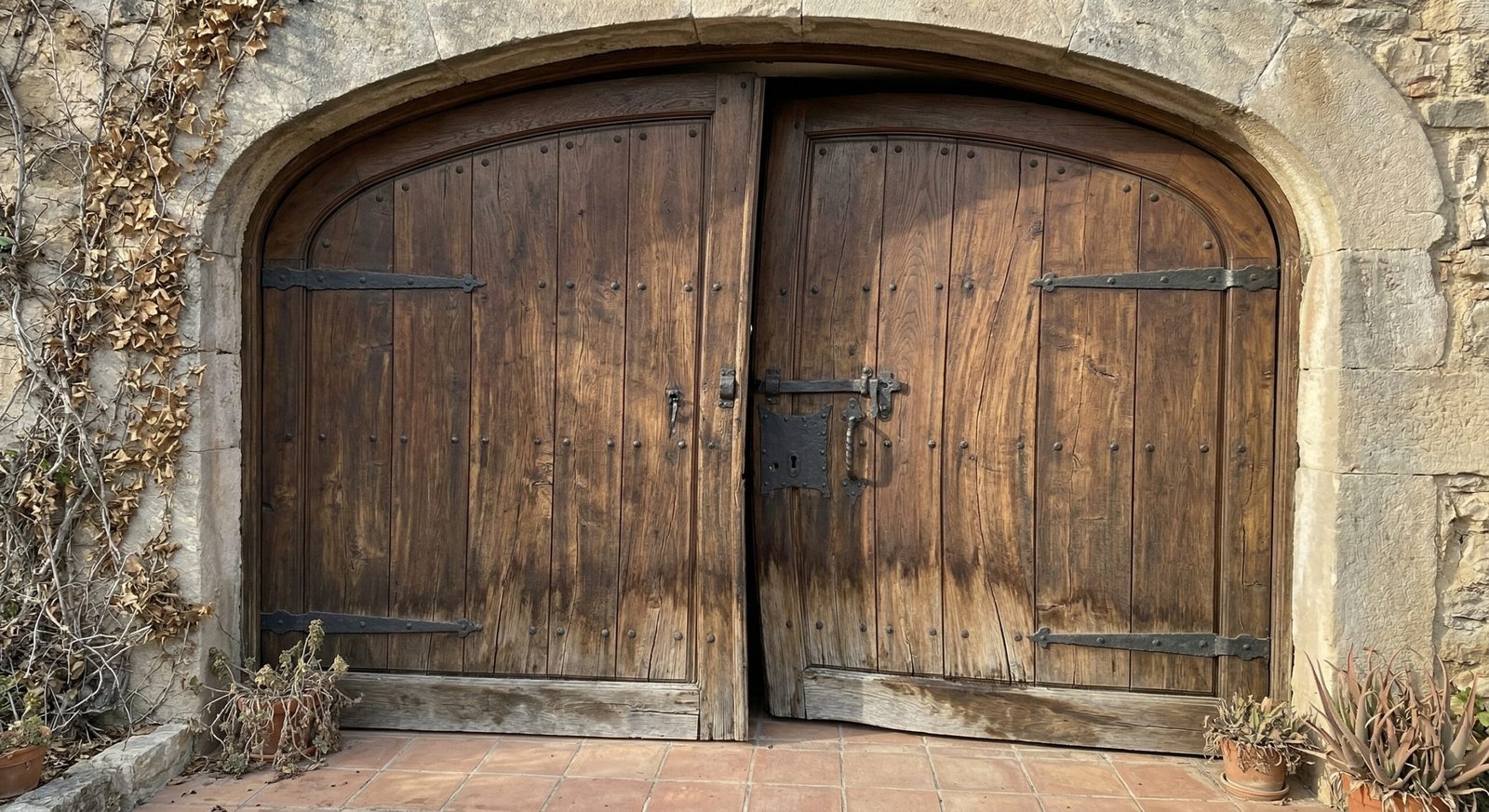
Many of the custom estates in Sand Canyon feature beautiful, heavy timber doors made from cedar, mahogany, or reclaimed oak. While visually stunning, wood is a cellular, living material that reacts violently to the local climate.
Protecting Wood Doors from Summer Heat
When the intense afternoon sun hits a dark-stained wood door facing the street, the surface temperature can exceed 160 degrees. This bakes the moisture out of the exterior fibers, causing them to shrink, while the cooler, shaded interior fibers remain expanded. This differential causes the heavy timber panels to bow and warp.
A warped door binds in the tracks, putting immense friction on the entire lifting assembly. To combat this, the exterior finish must be maintained with UV-blocking marine-grade sealants. More importantly, the hardware holding the door together must be upgraded. We replace standard hinges with 11-gauge industrial steel brackets and install double-U horizontal struts to force the wood to remain structurally rigid, regardless of the thermal load.
Additionally, the weatherstripping around the perimeter and the bottom seals must be inspected annually. In the SCV heat, standard PVC seals melt to the concrete or become brittle and crack. Upgrading to high-grade EPDM rubber ensures the seals remain pliable, keeping the heat and canyon rodents out of your garage without sticking to your driveway.
4. Electrical Grid Spikes and Brain Damage
Sand Canyon is notorious for electrical grid volatility, especially during fire season when Public Safety Power Shutoffs (PSPS) are common. When the power drops out and abruptly surges back on, the electrical spike travels directly into your garage door opener.
The "brain" of your opener is its logic board—a highly sensitive printed circuit board responsible for receiving remote signals and dictating travel limits. A single voltage spike from the local grid will instantly fry the microprocessors on these logic boards. You will know this has happened if the door starts opening on its own (phantom cycles) or if the motor simply clicks and refuses to move.
Preventing this is incredibly simple but often overlooked: install a dedicated, single-outlet surge protector between your opener and the ceiling outlet. This $20 hardware addition absorbs the transient voltage spikes that roll through the canyon, sacrificing itself to save your $600 motor assembly.
5. Safety Reversal Failures from Wind and Debris
Every automated garage door operates with photo-eye sensors located six inches off the ground near the tracks. These sensors project an invisible infrared beam; if the beam is broken, the door will reverse to prevent crushing an object or person.
In Sand Canyon, high-velocity wind events frequently rattle the track framework. It only takes a millimeter of vibration to knock these sensitive photo-eye sensors out of alignment. Furthermore, the wind constantly kicks up tumbleweeds, leaves, and dust that coat the sensor lenses. When you try to close the door and it immediately reverses while the overhead lights blink aggressively, it is almost always a sensor issue.
Prevention requires securing the sensor brackets with heavy-duty locking washers so the canyon winds cannot vibrate them loose. Wiping the lenses with a dry microfiber cloth should be a regular part of your household routine.
Annual Maintenance Checklist for 91387
To keep the heavy machinery on your Sand Canyon estate operating safely and quietly, strict adherence to a yearly maintenance protocol is required:
- Torsion Spring Audit: Inspect the coils for rust, separation, or structural elongation.
- Kinetic Balance Drop-Test: Disconnect the motor and manually lift the door to the halfway point to ensure it hovers in place.
- Track Solvent Flush: Strip all old grease and silica sludge from the vertical and horizontal tracks.
- Dry Lubrication Application: Apply dry PTFE spray to hinges, springs, and nylon rollers.
- Hinge and Strut Torquing: Tighten all lag screws and bolts that have vibrated loose from wind and daily operation.
- Weather Seal Inspection: Check the perimeter weatherstripping and bottom seals for UV cracking, dry rot, or rodent damage.
- Wood Panel Hydration Check: Inspect heavy timber doors for dry cracking, bowing, or clear-coat degradation.
- Sensor Alignment and Polish: Wipe the photo-eye sensors and confirm the mounting brackets are completely rigid against the wall.
- Force Setting Calibration: Test the motor's internal sensitivity limits to ensure it reverses upon meeting resistance.
- Battery Backup Cycle Test: Unplug the opener from the ceiling and run the door to verify the SB-969 compliance battery holds a sufficient charge for emergency egress.