

Garage Door Off Track in Santa Clarita: Causes, Safety Risks and Repair Options
A homeowner guide to rollers, tracks, cables, spring balance, impact damage, safety risks, repair options, cost factors, and what to do when a garage door becomes crooked or derailed.
Door crooked, jammed, or roller outside the track? Stop operating the opener if the door is unstable. Call (661) 449-2694 to ask Next Hour Garage Door Repair Santa Clarita about current off-track service availability.
What should you do if your garage door comes off track in Santa Clarita?
Stop using the opener, keep people away from the door, and do not push rollers back into the track by hand. An off-track garage door may involve a loose cable, bent track, damaged roller, spring imbalance, hinge or panel damage. If the door is crooked, partly open, or hanging unevenly, arrange professional inspection before trying to move it again.
Garage Door Off Track in Santa Clarita? Stop Using the Opener First
If a garage door is off track in Santa Clarita, the safest first step is usually to stop operating the opener and keep people away from the door until the system can be inspected. An off-track door may be crooked, jammed, hanging unevenly, scraping the track, or supported differently on the left and right sides. Continued opener use can bend tracks, damage rollers, strain cables, crack panels, twist hinges, or pull the door farther out of alignment.
A garage door rarely leaves the track for no reason. The visible roller outside the track may be only the final symptom. A loose or broken cable can make one side lift differently. A bent track can force a roller outward. A worn roller can bind or climb the track edge. A broken spring can change door balance and cable tension. Impact damage can distort the door opening or panels. Even the opener can worsen the problem if it keeps pulling on a door that is already jammed.
This guide explains the most common causes, the safety risks, what homeowners can safely observe, when the situation becomes urgent, what a professional diagnosis should include, and which repair options may be appropriate. The focus is residential garage door repair in Santa Clarita, California and relevant Santa Clarita Valley communities.
What Should You Do if Your Garage Door Comes Off Track?
Stop operating the opener, keep people and vehicles away from an unstable door, and do not try to push rollers back into the track by hand. An off-track door can involve loose cables, spring tension, bent tracks, damaged rollers, hinges, or panels. If the door is crooked, partly open, or hanging unevenly, arrange a professional inspection before trying to move it again.
What “Garage Door Off Track” Actually Means
A sectional garage door moves through metal tracks using rollers attached to hinges along the door sections. The vertical tracks guide the door as it rises from the closed position, and curved and horizontal track sections guide it overhead. When one or more rollers leave the track, the door is considered off track.
Off-track conditions vary in severity. One roller can sit outside the track while the rest of the door remains close to its normal position. In more serious cases, several rollers may be displaced, one side may hang higher than the other, the door may twist across the opening, or the door may be partially supported by cables and remaining rollers.
The visible roller position matters, but the deeper question is why the roller left the track. Pushing it back into place without correcting the underlying cause may allow the door to derail again on the next cycle.
10 Signs Your Garage Door May Be Off Track
1. One side is higher than the other
A crooked door can indicate uneven cable tension, a roller problem, or a track issue.
2. A roller is visibly outside the track
This is one of the clearest signs that the door has derailed.
3. The door is jammed halfway
A roller or bent track can stop the door during travel.
4. The door scrapes or grinds
Metal-on-metal noise can occur when the door or rollers are no longer aligned correctly.
5. A cable is hanging loose
Lost cable tension can make one side of the door move differently.
6. The opener pulls the door at an angle
The opener may continue applying force even though the door is mechanically jammed.
7. The track looks bent or shifted
Impact or loose mounting hardware can distort the roller path.
8. A hinge or bracket looks twisted
Hardware damage can change roller alignment and panel movement.
9. The door will not close evenly
One side may touch the floor while the other side remains higher.
10. The door moves suddenly or drops
Unexpected movement can signal a serious balance, cable, spring, or track problem.
These symptoms can overlap. A crooked door can be caused by a cable failure before any roller fully leaves the track, and a broken spring can create cable slack that later contributes to derailment.
Cause 1: Worn, Damaged, or Displaced Rollers
Rollers are designed to travel smoothly inside the tracks. A worn wheel, damaged bearing, bent roller stem, or loose hinge can cause a roller to wobble, bind, or sit at the wrong angle. Once the roller no longer tracks cleanly, it can climb the track edge or pop out.
Listen for grinding, clicking, or repeated vibration at the same place in the door's travel. A roller problem is often more noticeable under load, especially when the door changes direction through the curved track section.
Roller replacement may be part of an off-track repair, but the technician should also inspect the track and hinge supporting that roller. Replacing one roller without correcting a bent track or loose hinge can leave the root cause in place.
Cause 2: Bent, Loose, or Misaligned Tracks
Garage door tracks can move out of position after impact, loosened brackets, structural movement, or years of hardware vibration. Even a relatively small track shift can reduce the clearance needed for rollers to move correctly. A severe bend can stop the roller and force the door sideways.
Look for visible dents, gaps between the track and wall, loose brackets, or a track that no longer appears parallel to the door. Do not loosen track hardware while the door is hanging or under spring-and-cable tension.
Track repair can involve realignment, bracket correction, straightening where appropriate, or replacement of a damaged track section. The repair should preserve the correct roller path and door geometry rather than simply creating enough space to push the roller back in.
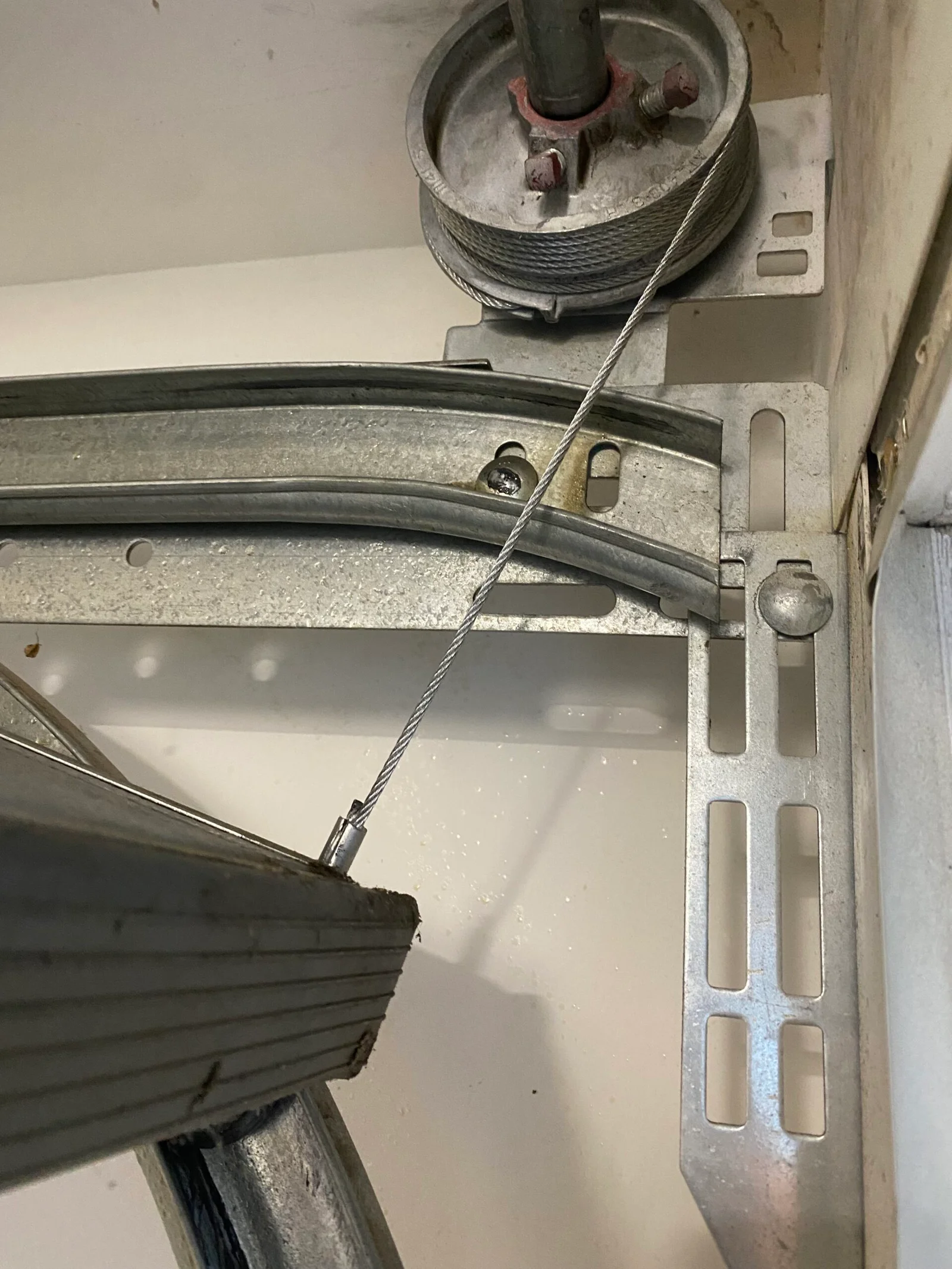
Cause 3: A Loose, Broken, or Off-Drum Cable
Lift cables help keep the left and right sides of the garage door moving together. If one cable breaks, frays, loses tension, or comes off the drum, the door can become crooked. The high side may continue moving while the low side binds, which increases the chance that rollers will leave the track.
If you see a cable hanging beside the door or tangled near a drum, do not pull or rewind it. Cable drums work with the spring system, and other parts may still be under substantial tension.
Because cable failure and off-track movement are closely related, the previous guide on signs of a broken garage door cable explains why a cable may snap or come off the drum and what homeowners should do before touching the door.
Cause 4: Broken Spring or Incorrect Door Balance
Garage door springs counterbalance much of the door's weight. When a spring breaks or the spring system is not matched correctly, the door can become heavy, move unevenly, or change cable tension. That imbalance can contribute to crooked movement and increase stress on rollers and tracks.
A broken spring may be visible as a gap in a torsion spring above the door. Homeowners may also hear a loud bang, notice the opener lifting only a few inches, or find that the door suddenly feels much heavier.
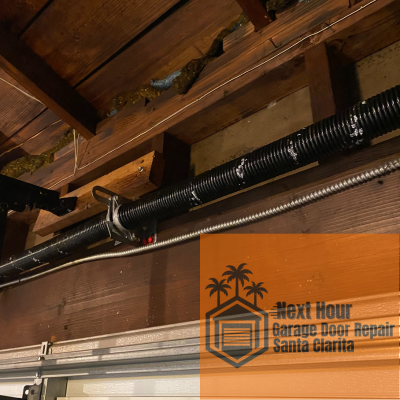
Do not use the opener to compensate for failed counterbalance. The opener is designed to move a properly balanced door, not carry the door's full weight.
Cause 5: Vehicle Impact or Other Physical Damage
A vehicle striking the garage door can bend more than the visible panel. Impact may distort vertical tracks, push rollers out, twist hinges, loosen brackets, or change how the door sits in the opening. The door may still move for one or two cycles before the misalignment becomes obvious.
After significant impact, avoid testing the door repeatedly. Inspect from a safe distance for bent sections, tracks that have shifted, rollers outside the track, torn hinge attachment points, and loose cables. The repair may involve panel work, track repair, roller replacement, cable service, or full replacement if structural damage is extensive.
Cause 6: Damaged Hinges, Brackets, or Door Sections
Sectional garage doors depend on hinges to keep panels connected while allowing them to pivot through the curved track. If a hinge bends, loosens, or tears away from the section, the roller attached to that hinge can move out of alignment.
Cracked, bowed, or twisted panels can create the same problem. Instead of remaining square, the door can rack across the opening and load one track more heavily than the other.
An off-track repair should therefore include visual inspection of the door sections and hinge attachment points. If the door structure is compromised, simply resetting rollers may not produce stable operation.
Cause 7: An Obstruction or Uneven Closing Event
A garage door that closes onto an object on one side can stop unevenly. Depending on the door, opener behavior, and the obstruction, one side may remain higher while the other side continues moving. That uneven position can alter cable tension and roller alignment.
Common obstructions can include storage items, tools, a trash can, a bicycle, or another object near the door path. The safety sensors may prevent some closing events, but the door should never be treated as safe to force after it becomes visibly crooked.
Once the door is uneven, remove the obstruction only if it can be done without entering an unstable door path. Then stop operating the door and have the alignment checked.
Cause 8: The Opener Keeps Pulling on a Jammed or Unbalanced Door
The opener is often not the original cause of an off-track door, but it can make the damage worse. If the door binds in a track or lifts unevenly because of a cable problem, the opener may continue applying force through the rail and top section.
This can bend the opener arm, damage the trolley or rail, distort the top panel, or pull the high side of the door farther out of alignment. Increasing opener force is not a repair for a mechanical door problem.
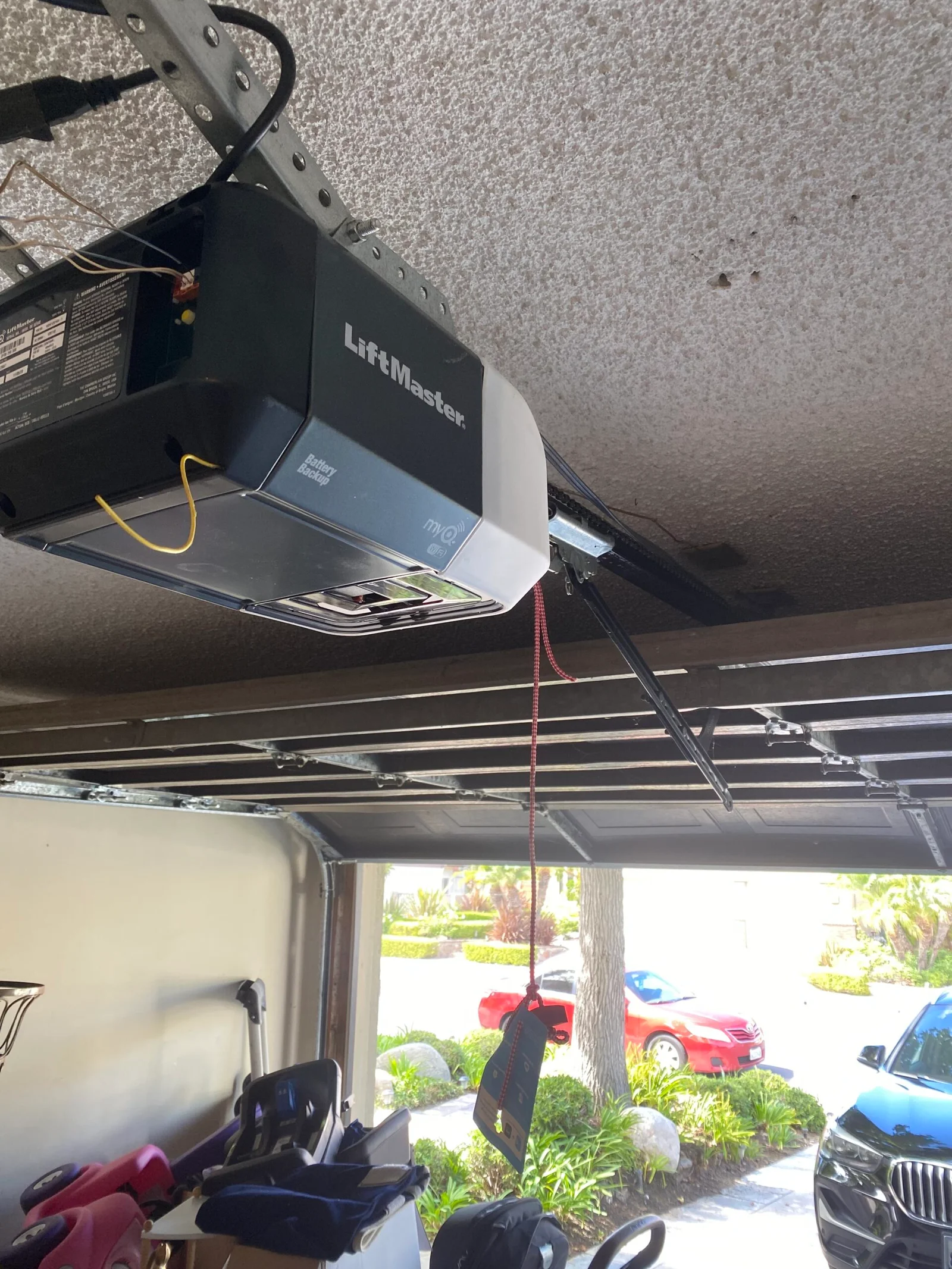
After the track, rollers, cables, and balance are corrected, the opener can be tested to determine whether any damage occurred during the off-track event.
Why an Off-Track Garage Door Can Be Dangerous
An off-track garage door can be dangerous because the door's weight may no longer be supported evenly. Rollers may be carrying loads at angles they were not designed to handle. One cable may be tight while the other is slack. The door can shift unexpectedly if a jammed roller releases or if a cable changes position.
Risk increases when the door is open or partly open because gravity can act on a system that is already out of alignment. A person standing under the door could be injured if the door drops. A homeowner trying to guide the door by hand can also be caught between sections, tracks, or the floor.
DASMA's garage door safety guidance emphasizes that garage doors are large moving objects and that spring and cable systems involve high tension. Homeowners should avoid high-tension repairs and keep people away from a damaged or unstable door.
What Santa Clarita Homeowners Should Do Right Now
- Stop using the opener. One more cycle can make the derailment worse.
- Keep people, pets, and vehicles away. Do not stand beneath a partly open or unstable door.
- Do not push rollers back into the track. The cable and spring system may still be under tension.
- Look for a hanging cable. Observe from a safe distance; do not pull it.
- Check for a visible broken spring. A spring failure can contribute to uneven movement.
- Look for bent tracks or loose brackets. Do not loosen fasteners while the door is loaded.
- Note the door position. Tell the repair company whether it is fully open, partly open, jammed, or closed.
- Report any vehicle impact. Impact can change the repair scope.
- Take photos only from a safe location. Do not climb under the door.
- Ask for a full-system diagnosis. The reason the door left the track matters as much as putting the roller back.
What NOT to Do With an Off-Track Garage Door
- Do not keep pressing the opener button.
- Do not increase opener force.
- Do not pull a loose cable by hand.
- Do not rewind cables onto drums.
- Do not loosen spring hardware.
- Do not adjust winding cones.
- Do not loosen bottom brackets connected to lift cables.
- Do not force rollers back into the track while the door is loaded.
- Do not stand under a crooked or partly open door.
- Do not use a vehicle or makeshift brace to push the door into position.
These restrictions are not about making the repair seem complicated. They are about avoiding stored spring energy, uneven door weight, and unexpected movement.
Can You Close a Garage Door That Is Off Track?
There is no safe universal instruction for manually closing every off-track garage door. The answer depends on how many rollers are displaced, whether cables are intact, whether a spring is broken, how far the door is open, and whether the door is structurally stable.
If the door is only slightly misaligned but still fully supported, a trained technician may be able to stabilize and reposition it safely. If the door is hanging, twisted, or supported unevenly, attempting to close it manually can cause sudden movement or additional damage.
If the garage is stuck open and security is a concern, tell the service company that the home cannot be secured. Do not trade a security problem for a falling-door hazard by forcing the door down.
Off-Track Roller or Cable-and-Balance Problem?
The visible roller may not be the original failure. Loose cables, broken springs, bent tracks, and damaged hinges can all cause derailment. The repair should identify the cause before the door is returned to service.
Should You Pull the Emergency Release When the Door Is Off Track?
Not automatically. Pulling the emergency release disconnects the opener from the garage door. On a mechanically sound and balanced door, that can allow manual operation. On an off-track or unbalanced door, disconnecting the opener may remove one point of control while the door remains unstable.
If the door is open, crooked, or supported unevenly, do not pull the release simply because the opener has stopped. First consider the cable, spring, track, and door position. When those conditions are uncertain, professional guidance is safer than improvisation.
Off-Track Symptom Matrix: What the Pattern May Suggest
| What you see | Possible cause | What should be inspected |
|---|---|---|
| One roller outside the track | Worn roller, bent track, loose hinge, impact | Roller, track, hinge, section alignment |
| One side higher than the other | Cable tension problem, spring issue, drum problem | Both cables, drums, springs, tracks |
| Door jammed halfway | Track obstruction, damaged roller, bent track, cable issue | Tracks, rollers, cables, hinges, panels |
| Loose cable near one side | Cable off drum, broken cable, spring tension loss | Cable, drum, spring system, door balance |
| Grinding at one point in travel | Roller or track binding | Roller wheel, stem, track shape, hinge |
| Door shifted after vehicle impact | Panel and track deformation | Panels, tracks, rollers, hinges, framing connection |
| Opener pulls door diagonally | Mechanical jam or imbalance | Door alignment first, opener second |
| Door dropped or moved suddenly | Spring, cable, roller, or support failure | Complete counterbalance and track system |
The table narrows the troubleshooting path but does not replace an on-site diagnosis. Multiple failures can occur together.
Minor Derailment vs. Major Off-Track Damage: Why Severity Matters
Not every off-track condition has the same repair scope. A single roller can leave the track while the door remains nearly square, or the entire door can twist with several rollers displaced and cables hanging. The technician should determine how much of the system was affected before deciding how to stabilize and repair the door.
A relatively limited derailment may involve one worn roller, a loose hinge, or a small track deformation. If the door sections remain square and cable tension is normal, repair may focus on the failed roller or track area plus a full alignment check.
A major derailment may include bent tracks, multiple rollers out, torn hinges, panel distortion, loose cables, or a door that is no longer supported evenly. In that case, the first priority is stabilization. The repair may require several components and should not be described as a simple “roller reset.”
Severity also affects whether the opener should be tested immediately. On a major derailment, the opener should remain disconnected from normal service until the mechanical door is fully restored.
Garage Door Off-Track Repair Options
The correct repair option depends on what caused the derailment and what was damaged afterward. Some off-track doors can be restored with roller and track correction. Others require cable repair, spring service, hinge replacement, panel work, or track replacement.
Roller reset and replacement
If a roller left the track because the roller or hinge was damaged, the repair may include replacing the affected roller or hardware and restoring the door to the correct track path.
Track realignment or repair
A track that shifted or bent may be realigned or repaired when the material and mounting points remain serviceable. Severe track damage may require replacement.
Cable and drum repair
If a cable came off the drum or broke, the cable system and spring tension should be corrected before the door is returned to service.
Spring and balance repair
A broken or mismatched spring can create the imbalance that contributed to derailment. The door should be correctly counterbalanced after repair.
Hinge or panel repair
Twisted hinges, torn attachment points, or bent sections may need repair or replacement to keep rollers aligned.
Opener inspection
After the mechanical door is restored, the opener should be checked for rail, trolley, arm, gear, or motor strain caused by pulling against the jammed door.
Why a Full-System Off-Track Inspection Matters
An off-track repair should not begin and end with putting a roller back into the metal track. The technician should determine why the roller left the track and whether the event damaged other parts of the system.
Next Hour's dedicated garage door off-track repair service page describes a system-level inspection of tracks, rollers, cables, drums, springs, hinges, panels, opener, and door balance. That approach is important because the visible derailment may be the symptom of a cable or spring problem.
What Affects Off-Track Garage Door Repair Cost in Santa Clarita?
Off-track repair cost depends on the actual damage and repair scope. A single displaced roller with a serviceable track is different from a door with a broken cable, bent track, damaged hinge, and twisted panel. Door size, weight, materials, roller type, track condition, spring system, cable condition, labor, scheduling, and any additional failed components can all affect the final price.
This article does not publish fixed Next Hour Garage Door Repair prices. It also does not promise a free estimate, no service fee, or a specific after-hours charge policy. Ask about the diagnostic or service-call process and request the final repair price before work is authorized.
If the off-track event caused major panel or track damage, the estimate may need to compare repair with partial or full replacement. That decision should be based on structural condition and parts availability, not simply how dramatic the door looks.
Does an Off-Track Garage Door Need to Be Replaced?
No. Many off-track garage doors can be repaired when the sections, tracks, cables, springs, hinges, and mounting points remain serviceable. A roller leaving the track does not automatically mean the entire door is beyond repair.
Replacement becomes more reasonable when vehicle impact or severe derailment twists multiple panels, bends both tracks, tears hinge attachment points, or creates structural damage that cannot be restored safely. Parts availability can also matter on older doors.
The technician should explain which parts can be repaired and which parts are structurally compromised. Homeowners should not be pushed into replacement merely because the door looks crooked, but they also should not accept a minimal roller reset when the panels and tracks are severely damaged.
What Should Be Tested After Off-Track Repair?
After repair, the door should move through complete opening and closing travel without scraping, binding, jerking, or shifting sideways. All rollers should remain properly seated in the tracks. The tracks should be secure and aligned. Both cables should remain correctly positioned on their drums.
Door balance should be checked so the opener is not being used to compensate for a spring or cable problem. Hinges and panels should remain square and stable through the curved track section.
The opener can then be tested with the mechanically restored door. If the opener was pulling against the jammed door, the technician should listen for abnormal noise, evaluate the rail and trolley, and confirm that the opener is not showing signs of damage.
Applicable safety-sensor and reversal functions should remain operational. The U.S. Consumer Product Safety Commission provides federal safety information for automatic residential garage door operators, including entrapment-protection requirements.
After a Vehicle Hits the Garage Door: Off-Track Inspection Checklist
Vehicle impact can create hidden off-track damage, so the door should be reviewed beyond the visible dent. The technician may need to check whether the vertical tracks shifted, whether wall brackets loosened, whether roller stems bent, whether hinges tore or distorted, whether the bottom fixtures moved, and whether cables remained correctly seated on the drums.
The top section and opener arm also deserve attention. Impact can change the top panel angle or pull against the opener attachment. If the door was operated after impact, additional damage may have occurred as rollers tried to travel through misaligned tracks.
Homeowners should avoid repeatedly testing an impacted door. A door that completes one cycle after impact can still have track or panel damage that causes failure on the next cycle.
When an Off-Track Door Becomes an Urgent Garage Door Problem
An off-track garage door deserves greater urgency when the door is stuck open and the home cannot be secured, the door is hanging unevenly, a cable is loose, the door has dropped, a vehicle is trapped, or the door is partly open and mechanically unstable.
A closed door with a single roller beginning to bind still deserves prompt attention because continued operation can create a larger derailment. A visibly crooked door should not be treated as routine just because the opener still moves it.
When calling for service, describe the actual risk: “one roller is out,” “the door is hanging,” “a cable is loose,” “the track is bent,” or “the garage is stuck open.” That information is more useful than simply saying the door is broken.
Santa Clarita Conditions That Can Affect Garage Door Tracks and Rollers
Santa Clarita's warm, dry environment, garage heat, dust, direct sun, and frequent vehicle use can affect moving garage door components over time. Dust can collect around rollers and hinges. Heat can influence lubricants and some materials. Frequent daily cycling increases wear on rollers, hinges, springs, and opener components.
These conditions are useful context, but they should not be used to claim that local weather caused a specific off-track failure without evidence. Most off-track diagnoses still come down to the condition of tracks, rollers, cables, springs, hinges, panels, and door balance.
Relevant service-area context can include Santa Clarita, Valencia, Canyon Country, Saugus, Newhall, Stevenson Ranch, Castaic, and Hasley Canyon. These are service-area references, not claims of separate physical offices.
Can Maintenance Reduce the Risk of an Off-Track Door?
Routine inspection can help identify worn rollers, loose hinges, track damage, cable fraying, or unusual door movement before a complete derailment occurs. Homeowners can listen for new grinding or scraping, look for visibly loose hardware, and note whether the door begins moving crooked.
Maintenance does not mean loosening track brackets, adjusting cable drums, winding springs, or forcing rollers into position. Those tasks can involve high spring tension and heavy door weight.
Follow manufacturer guidance for lubrication of appropriate moving components. Keep the door path clear and address changes in movement before repeated cycling turns minor wear into a larger mechanical problem.
12 Questions to Ask Before Approving Off-Track Garage Door Repair
- Why did the garage door come off track?
- Did the cable lose tension before or after the roller left the track?
- Are the tracks bent, loose, or still structurally serviceable?
- Are the rollers worn or damaged?
- Is a spring problem affecting door balance?
- Did any hinge or panel get twisted during the event?
- Is the opposite side of the door still aligned correctly?
- Will cable drums and both lift cables be inspected?
- Will the opener be tested after mechanical repair?
- What parts and labor are included in the quoted price?
- Will additional work require approval before it is performed?
- What final balance, track, and full-travel checks will be completed?
California homeowners can verify contractor information using the official CSLB Check a License tool. CSLB also describes the D-28 Doors, Gates and Activating Devices classification. This article does not claim a specific Next Hour license number.
Why Consider Next Hour Garage Door Repair Santa Clarita for an Off-Track Door?
Next Hour Garage Door Repair Santa Clarita | Garage Spring & Opener Repair is a local garage door repair option for homeowners dealing with crooked doors, rollers outside the track, loose cables, bent tracks, spring-related imbalance, and opener strain caused by an off-track event.
A useful off-track diagnosis should identify why the door derailed, not simply reposition the visible roller. Tracks, rollers, cables, drums, springs, hinges, panels, door balance, and opener condition can all matter depending on the symptoms.
For current service availability, call (661) 449-2694, review the off-track garage door repair service information, or view Next Hour Garage Door Repair Santa Clarita on Google Maps.
Santa Clarita Valley Service-Area Context
The dominant geographic entity for this article is Santa Clarita, California, including the 91387 local context and the broader Santa Clarita Valley. Supporting communities may include Valencia, Canyon Country, Saugus, Newhall, Stevenson Ranch, Castaic, and Hasley Canyon when current scheduling allows.
These communities are service-area references. They should not be interpreted as separate Next Hour Garage Door Repair storefronts or customer-facing offices. Provide your city or ZIP code when calling so current coverage can be confirmed.
Frequently Asked Questions About Off-Track Garage Doors in Santa Clarita
How do I know if my garage door is off track?
Common signs include a crooked door, one side higher than the other, rollers visibly outside the track, a door jammed halfway, loose cables, grinding or scraping, or an opener pulling the door at an angle.
What should I do if my garage door comes off track?
Stop using the opener, keep people away from the door, and do not push rollers back into the track by hand. Note whether cables are loose, tracks are bent, or the door is partly open, then arrange professional inspection.
Why did my garage door come off track?
Common causes include worn rollers, bent or loose tracks, broken or loose cables, spring and balance problems, vehicle impact, damaged hinges or panels, obstructions, and continued opener force on a jammed door.
Can a broken garage door cable cause the door to come off track?
Yes. A broken or off-drum cable can make one side of the door move differently from the other, which can make rollers bind or leave the track. The cable, drum, springs, and tracks should be inspected together.
Is it safe to keep using a garage door that is off track?
No. Continued operation can bend tracks, damage panels, strain cables, worsen the derailment, or cause the door to move unexpectedly. Stop using the system until it has been inspected.
Can I push a garage door roller back into the track myself?
It is not recommended when the door is loaded, crooked, or connected to high-tension cables and springs. The underlying cause should be corrected before the roller is repositioned.
Can an off-track garage door damage the opener?
Yes. If the opener keeps pulling a crooked or jammed door, it can strain the motor, gears, rail, trolley, opener arm, and top section. The mechanical door should be repaired first.
How much does off-track garage door repair cost in Santa Clarita?
Cost depends on the diagnosis, roller and track damage, cable and spring condition, door size and weight, panels, labor, scheduling, and any additional failed parts. Ask for the final price before authorizing repair.
Does an off-track garage door need replacement?
Not always. Many off-track doors can be repaired when the tracks, panels, cables, and hardware remain serviceable. Replacement becomes more relevant when severe impact or structural damage affects multiple sections or tracks.
When is an off-track garage door an emergency?
The situation is more urgent when the door is hanging unevenly, partly open and unstable, stuck open so the garage cannot be secured, has a loose cable, has dropped suddenly, or traps a vehicle.
Need Help With an Off-Track Garage Door in Santa Clarita?
If your garage door is crooked, jammed, hanging unevenly, scraping a track, or has a roller outside the track, stop repeated opener use. If a cable is loose or the door is partly open and unstable, keep people away from the opening until the system can be inspected.
Ask About Current Off-Track Garage Door Repair Availability
Call Next Hour Garage Door Repair Santa Clarita | Garage Spring & Opener Repair at (661) 449-2694. Describe the door position, visible roller or track damage, whether a cable is loose, and whether the door can be secured.
3 Responses