Garage Door Doctor Santa Clarita
When a garage door suddenly becomes heavy, refuses to open, reverses before closing, comes off track or makes unusual noises, the most useful first step is diagnosis. This Santa Clarita homeowner guide explains how garage door technicians identify problems involving springs, openers, cables, rollers, tracks, sensors and door balance before recommending repair or replacement.
What Should a Garage Door Doctor in Santa Clarita Actually Do?
Short answer: a garage door technician should diagnose the cause of the problem before replacing parts. That means looking beyond the symptom and determining whether the failure involves the spring system, opener, cables, drums, rollers, tracks, safety sensors, door balance, panels or another connected component.
A door that will not open does not automatically need a new opener. A broken torsion spring can make the door so heavy that the opener cannot lift it. A door that reverses while closing does not automatically need new sensors; an obstruction, mechanical resistance or opener setting may create similar behavior.
The useful sequence is: identify the symptom → inspect related components → isolate the failure → explain repair options → provide an understandable estimate → test the door after repair. That diagnostic approach helps homeowners avoid replacing the wrong component.
Next Hour Garage Door Repair Santa Clarita is a separate local residential garage door company homeowners can contact for troubleshooting and repair involving springs, openers, cables, rollers, tracks, sensors, off-track doors and related garage door problems.
What Does “Garage Door Doctor Santa Clarita” Mean?
Homeowners often use words such as “doctor,” “expert,” “technician” or “repair specialist” when they want someone who can diagnose a garage door problem rather than simply sell a replacement.
The doctor comparison is useful only as an analogy. A garage door technician is not providing medical care and “garage door doctor” is not a technical certification by itself. The valuable idea behind the phrase is diagnosis: identify what is wrong before deciding what should be repaired.
This matters because a residential garage door is an interconnected mechanical and automatic system. The symptom that catches a homeowner's attention may be several steps removed from the component that actually failed.
The Symptom Is Not Always the Diagnosis
If your automatic opener runs but the garage door remains on the floor, “bad opener” may seem like the obvious diagnosis. But if a torsion spring broke, the opener may simply be unable to lift the now-unbalanced weight of the door.
If the garage door stops while closing and reverses, the photo-eye sensors deserve attention, but the diagnosis should also consider whether the door is binding, meeting an obstruction or experiencing an opener travel-related problem.
If the door becomes crooked, replacing one roller may not solve the issue if the real cause is a lift cable that has come off a drum.
Diagnosis Before Parts Replacement
A professional repair recommendation should connect three things: the homeowner's symptom, the component that failed and the repair being proposed.
If that connection cannot be explained, the homeowner should ask more questions before authorizing major work.
Why Should Garage Door Diagnosis Come Before Repair?
Garage door systems distribute force across several components. Springs counterbalance the weight of the door. Lift cables connect the lower part of the door to drums or the spring system. Rollers guide the door through vertical and horizontal tracks. Hinges allow sectional panels to move around the curved track radius.
The automatic garage door opener then moves a door that should already operate properly as a mechanical system.
When one part fails, another component may show the symptom. Diagnosis is the process of separating the visible symptom from the underlying cause.
Why Parts Swapping Can Become Expensive
Replacing parts based only on a guess can create unnecessary expense. Installing a new opener will not fix a broken spring. Replacing photo-eye sensors will not straighten a damaged track. Installing rollers will not correct a lift cable that has lost tension.
This does not mean every garage door repair requires an elaborate investigation. Many failures become obvious once the right components are inspected. The point is that the repair should follow the evidence.
Related Components Should Be Considered
When a spring breaks, a technician may also look at cables, drums and door balance. When a cable fails, rollers and tracks may deserve attention if the garage door became crooked. When an opener struggles, the mechanical door should be evaluated before assuming the motor is defective.
Inspecting related components does not mean every component should be replaced. It helps identify whether the original failure created additional damage.
What Garage Door Symptoms Should Santa Clarita Homeowners Watch For?
Door Will Not Open
Possible causes include a broken spring, opener failure, trolley disconnection, cable problem, track obstruction, power issue or control problem.
Door Will Not Close
Safety sensors, opener settings, an obstruction or mechanical resistance can prevent normal closing.
Door Suddenly Feels Heavy
A major change in door weight commonly points toward a spring or counterbalance-system problem.
Opener Runs but Door Stays Down
The cause may be an opener connection or drive problem, but a broken spring can create almost the same homeowner experience.
Door Moves Crooked
Cable, drum, roller, track or spring-related problems can cause one side of the door to move differently from the other.
Grinding, Scraping or Popping
Rollers, hinges, tracks, springs or opener components may create new mechanical noises.
Door Closes Then Reverses
Photo-eye sensors, obstructions, opener travel behavior or resistance in the door can contribute to reversing.
Rollers Leave the Track
Impact, cable failure, track damage or severe misalignment can result in an off-track garage door.
Door Opens Only a Few Inches
A spring problem, mechanical resistance or opener-related issue may prevent the door from completing its travel.
These symptoms are useful clues, but they are not definitive diagnoses. A strong service visit connects the symptom with physical evidence from the garage door system.
What Should a Garage Door Technician Inspect?
The inspection should be shaped by the problem rather than following a one-size-fits-all replacement checklist.
For a door that suddenly became extremely heavy, the spring and counterbalance system deserve immediate attention. For a door that closes and reverses, the safety sensors, obstruction path, mechanical movement and opener behavior become more relevant.
Spring System
The technician may inspect torsion or extension springs, attachment points, shaft components and the relationship between spring force and door weight.
Lift Cables and Drums
Cables should remain properly routed and supported. Fraying, displacement or loss of tension can affect the position and stability of the door.
Rollers and Tracks
Rollers should follow the track path without obvious binding. Technicians may look for track damage, loose mounting points, displaced rollers or areas where the door is rubbing.
Hinges and Panels
Hinges allow sectional movement and connect the door panels. Structural panel damage, loose hardware or impact damage may affect how the door travels.
Automatic Garage Door Opener
Depending on the symptom, inspection may include the opener motor, trolley or carriage, rail, drive system, wall control, remote operation, travel behavior and safety systems.
Photo-Eye Safety Sensors
The sensors near the bottom of the door opening may need to be checked for alignment, physical damage, obstruction or related wiring concerns.
Door Balance
Door balance is important because an opener should not be expected to compensate for a garage door that has lost proper counterbalance.
What Does a Professional Garage Door Diagnostic Process Look Like?
The exact process changes with the problem, but a useful diagnostic visit generally moves from the homeowner's symptom toward a specific repair recommendation.
This structure is useful because it makes the repair recommendation explainable. A homeowner does not need detailed engineering knowledge, but should be able to understand why the proposed repair relates to the original problem.
How Does a Technician Diagnose a Broken Garage Door Spring?
Garage door springs are part of the counterbalance system. They do not simply “help” the automatic opener; they perform much of the work of offsetting the door's weight.
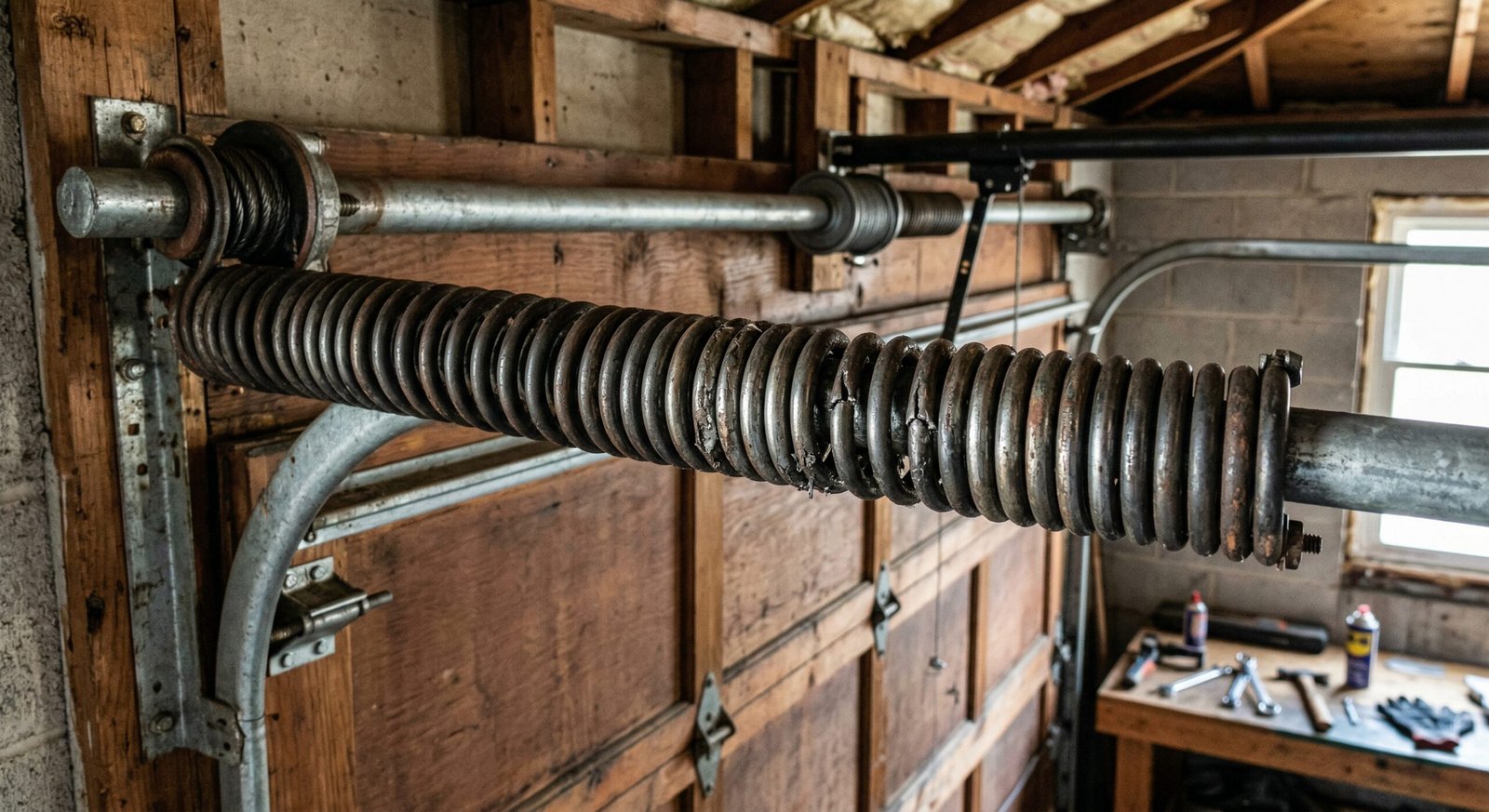
Common Broken-Spring Clues
- A visible separation appears in a torsion spring.
- A loud bang or snapping sound was heard in the garage.
- The door suddenly became extremely heavy.
- The opener tries to lift the door but cannot.
- The door rises a short distance and stops.
These signs often point toward spring failure, but a professional inspection can also consider whether the cables or drums were affected.
Why Matching the Spring to the Door Matters
Garage doors vary in weight, width, height, insulation and construction. The spring system must be appropriate for the specific door rather than selected only because a spring physically fits the shaft.
Some doors use one spring and others use multiple springs. A technician should understand the existing configuration before recommending replacement.
Spring and Cable Safety
Garage door springs can contain substantial stored energy. Lift cables and bottom brackets may also be affected by spring tension. Do not loosen, rewind or reposition high-tension spring hardware simply to test whether the door starts working again.
DASMA's homeowner safety guidance recommends trained technician service for worn or broken springs and loaded cable components. Homeowners can review garage door spring and cable safety guidance from DASMA .
How Can You Tell an Opener Problem From a Garage Door Problem?
This is one of the most useful distinctions a garage door technician can make. The opener and the physical garage door work together, but they are not the same system.
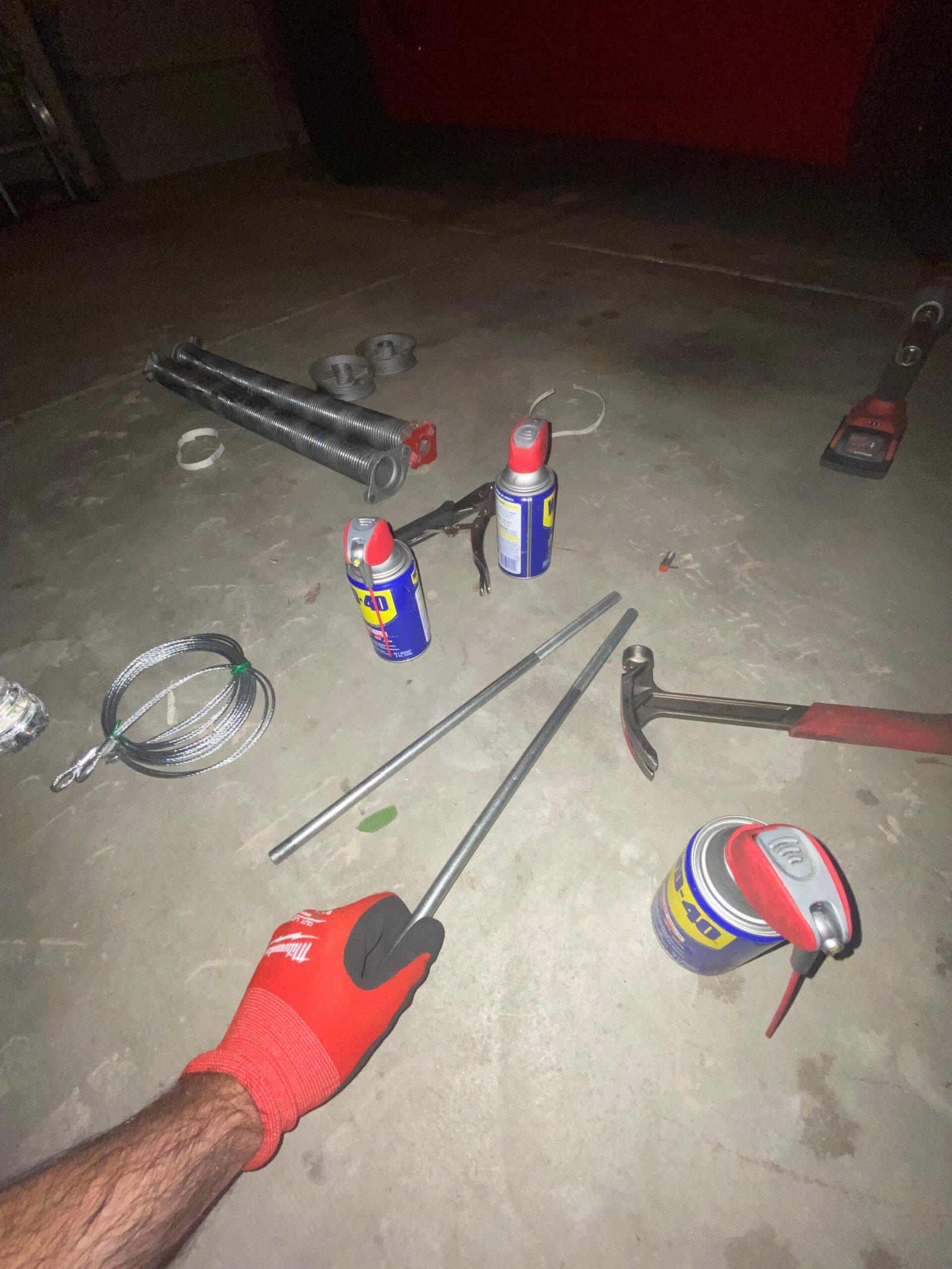
When the Door Can Make the Opener Look Bad
If the spring system has failed and the door has become extremely heavy, the opener may strain, stop or fail to raise the door. Installing a stronger or newer opener would not correct the lost counterbalance.
When the Opener Itself May Be the Problem
A mechanically suitable garage door can still have a failure in the opener motor, trolley, carriage, belt, chain, internal drive component, control electronics, wall button, remote system or safety-sensor circuit.
Remote-Control Problems Do Not Always Mean Motor Failure
If the wall control operates the door but a remote does not, the diagnosis is different from an opener that has no power or a motor that runs without moving the trolley.
Safety Reversal Is Part of the Opener System
Automatic residential garage door operators are subject to federal safety requirements. The U.S. Consumer Product Safety Commission identifies 16 CFR Part 1211 as the mandatory federal safety standard for automatic residential garage door operators.
Homeowners can review CPSC information about automatic residential garage door operator safety requirements .
How Are Cable, Roller and Track Problems Diagnosed?
These components are closely connected to how the garage door moves, but they fail in different ways.
Garage Door Cable Problems
Lift cables work with the spring system. A frayed, displaced or broken cable may allow one side of the garage door to lose support. The door can become crooked or stop moving normally.
A hanging cable is not always an isolated cable failure. A spring problem or drum issue may have changed the tension and allowed the cable to come out of position.
Roller Problems
Worn or damaged rollers can contribute to vibration, noise, drag or rough travel. A roller that has left the track deserves additional diagnosis because the cause may involve more than the roller itself.
Track Problems
Garage door tracks can become bent, loose, displaced or damaged by impact. A minor alignment issue is different from a track section that has been physically deformed.
Why an Off-Track Door Needs More Than a Quick Push
When a door leaves the track, the technician should determine why. Simply pushing rollers back into position without correcting the cause can allow the condition to return.
Possible causes include cable failure, impact, damaged track, roller failure or a severely uneven lifting condition.
Why Does My Garage Door Close and Come Back Up?
A reversing garage door is commonly associated with photo-eye safety sensors, but the sensor itself is not the only possible cause.
Obstruction
An obvious object in the path of the door or sensor beam should be cleared before assuming a component has failed.
Sensor Alignment or Condition
One sensor may have been bumped or physically damaged. Dust and debris can also make a visual inspection worthwhile, particularly in a dry environment.
Wiring or Control Problem
A sensor may appear normal while a related wiring or opener-control problem prevents the safety system from operating as expected.
Mechanical Resistance
If the garage door is binding or meeting unusual resistance, the opener's behavior can resemble a safety-sensor issue. That is why the technician should consider door movement in addition to the photo eyes.
The goal should be to restore proper safety operation, not permanently bypass a system simply because the door currently refuses to close.
Garage Door Doctor Santa Clarita Diagnostic Comparison Table
| Homeowner Symptom | Possible System Involved | What a Technician May Check | What Not to Assume | Urgency |
|---|---|---|---|---|
| Door suddenly becomes very heavy | Spring / counterbalance system | Springs, cables, drums and door balance | Do not assume the opener motor is too weak | High |
| Opener runs but door does not rise | Spring system or opener drive | Door balance, trolley, drive system and opener | Do not automatically replace the opener | Moderate to High |
| Door closes then reverses | Sensors, settings or mechanical movement | Photo eyes, obstruction path, travel and door movement | Do not assume every reversal is a bad sensor | Moderate |
| Door is crooked | Cable, drum, spring, roller or track | Both sides of lifting system and track alignment | Do not keep cycling the door hoping it straightens itself | High |
| Cable is hanging | Cable / spring / drum | Cable routing, drum and counterbalance condition | Do not pull or reconnect a loaded cable casually | High |
| Grinding or scraping | Roller, hinge, track or opener | Location of noise and mechanical travel | Do not assume lubrication fixes physical damage | Moderate |
| Remote does not work | Remote / receiver / control system | Wall control, remote response and opener status | Do not assume the entire opener needs replacement | Low to Moderate |
| Rollers are outside the track | Track, cable, roller or impact damage | Track geometry, cable tension and roller condition | Do not repeatedly operate an unstable door | High |
| Door stops after moving a few inches | Spring, resistance or opener system | Balance, spring condition, track movement and opener | Do not diagnose based only on where the door stops | Moderate to High |
The table is intended to organize troubleshooting, not replace an on-site diagnosis. Several garage door failures can create similar symptoms, and more than one component can be damaged during the same event.
When Should You Stop Operating a Garage Door?
Some garage door issues can be scheduled routinely. Others can create unnecessary risk or secondary damage if the door continues to be operated.
Stop Repeated Operation When
- A garage door is severely crooked or leaning.
- A lift cable is broken, hanging or visibly displaced.
- Multiple rollers have left the track.
- A track is pulling away from its mounting surface.
- A spring is visibly broken and the door has become extremely heavy.
- The garage door appears unstable or at risk of falling.
- Impact has significantly damaged the panels or track system.
DASMA's inspection guidance warns that springs and spring hardware operate under high tension and advises that repairs and adjustments involving those systems be handled by trained door-system technicians.
A homeowner can observe visible symptoms and describe them when scheduling service. The goal is not to perform dangerous high-tension testing in order to obtain a more precise diagnosis before the technician arrives.
When Does Diagnosis Lead to Repair vs. Replacement?
A professional diagnosis should answer more than “what is broken?” It should also help determine the appropriate level of repair.
Repair May Make Sense When
- The primary problem is a failed spring.
- A cable or roller problem can be isolated.
- Track damage can be properly corrected.
- The opener has a serviceable component failure.
- Safety sensors need correction or replacement.
- The garage door panels remain structurally suitable.
- Compatible replacement components are available.
Panel Replacement May Be an Intermediate Option
When impact damage is limited to one garage door section and a compatible replacement panel is available, panel replacement can sometimes be considered without replacing the entire door.
Full Garage Door Replacement May Deserve Consideration When
- Several sections have substantial structural damage.
- The door has experienced major impact damage.
- Critical replacement components or matching panels are unavailable.
- Several major systems require extensive work at the same time.
- The homeowner wants a substantial material, design or insulation upgrade.
- Repair would not restore suitable operation.
Opener Replacement Is a Separate Diagnosis
The physical garage door and automatic opener should be evaluated as related but separate systems. A good garage door does not guarantee a good opener, and an opener problem does not automatically mean the garage door itself needs replacement.
When a broader installation project creates questions about local permits or construction requirements, homeowners can consult the City of Santa Clarita Building & Safety Permit Center for current local information.
What Should a Garage Door Repair Estimate Explain?
An estimate becomes more useful when it explains the connection between the diagnosis and the work being sold.
If the technician says a spring failed, the homeowner should know how many springs are being replaced and whether related cable or drum work is included. If a new opener is recommended, the homeowner should understand why repair of the current opener is not being recommended.
Diagnostic Estimate Checklist
- What symptom was investigated?
- What component was identified as the primary failure?
- What evidence supports that diagnosis?
- Were related components damaged?
- Which parts will be repaired or replaced?
- How many parts are included?
- Does the estimate include labor?
- Are adjustments or balancing included?
- Which recommendations are required now?
- Which recommendations are preventive or optional?
- Are reasonable repair alternatives available?
- What warranty applies if one is offered?
- Under what conditions could the final price change?
Written Terms Matter for Qualifying California Projects
California's Contractors State License Board explains that written home-improvement agreements help clarify the work, materials, price and other project details. For projects subject to California's home-improvement contract rules, homeowners should understand what is being signed before authorizing work.
Homeowners can review California CSLB home-improvement contract guidance .
Homeowners who want additional comparison criteria can also review the best garage door repair Santa Clarita hiring guide for questions to consider when comparing local companies.
What Local Factors Matter When Diagnosing Garage Doors in Santa Clarita?
Santa Clarita-specific experience does not change the basic mechanics of a garage door, but local housing patterns and environmental conditions can provide useful context during troubleshooting.
Large Two-Car Garage Doors
Many Santa Clarita homes use wide two-car garage doors. Larger doors, especially insulated or decorative models, can carry considerable weight.
That makes spring selection and door balance important when a homeowner reports that an opener suddenly seems weak or the door has become difficult to lift.
Frequent Daily Use
Homes in vehicle-oriented communities such as Valencia, Saugus, Canyon Country, Newhall and Stevenson Ranch may use the garage door as a primary daily entrance.
A door that cycles several times each day accumulates operating cycles across springs, rollers, hinges and opener components more quickly than a lightly used secondary door.
Hot, Dry Conditions
Santa Clarita's hot, dry summers can affect the garage environment and expose exterior materials and seals to sustained heat and strong sunlight.
Heat alone does not diagnose a failed spring, sensor or opener. It is local context that can be considered alongside the actual condition of the installed equipment.
Dust Around Tracks and Sensors
Dust and debris can accumulate near tracks, rollers and photo-eye sensor areas. A visible cleaning issue is not proof of a mechanical failure, but it can be one of the simple conditions checked before more expensive components are blamed.
Older and Newer Garage Door Systems
Santa Clarita Valley housing includes established homes, remodeled properties and newer master-planned communities. A garage door may have an older physical door connected to a newer opener, or newer door sections operating with hardware that has accumulated heavy daily use.
That is another reason diagnosis should be based on the equipment at the property rather than assuming every home has the same system.
Attached Garages and Security
A garage door stuck open can become more urgent when the garage is attached to the house or provides access to stored property. Likewise, a door stuck closed can trap a vehicle and make same-day service more important to the household.
What Should You Ask a Garage Door Technician After the Diagnosis?
Homeowner Diagnostic Questions
- What do you believe caused the original problem?
- Which component actually failed?
- How did you determine that?
- Did the failure damage any related components?
- Is the garage door safe to operate right now?
- What parts need to be repaired or replaced?
- Why does each recommended part need attention?
- Are there multiple reasonable repair options?
- Which work is necessary now?
- Which work is maintenance or preventive?
- If replacement is recommended, why is repair not practical?
- Will the door be checked for proper movement after repair?
- Will the automatic opener and relevant safety systems be tested?
- What should I monitor after the repair?
These questions are not designed to turn the service call into an interrogation. They help make sure the homeowner understands the problem before approving the solution.
Garage Door Diagnostic Red Flags
Be Cautious When
- A major replacement is recommended before the system is meaningfully inspected.
- The technician cannot explain what caused the problem.
- An opener is condemned without considering whether the door has become unusually heavy.
- Sensors are replaced without checking for obstruction or related causes.
- A crooked door is repeatedly operated without addressing the cable or track condition.
- Additional parts are added without explaining how they relate to the failure.
- Every visible sign of wear is treated as an immediate mandatory replacement.
- Required repair and optional maintenance are not distinguished.
- The price changes substantially without a change in diagnosis or scope.
- High-pressure language replaces a clear safety explanation.
A technician may legitimately discover additional damage after inspection begins. The issue is not whether the scope can ever change; it is whether the reason for that change can be explained.
Why Consider Next Hour Garage Door Repair Santa Clarita?
Next Hour Garage Door Repair Santa Clarita | Garage Spring & Opener Repair is a local residential garage door company serving Santa Clarita and surrounding Santa Clarita Valley communities.
Homeowners can contact the company for garage door troubleshooting and service involving broken springs, malfunctioning openers, damaged cables, rollers, tracks, off-track doors, safety sensors, noisy operation, stuck doors, damaged panels and residential garage door installation.
For a “garage door doctor” type search, the most relevant value is diagnosis: determining whether the symptom originates with the spring system, automatic opener, cable system, tracks, rollers, sensors or physical door before deciding what repair should be considered.
Next Hour should be evaluated using the same practical criteria a homeowner would apply to any local garage door company: business identity, explanation of the problem, repair scope, safety, pricing clarity and fit for the actual service need.
Business Information
Next Hour Garage Door Repair Santa Clarita |
Garage Spring & Opener Repair
19410 Golden Valley Rd
Santa Clarita, CA 91387
Phone:
(661) 449-2694
Homeowners can also review garage door troubleshooting and repair in Santa Clarita through the company website.
Garage Door Troubleshooting & Repair Areas
Next Hour Garage Door Repair Santa Clarita serves residential garage door needs throughout Santa Clarita and nearby Santa Clarita Valley communities. Service availability can depend on the specific location and repair need.
Garage Door Doctor Santa Clarita FAQs
What does a garage door doctor in Santa Clarita diagnose?
A garage door technician may diagnose problems involving torsion or extension springs, door balance, lift cables, cable drums, rollers, tracks, hinges, garage door panels, automatic openers, trolley or drive components, wall controls and photo-eye safety sensors. The inspection should match the symptom. “Garage door doctor” is a search phrase or business-style description, not a technical credential by itself.
Why won't my garage door open even though the opener is running?
Possible causes include a broken spring, disconnected or damaged opener trolley, drive-system problem, cable issue or another mechanical failure. A broken spring can make the door extremely heavy, causing an otherwise functioning opener to struggle or stop. That is why door balance and spring condition should be considered before automatically replacing the opener.
How can I tell if the garage door spring is the problem?
Common clues include a visible separation in a torsion spring, a loud bang when the failure occurred, a garage door that suddenly feels unusually heavy or an opener that can no longer lift the door normally. Because springs operate under substantial tension, avoid loosening or rewinding high-tension components simply to test the system.
Why does my garage door close and then reverse?
Safety sensors are one possible cause, but they are not the only one. The door may encounter an obstruction, the photo eyes may be misaligned, wiring may be affected, opener travel behavior may need evaluation or the physical garage door may have unusual resistance. A complete diagnosis considers both the safety system and normal mechanical movement.
Is a crooked garage door dangerous to keep operating?
A severely crooked garage door should generally not be cycled repeatedly. Cable, drum, spring, roller or track problems can cause uneven movement, and continued operation may increase damage or create instability around the heavy door. If a cable is hanging or multiple rollers have left the track, stop experimenting with the door and arrange an inspection.
How does a garage door technician decide between repair and replacement?
The decision depends on the failed component, structural condition of the door, availability of compatible parts, extent of damage and whether repair can restore suitable operation. Springs, cables, rollers, sensors and some opener problems are often individual repair issues. Replacement may deserve consideration when several panels are badly damaged or multiple major systems require extensive work.
What should I ask after a garage door diagnosis?
Ask what failed, what evidence supports the diagnosis, whether related components were damaged, what parts are included in the proposed repair, whether there are alternative options and whether the door is safe to operate before the repair. You should also understand which recommendations are necessary now versus preventive maintenance.
Is Next Hour the same company as another business called Garage Door Doctor or Garage Door Doc?
No affiliation is claimed. Next Hour Garage Door Repair Santa Clarita is presented on this page as a separate local residential garage door business. Similar “Garage Door Doctor” or “Garage Door Doc” wording can be used by other companies, so homeowners looking for a particular branded business should verify the company name and contact information before scheduling service.
Find Next Hour Garage Door Repair Santa Clarita on Google Maps
Verify the Next Hour business listing and Santa Clarita location before requesting garage door troubleshooting or repair.
Need Help Diagnosing a Garage Door Problem in Santa Clarita?
If your garage door will not open or close, suddenly feels heavy, has a broken spring, opener problem, hanging cable, off-track condition, unusual noise or safety-sensor issue, determining the actual cause is the first step toward choosing the appropriate repair.
Call (661) 449-2694Call Next Hour Garage Door Repair Santa Clarita at (661) 449-2694 for garage door troubleshooting and repair in Santa Clarita and nearby areas.
One Response